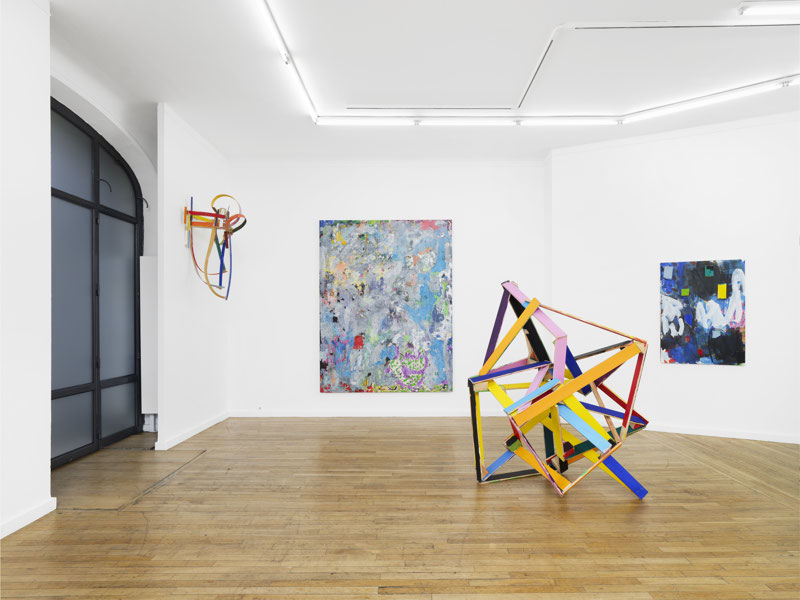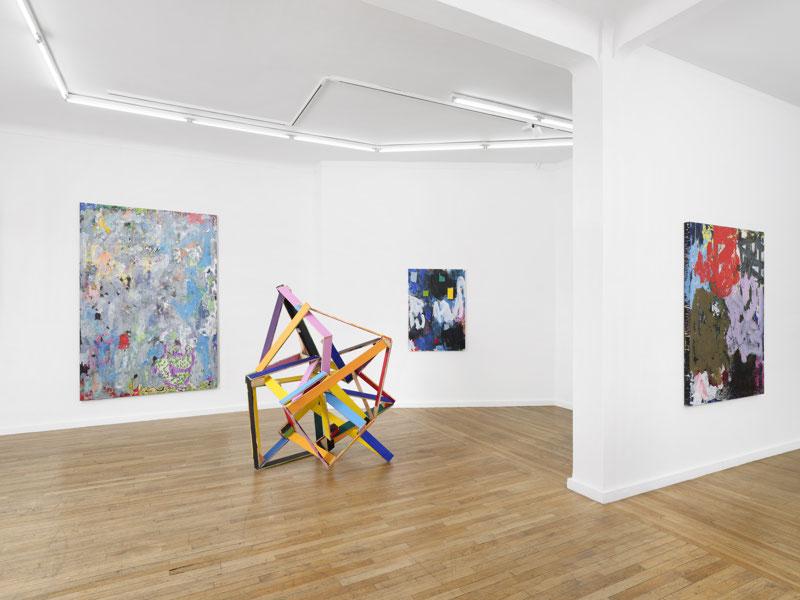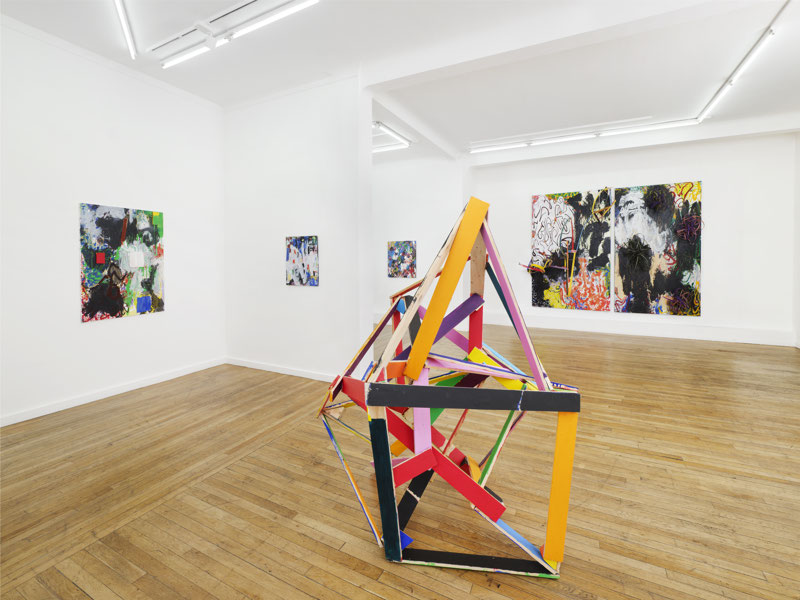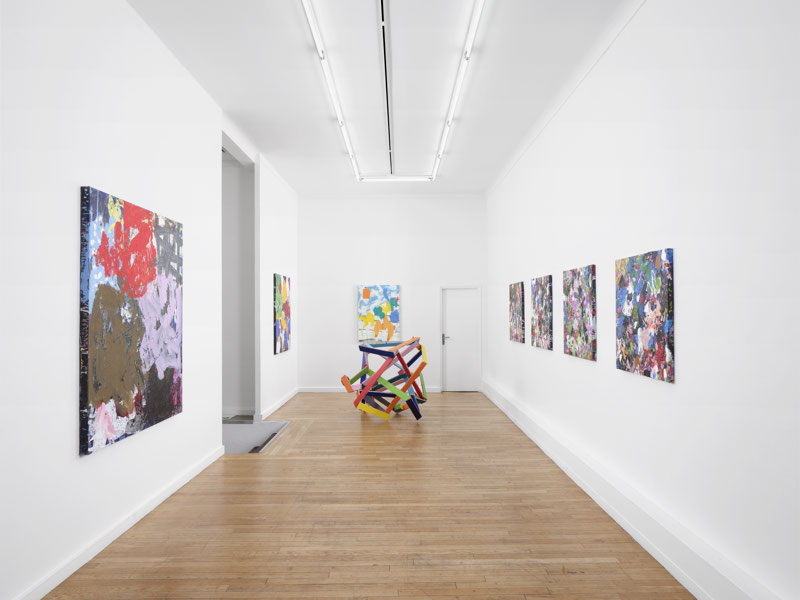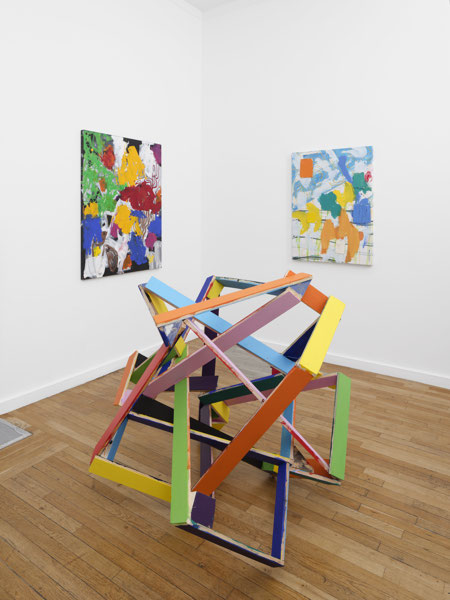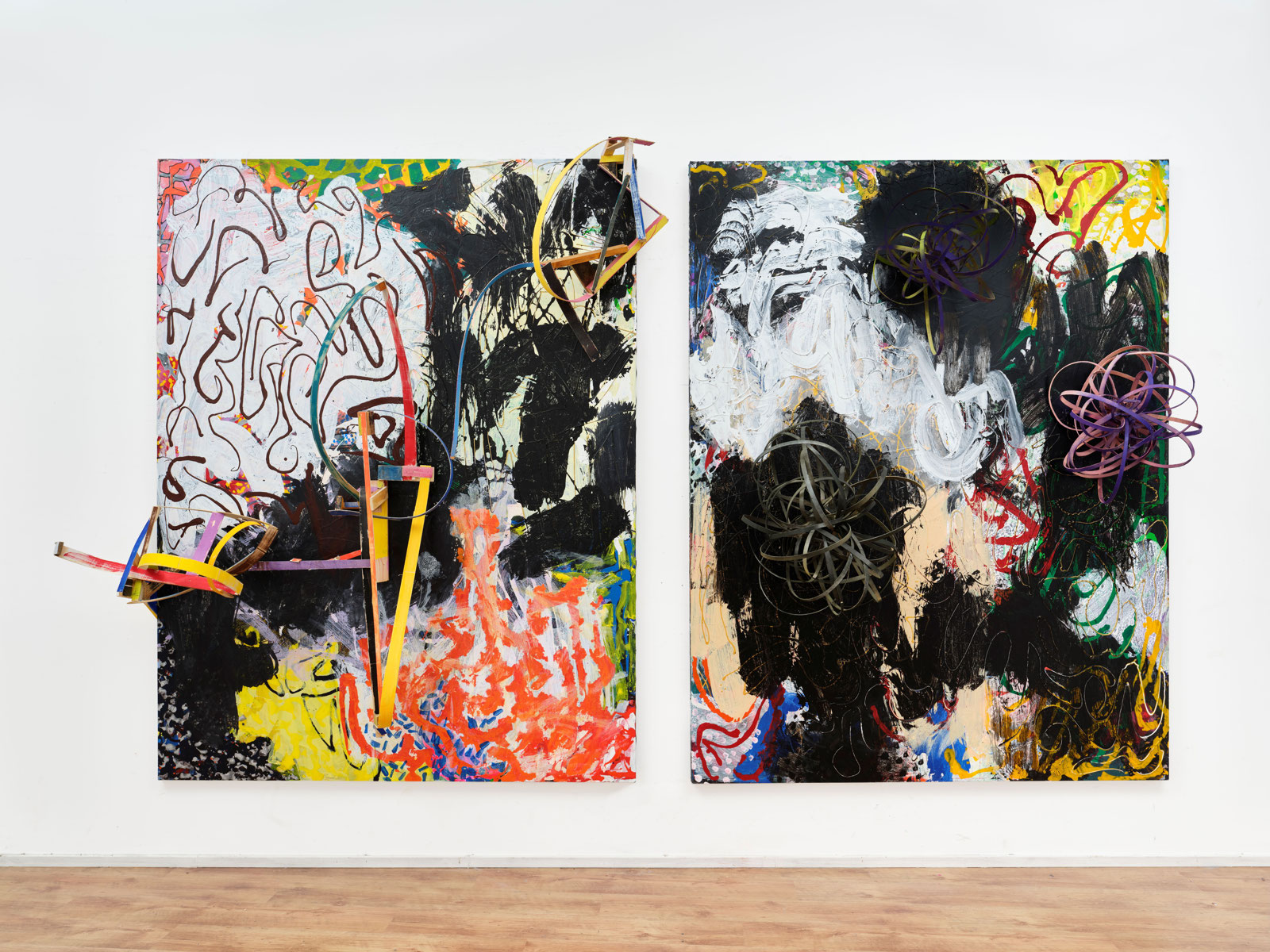
Franck Chalendard's painting has always been based on a dual principle of expenditure and serial exploration of the possibilities of color and gesture. He begins by deciding on a method that will enable him to structure the entire surface available to him, a method that varies so much from one series to another that, were it not for the consistency of his chromatic sensibility, one might think that the works were by different artists. She then proceeds with a form of improvisation that builds each painting stroke by stroke, one area responding to the one that preceded it, sometimes in opposition, sometimes in homogeneity, sometimes in juxtaposition, sometimes in overlap, until, suspending her activity, the artist considers that he has arrived at a pictorial state that satisfies him and that never quite absorbs the contradictory impulses that gave rise to it. Intermittently, he has also applied this method -if it is one- to sculptures and reliefs, thus proposing an extension of his painting beyond the canvas.
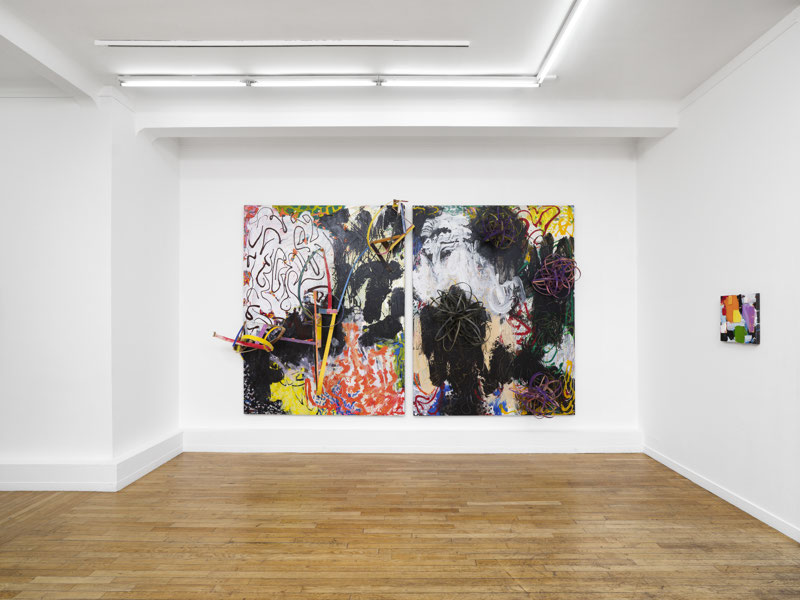
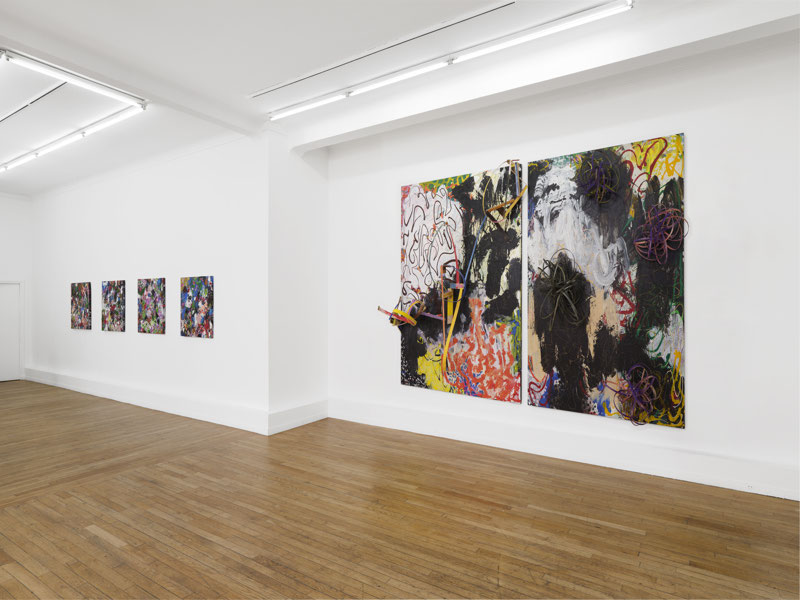
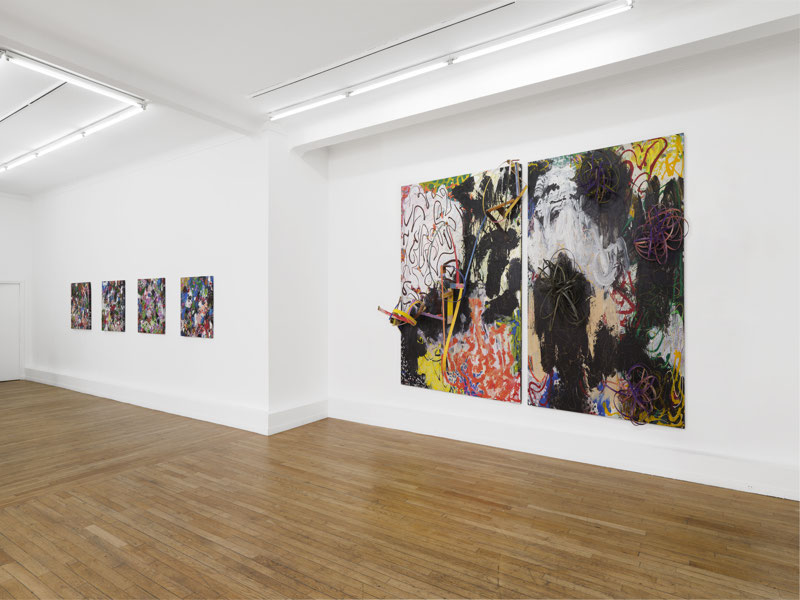
His recent works are based for the first time on the combination, within the painting and beyond its edges, of these pictorial and plastic approaches, without however ruling out the possibility of sticking to separate practices, since some paintings are strictly surfaces covered with paint and some sculptures are strictly three-dimensional assemblages of colored boards, each time with great chromatic and formal exuberance, which is also a sign of a genuine jubilation in the principle of expenditure that drives him. Franck Chalendard now explores the effects achieved by applying pieces of cardboard or wood to the brushstrokes that make up more or less continuous ensembles, giving his colors both literal relief and an unexpected luminosity, which I have so far only observed in certain paintings by Mary Heilmann: he exploits the separation between each of the formal elements that make up his compositions to rediscover a new form of totality, which, more than ever, is based on the coexistence of contradictions and separations, and does not pretend to establish an illusory community. In the two large paintings entitled Gargouilles, he takes this method to its extreme, placing on the surface of the painting not only elements that create a slight relief but actual sculptural parts (those of the sculptures to which he has given a separate existence, sculptures made of planks here, sculptures made of swirling strips there). These vigorously penetrate the viewers' space, preventing a passive grasp of what is being shown, and deliberately expand not only the field of painting but also that of the painting itself, in an exaggerated baroque style that appears to be a radicalization of what has always been present in his work.
Eric de Chassey, 2025