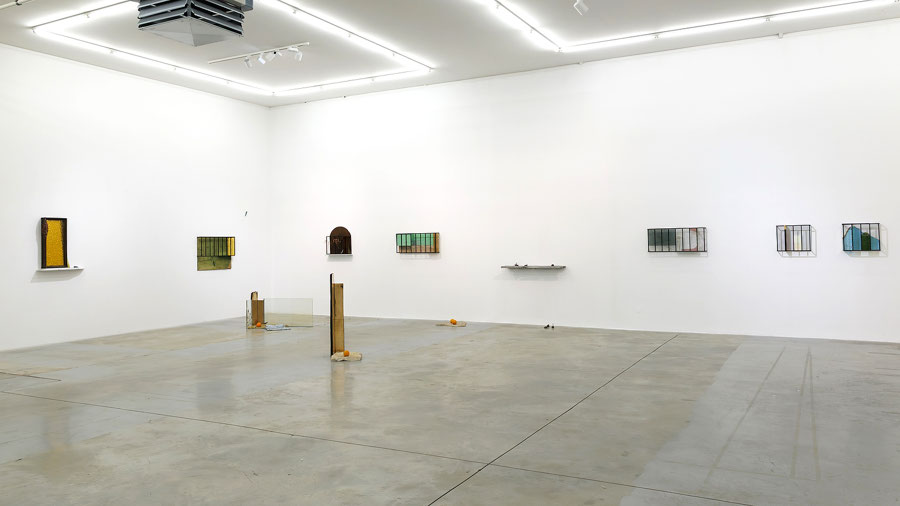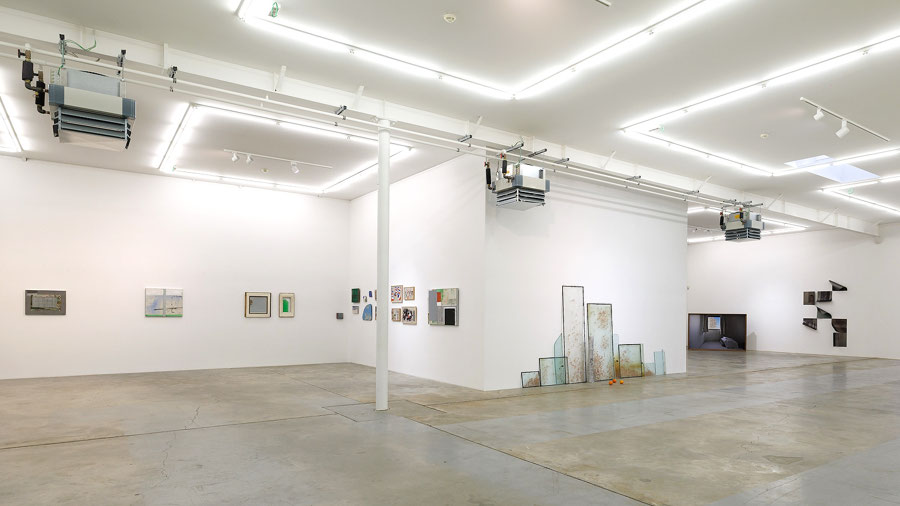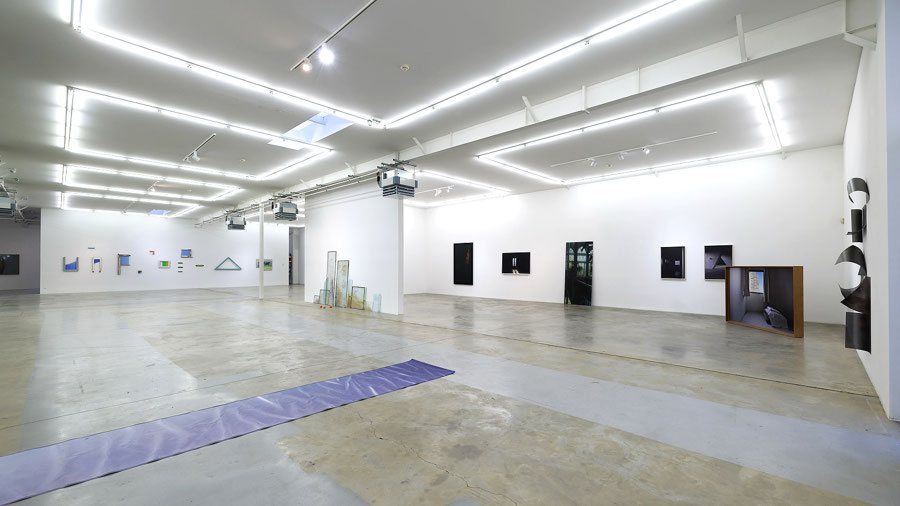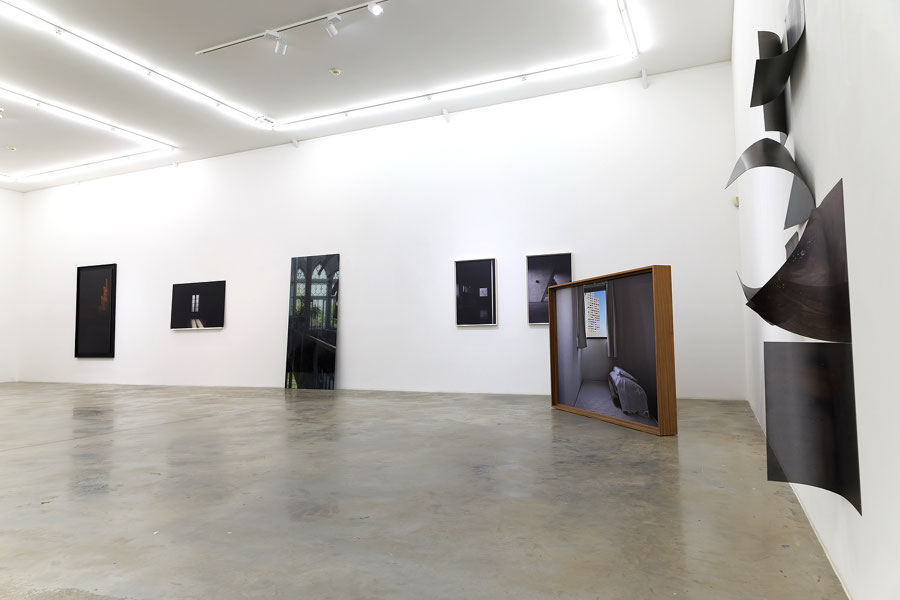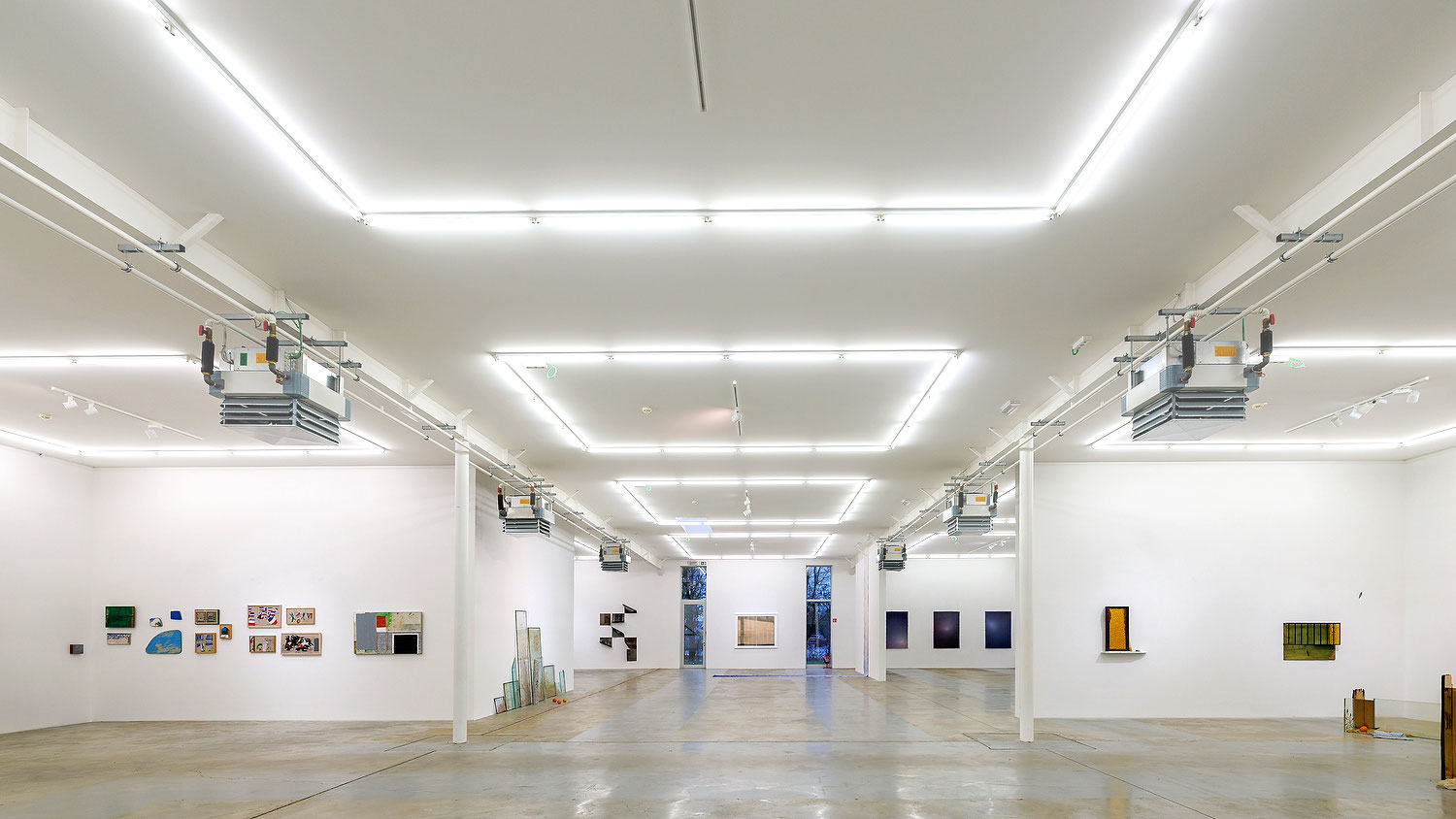
With Entrevue[s], Ceysson & Bénétière is delighted to bring into dialogue in Luxembourg the works of Wilfrid Almendra, Pierre Buraglio, Aurélie Pétrel, and David Raffini around a theme that is both familiar and profound: the window. Entrevue refers at once to the encounter between the artists, their exchange around this shared motif, and an “entre-vue,” something glimpsed between two spaces, an interior and an exterior. The window thus becomes both a shared subject and a site of vision. By defining the painting as an “open window,” Leon Battista Alberti inaugurated the analogy between this opening and two-dimensional visual art. This topos constitutes a major concept in Western image-making. It is the quadrilateral of the picture plane—this frame cut out of a surface—that underpins the comparison and organizes a space of visibility. As an interface between visible and invisible, intimate and social, the window directs light and guides the gaze, or conversely remains blind, a closed surface referring only to its own dispositif.
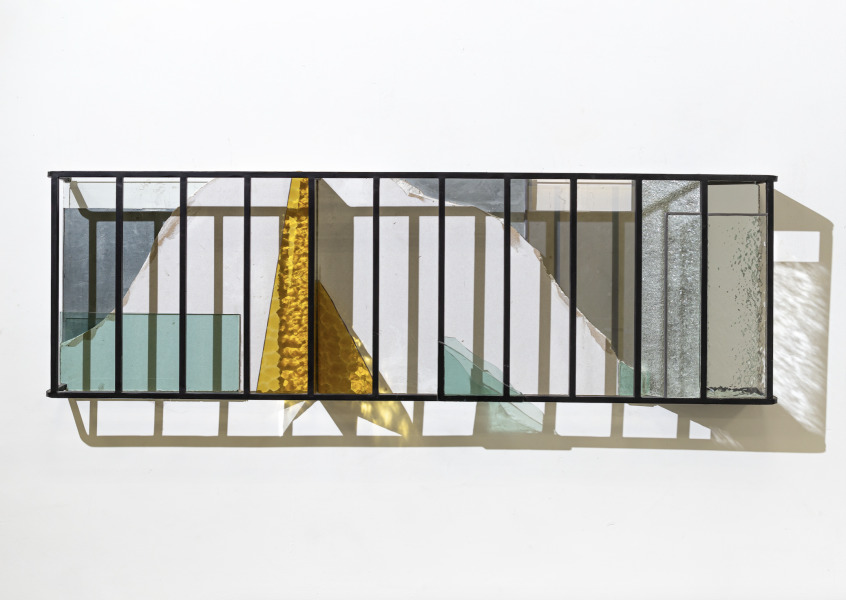
In Wilfrid Almendra’s work, the window first appears through the presence of its constituent elements. His series, notably Model Home and Sonatas, draw on the vocabulary of the built environment—glass, metal, frames—while diverting the window from its primary function. Rather than opening onto a landscape in visu, these works reveal a landscape in situ, composed of elements and objects embedded within the thickness of the frame. These objects operate symbolically, referring to the social world traditionally situated on the other side of the window, from which it separates the intimate sphere. Almendra thus reactivates Leonardo da Vinci’s conception of painting as a “pane of glass,” a transparent surface where two realities are articulated. Here, however, this pane does not grant access to a fictional elsewhere; it exposes the threshold itself, the very site through which two worlds transit.
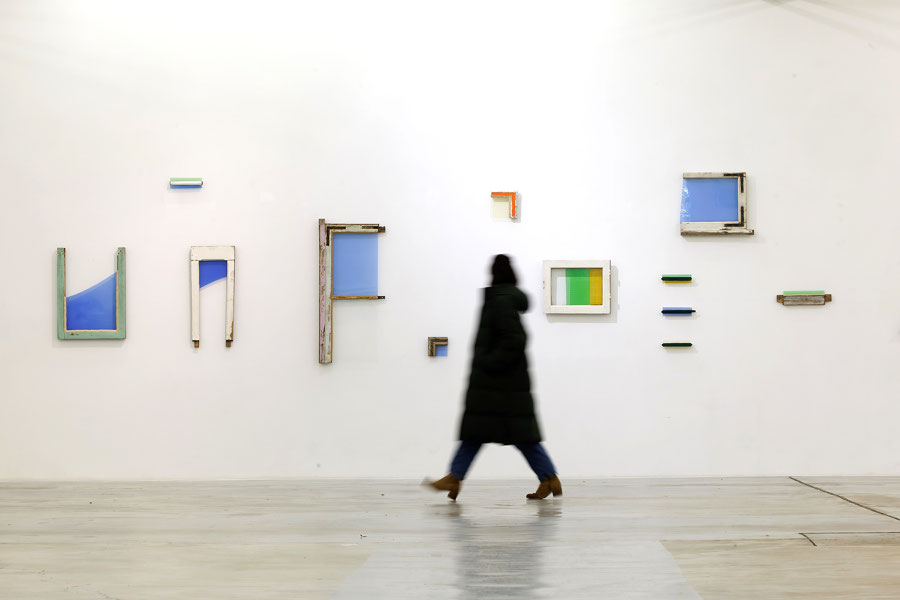
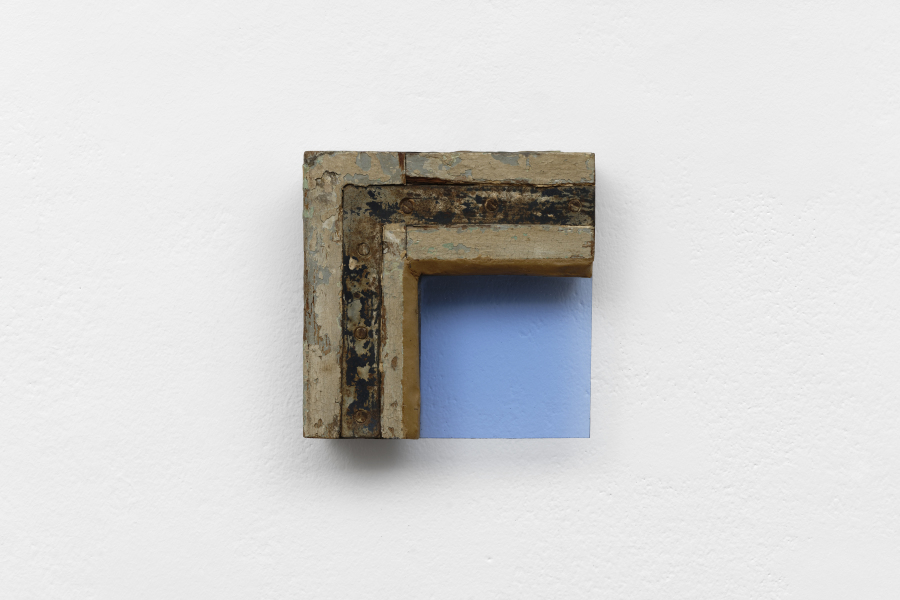
This exploration of the window as a concrete object finds a direct echo in Pierre Buraglio’s Fenêtres series, begun in the mid-1970s. Buraglio salvages window sashes from construction sites; these structural elements—frames, hinges, traces of use—are combined with blue or clear glass and presented as autonomous works. The gestures of the carpenter merge with those of the glazier. These architectural fragments open onto no landscape other than their own structure. They assert themselves as blind openings, interfaces that lead nowhere beyond themselves, where the frame literally becomes the subject. The stretched glass, the sharp edges of the cuts, and the dialogue between blue and green evoke both Matisse and Philippe de Champaigne’s Crucifixion. Here, the window ceases to be a motif and becomes a specific object of modern painting—a dispositif in which questions of framing, cutting, and vision are replayed.
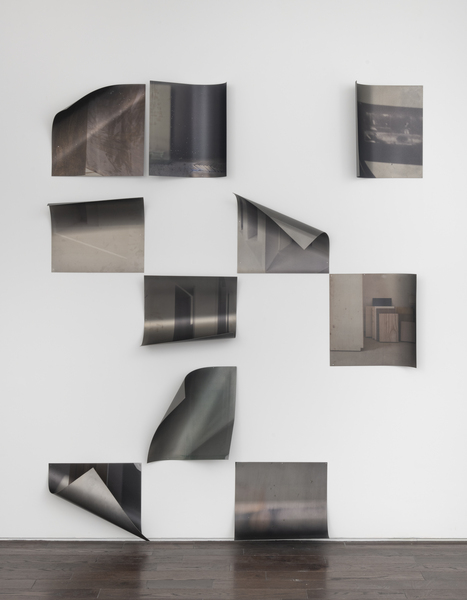
To this window-object corresponds the window-image in Aurélie Pétrel’s work. The history of photography quite literally begins at a window: the one through which Nicéphore Niépce captured, in 1826, the view from his house. Photography functions as a quadrilateral that cuts into reality, a threshold organizing light, time, and space. Pétrel’s works extend this genealogy by multiplying dispositifs in which a photographed scene itself contains an opening, or conversely where the structure of the image reiterates the window it frames. Photography thus becomes an in-between, a fragment of the world that is held and replayed, in which the window is simultaneously subject, device, and mise en abyme.
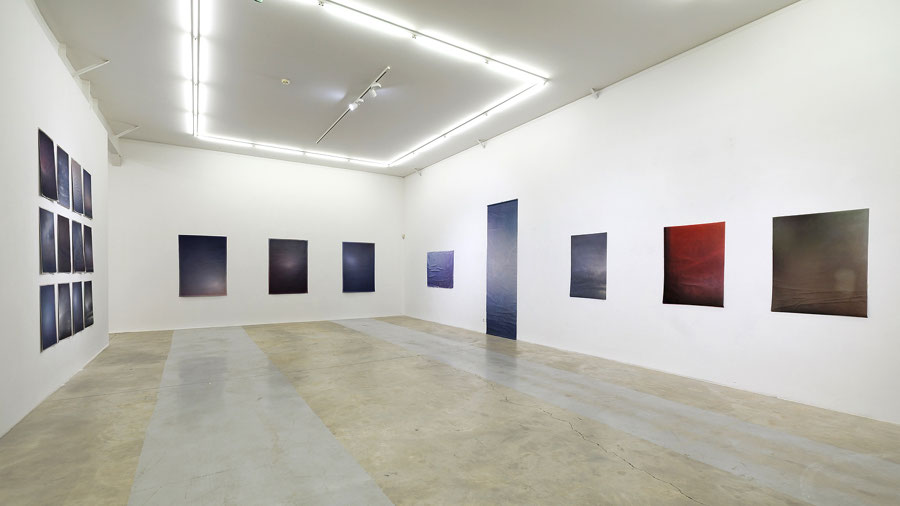
This dialogue continues in the painting of David Raffini, where the window becomes a perceptual and memorial experience. The folded, crumpled, or stretched fabrics he employs transform the surface of the painting into a membrane, a curtain, or an opening, recalling the fleeting nature of a landscape glimpsed through a window. Painting fixes these perceptions within textile matter, transforming ephemeral folds into durable memory, much like a sensation imprinted on the retina. In Raffini’s work, the motif is merely a pretext; as Dolla has observed, “painting itself is its own subject.” The window becomes a perceptual threshold, a site where surface and depth, blur and clarity, abstraction and figuration converge. It is also a temporal window: a suspended instant in which the attention of the studio crystallizes in gesture and light.
![View of the ENTREVUE[S] exhibition in Luxembourg, featuring works by Aurélie Pétrel (left) and David Raffini (right).](https://d21r5lu6gvix4l.cloudfront.net/attached_images/3472/main_image/157galerieceyssonbenetiereexpoentrevues20260128-900-600.jpg?223)