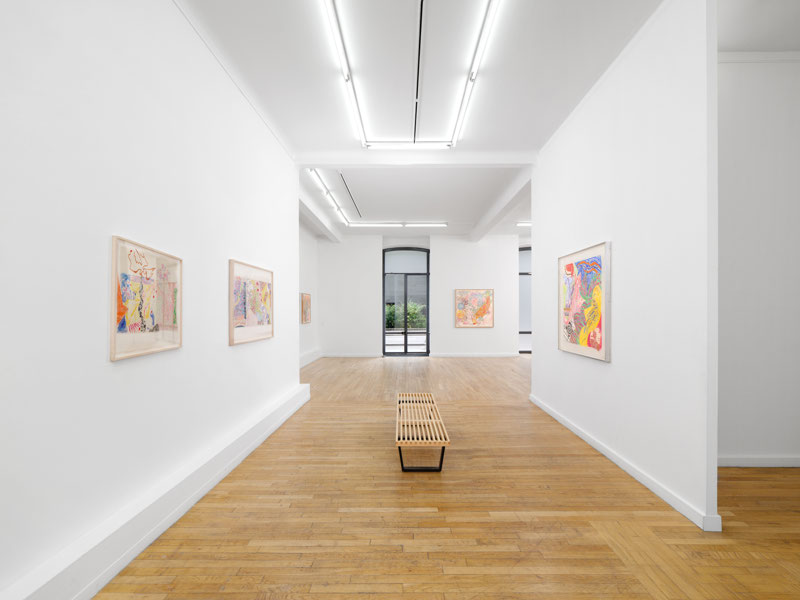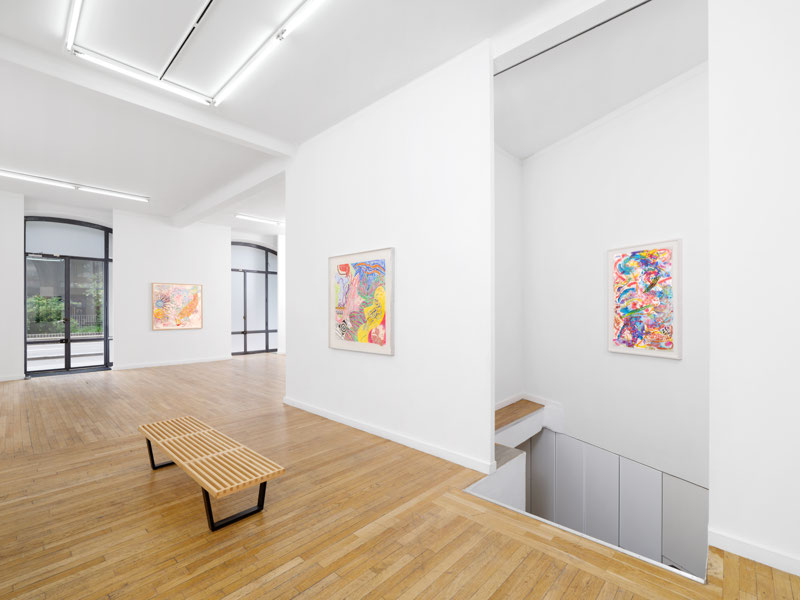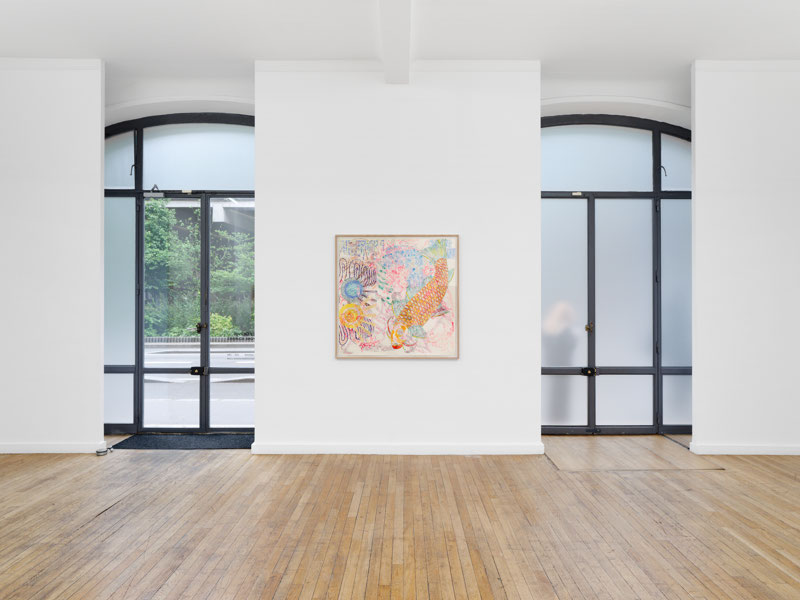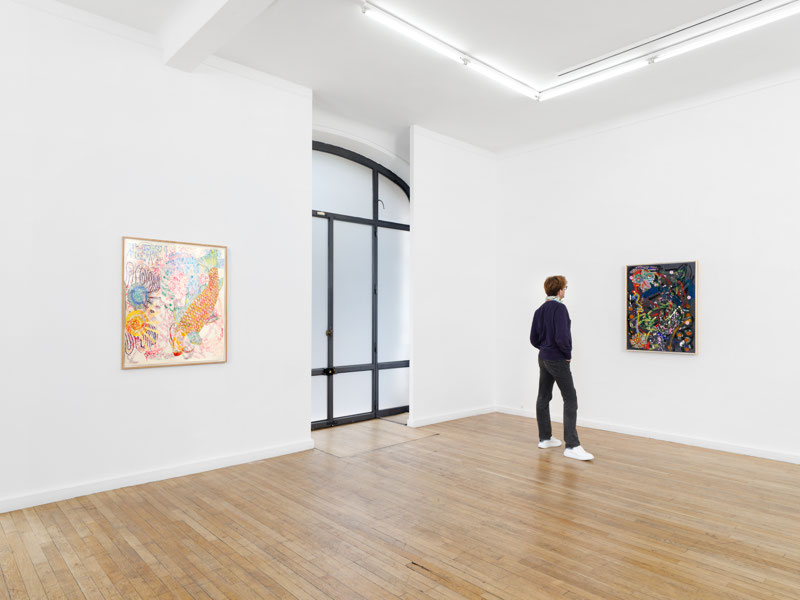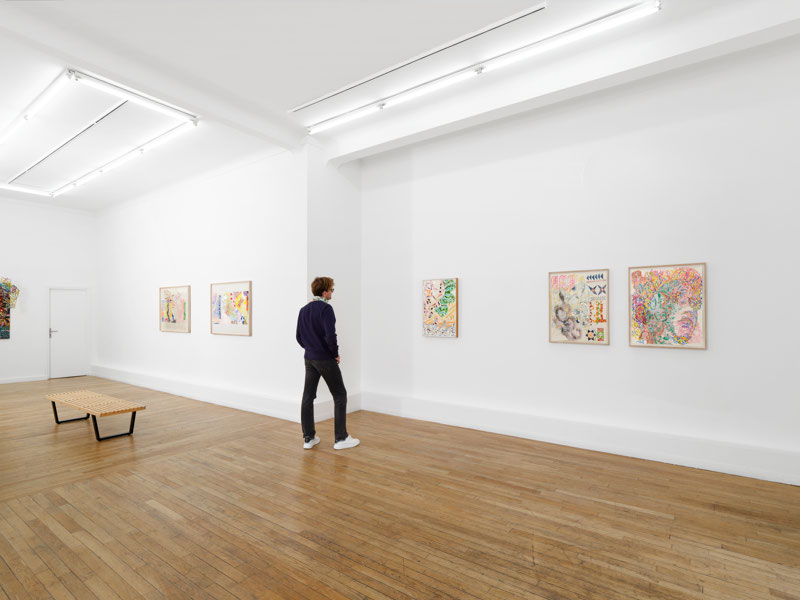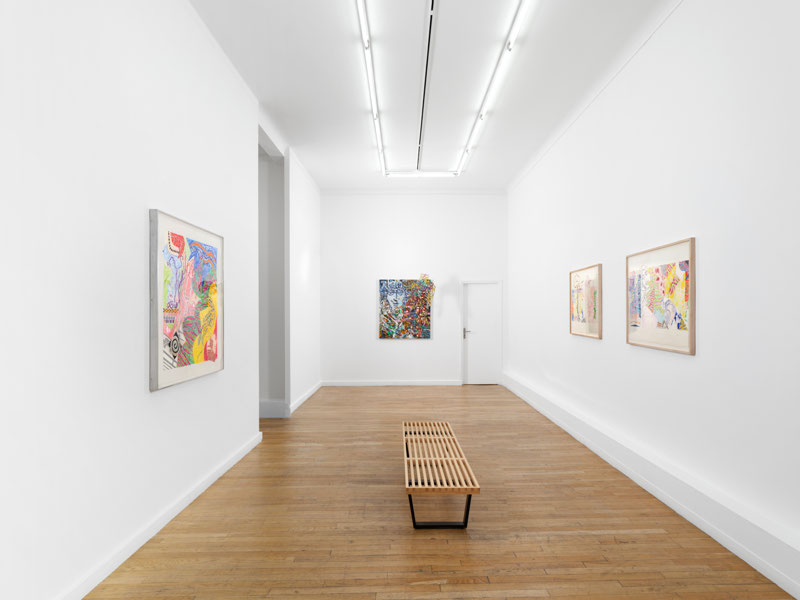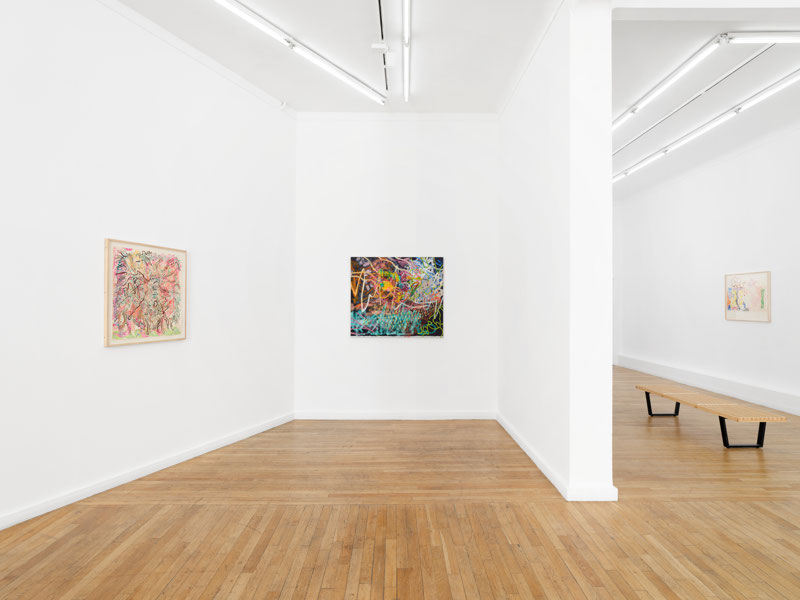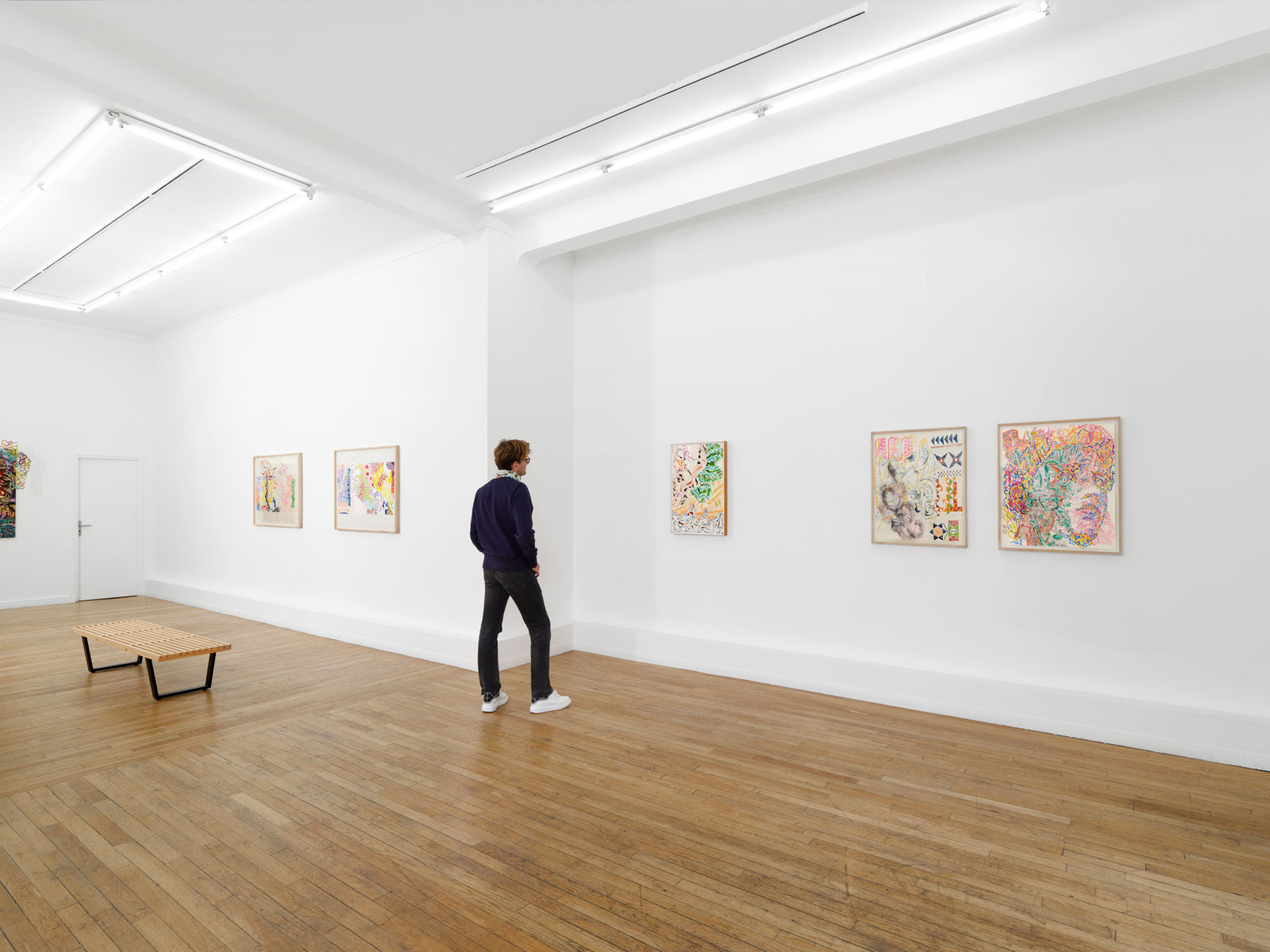
From May 21 to June 20, 2026, Ceysson & Bénétière Paris presents an exhibition dedicated to the American artist Nancy Graves (1939–1995). Over the course of her career, she developed a coherent body of work spanning sculpture, painting, drawing, watercolor, and lithography, which earned her international recognition.
Born in 1939 in Pittsfield, Massachusetts, Nancy Graves, who passed away in New York in 1995, rose to prominence as early as 1969 when she became the youngest artist and the fifth woman to have a solo exhibition at the Whitney Museum. She first gained attention with monumental sculptures of camels, yet throughout her career she worked simultaneously across filmmaking, painting, drawing, prints and editions, and sculpture, reflecting her interest in zoology, paleontology, astronomy, and dance, as well as art history and antiquity. The works presented here span the years 1977 to 1990, a period during which the artist actively incorporated, re-examined, and reinterpreted her sources through vivid color and a wide range of materials.
Nancy Graves never confined herself to a single style, consistently asserting both freedom and an openness to experimentation. At times she adopted an aesthetically layered approach particularly in her drawings related to cosmology and geology, while pursuing a more conceptual direction in her films. She developed a more assertive gestural language in the early 1980s and collaborated with the choreographer Trisha Brown in the middle of the decade, using strong, dynamic colors to establish rhythms that are in keeping in the spirit of Abstract Expressionism. It was also during this period that she began to incorporate imagery from art history into her work. In 1979, while in residence for several months at the American Academy in Rome, she immersed herself in architectural plans of Egyptian funerary chambers and pre-Roman ziggurats, and visited the city’s museums and archaeological sites. In the years that followed, she traveled to India and Nepal, and also visited Inca sites such as Machu Picchu. All of these sources, in dialogue with her knowledge of modern art—particularly her admiration for Henri Matisse and Fernand Léger—gradually unfolded as a layered accumulation accompanying the development of her thinking. Over the years, Nancy Graves assembled a vast personal library in her Soho loft comprising some 2,500 volumes, and worked directly with press clippings, photographs, diagrams, maps, brochures, and photocopies drawn from publications, newspapers, and catalogs. Reflecting on the 1980s and a dominant postmodernism, she stated in a 1992 interview with Thomas Padon, reproduced in Nancy Graves: Excavations in Print (1), that this juxtaposition reflected the state of the world and the society in which she lived.
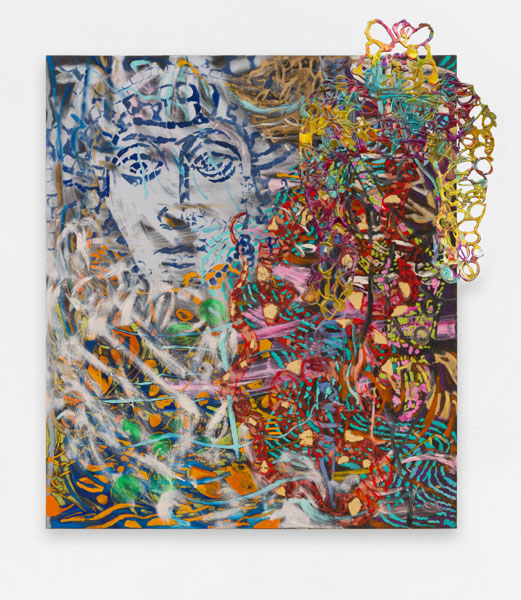
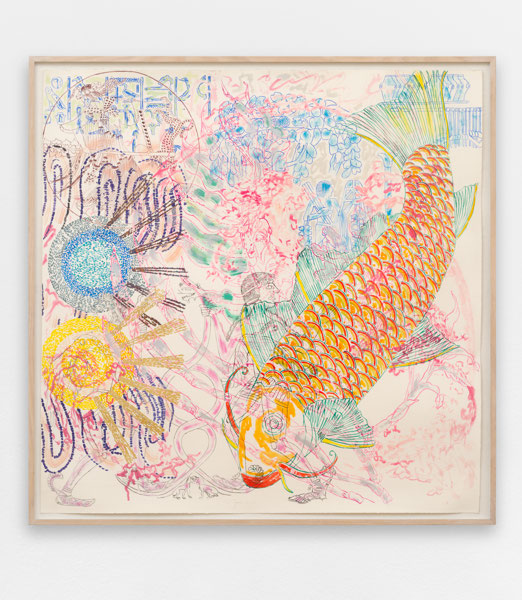
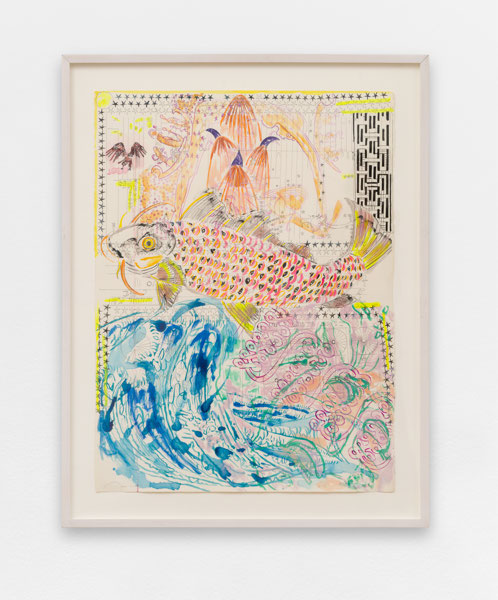
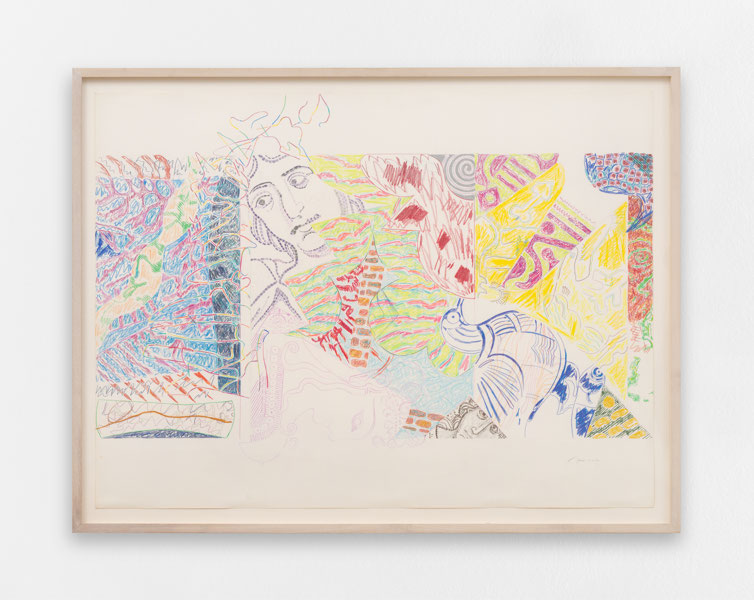
A closer look at several works in the exhibition reveals a wide range of techniques, from pencil and pastel to watercolor, acrylic, oil, and gouache on paper, canvas, or panel, and incorporating glitter, gold and silver leaf, and encaustic. Some works are dense and generous in color, while others are more restrained in tone, yet all cultivate a distinct sense of assemblage. One can clearly recognize motifs drawn from mosaics, ancient statuary, fish from Asian cultures, or even the head of Empress Theodora— a symbolic and feminist figure, explicitly identified by the artist alongside figures such as Nefertiti, Aphrodite, and Eve as female archetypes of historical, cultural, or mythic power. Most often, Nancy Graves begins with small black-and-white reproductions, which she then reinterprets, combines, and transforms. She pushes visual layering into an expressive, non-hierarchical language, shifting rhythms, sharpening her line, and accumulating color, while remaining aware of the risk of sentimentality and striving to keep her work “tough enough” to avoid “bathos.” By incorporating aluminum sculptural elements onto her canvases, she reinforces the strong ties with her sculptural practice. While she noted that these works could evoke historical or economic upheavals and social conflicts, she also repeatedly emphasized that her work remained fundamentally abstract and is primarily structured from a formal perspective. Her work develops an ongoing reflection on the temporality of artworks, the formation of a cultural vocabulary, and the meaning and reception of these fragments from art history. It considers how a motif that is no longer recognized, or whose meanings have faded, might be reintroduced to produce new perceptions. In doing so, it invites us to reflect on the very idea of “excavation” and, through this interplay between past and present, implicitly engages with the question of decontextualization.
One can easily imagine an artist deeply engaged with her fields of inquiry, while consistently maintaining a certain ambivalence in her position and direct involvement. While fully mastering the codes of an intellectual approach to art and aesthetics, Nancy Graves aligns herself more closely with experience. Although the works may not, at first glance, present a direct autobiography, her line—vivid, incisive, at times almost epic—together with her titles, often drawn from poetic and literary sources, reflects artistic choices and intellectual references rather than personal revelation.
From Torque, far from a tranquil image, to In Memory of My Feelings, represented by a fish threatened by a wave, to Permanent Tension and A Certain Distance, the artist reveals something of herself, forging a sensitive connection with the world through this process of self-reflection. She opens a space of projection into which the viewer can enter. Aesthetically, her work speaks of fragmentation and visual layering, expressed through combinations of forms and techniques, as well as differing temporalities and symbolic systems, affirming the primacy of the work of art. Emotionally, it takes stock of her relationship to the world, discreetly inviting the viewer to stand beside her, as analyzed by Carter Ratcliff in Art & Antiques Magazine, Nancy Graves: The Naturalist (2), published in 2017.
Belonging to the generation of Eva Hesse—who had studied at Yale University a few years before she did—Nancy Graves achieved recognition very early on. She participated in Documenta 5 and Documenta 6 in Kassel, was collected by Peter Ludwig, and was the subject of a major, widely acclaimed retrospective of her sculptural work that travelled to several museums across the United States—including the Fort Worth Art Museum, the Hirshhorn Museum and Sculpture Garden, the Santa Barbara Museum of Art, and the Brooklyn Museum—in 1987–1988, marking an exceptional level of recognition for a living artist.
She died in 1995 at a time when she remained highly active and widely recognized within the art world. In 2012, Chuck Close, one of her close friends, stated during a lecture at the City University of New York that she was one of the most underestimated and least recognized artists of her generation. Through her endless experimentation, fierce independence, and refusal to enter established circles, she belonged to no group or movement. Initially supported by feminist criticism, her position—less overtly engaged—contributed to the complexity of her reception, even as she continued to exhibit widely and publish. Yet Nancy Graves seemed to want attention to rest solely on her work, which in recent years has begun to be rediscovered and studied in depth.
Marie Maertens translated by Laurie Hurwitz, 2026
1. Thomas Padon, Nancy Graves: Excavations in Print: A Catalogue Raisonné, Abrams/AFA, 1996.
2. Carter Ratcliff, “Nancy Graves: The Naturalist,” Art & Antiques, October 2017.