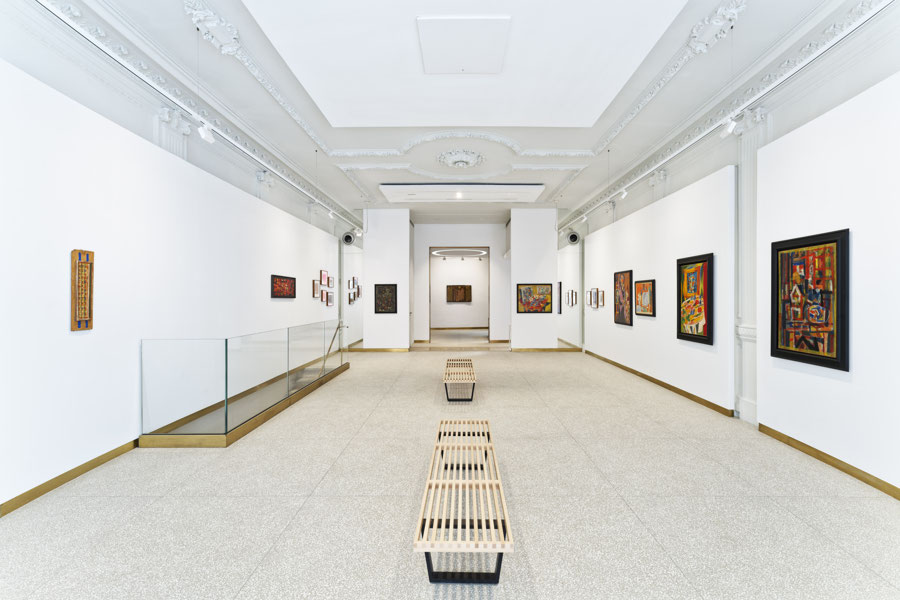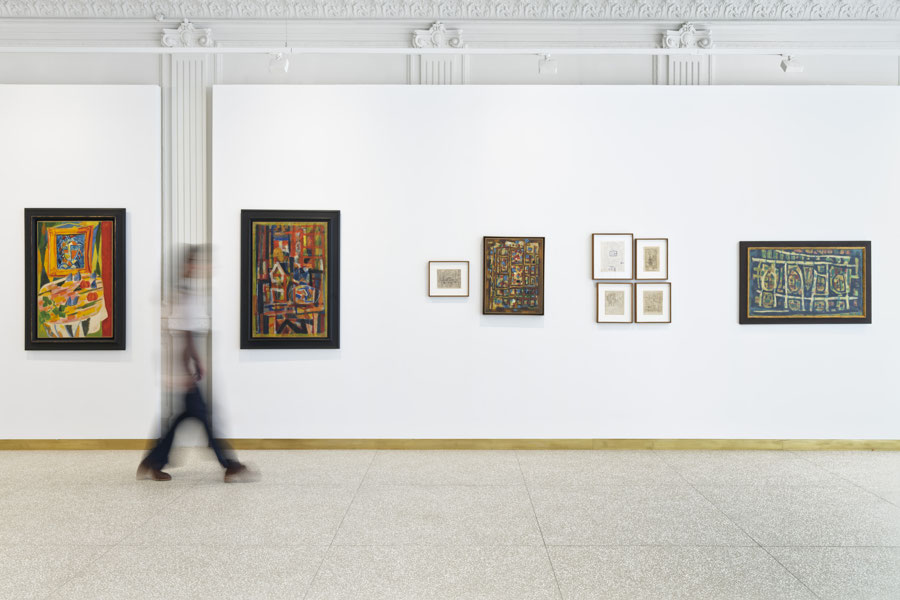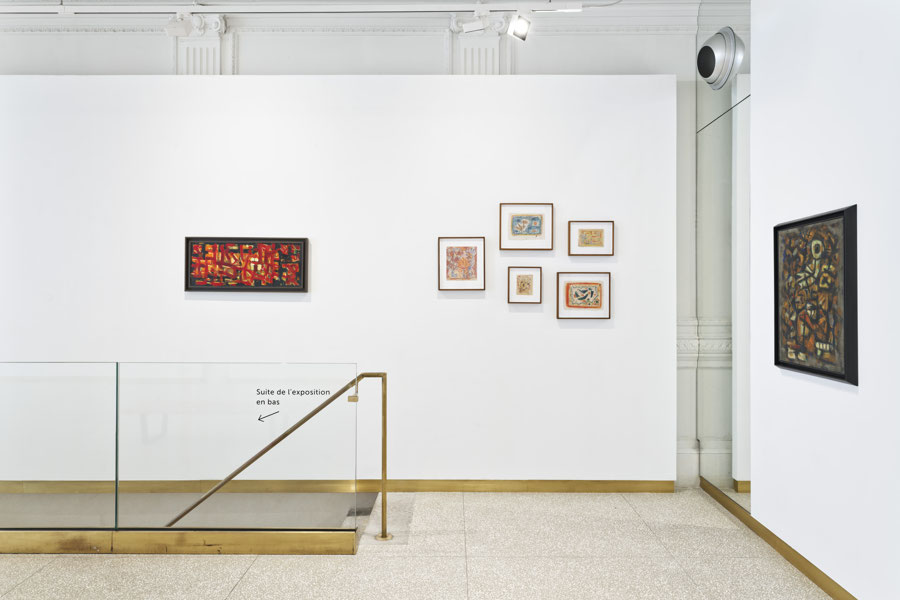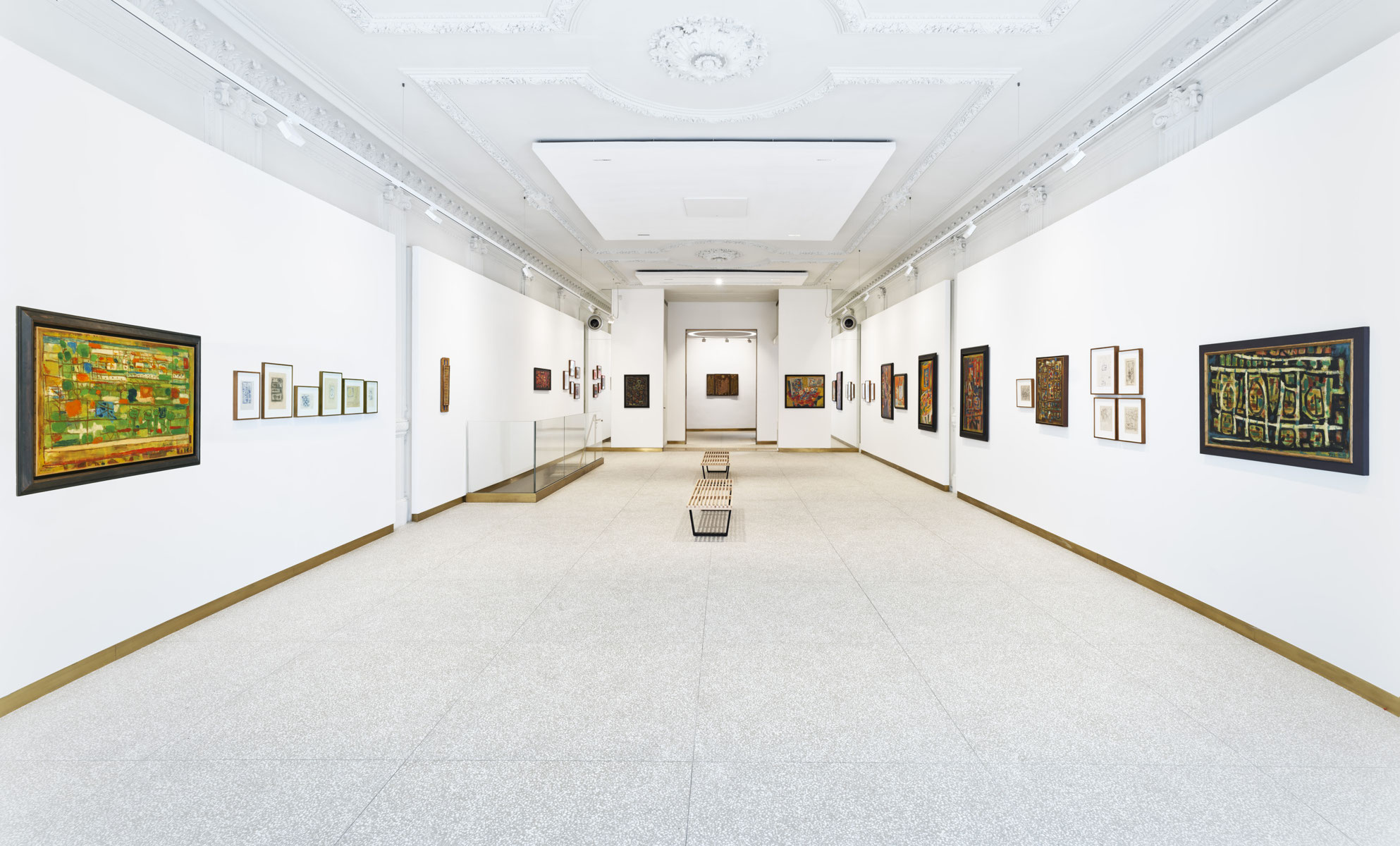
From April 16 to May 28, 2026, Ceysson & Bénétière Lyon is happy to present an exhibition dedicated to Roger Bissière, a major figure of twentieth-century French art.
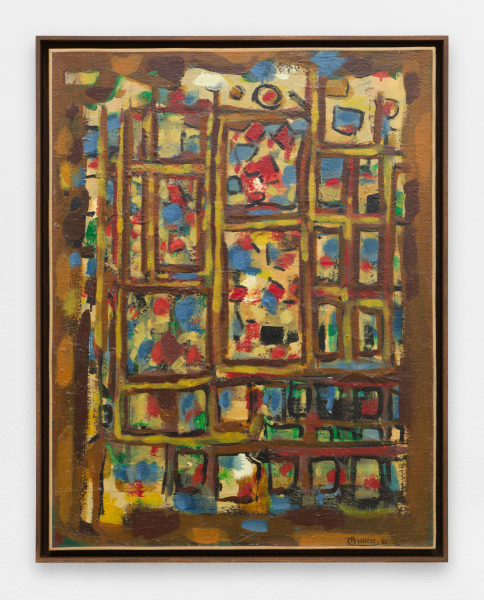
No Less Than a Cosmos, Paintings and Drawings, 1937–1964 : the title chosen for this exhibition conveys more than the mere span of years covered by the selected works on display. It situates them within a precise historical narrative, one for which the Second World War serves as a hinge, between the integration of the experimental movements of the early twentieth century and the emergence of what would come to be called lyrical abstraction within the Second School of Paris, before its eclipse by New York and the rise of Pop Art.
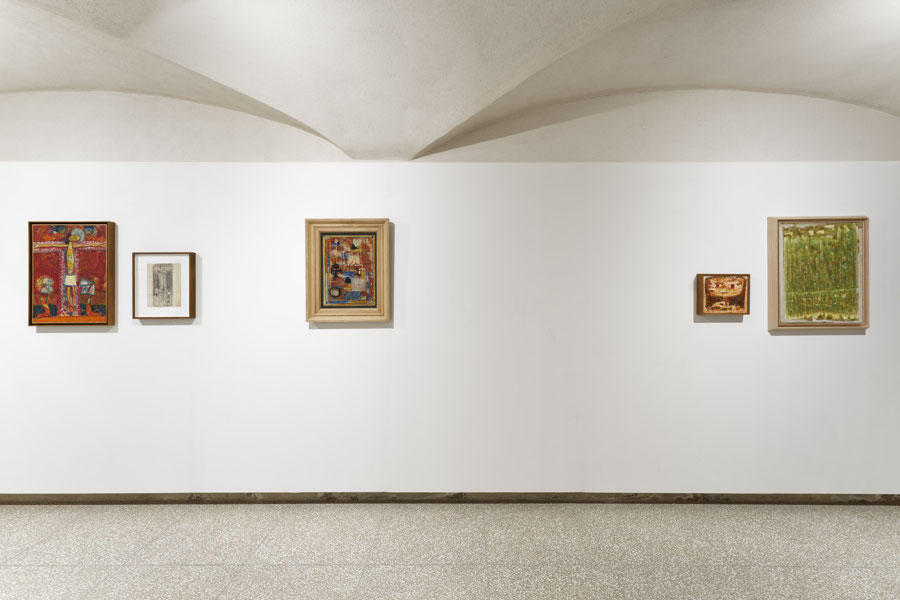
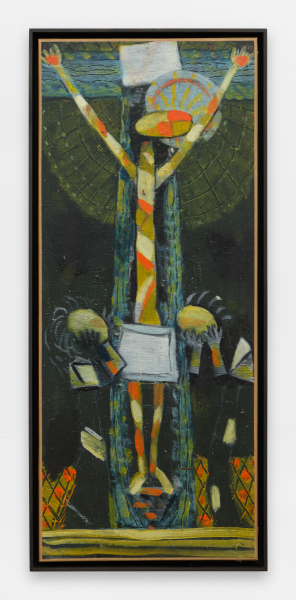
By 1937, the artist had already established his reputation through his work as a critic during the 1910s and as a teacher - of painting and fresco from 1923 onward - as well as through exhibitions at Berthe Weill, Paul Rosenberg, Druet, and the Leicester Galleries in London. At that time, while producing a number of Crucifixions on canvas and paper, he was also working on the decoration of the Railway and Merchant Navy Pavilions for the International Exhibition, within the group assembled around Robert and Sonia Delaunay. These works extended the legacy of Cubism toward colored rhythms, monumental scale, and a simplification characteristic of Art Deco.
In 1964, he was painting Compositions, drawing daily in his Journal, and only a few months before his death, represented France at the 32nd Venice Biennale, exhibiting tapestries in the entrance hall and paintings in the main room of the French Pavilion. There he received an honorable mention for “the historical and artistic importance of his work,” while Robert Rauschenberg was awarded the Grand Prize for painting. If a historical page was turned at that moment, it should not obscure the significance of what came before, namely the history of abstraction in Europe, retraced in 1955 by Documenta 1, in which Bissière took part, nor the singular mark left by the painter’s work within it.
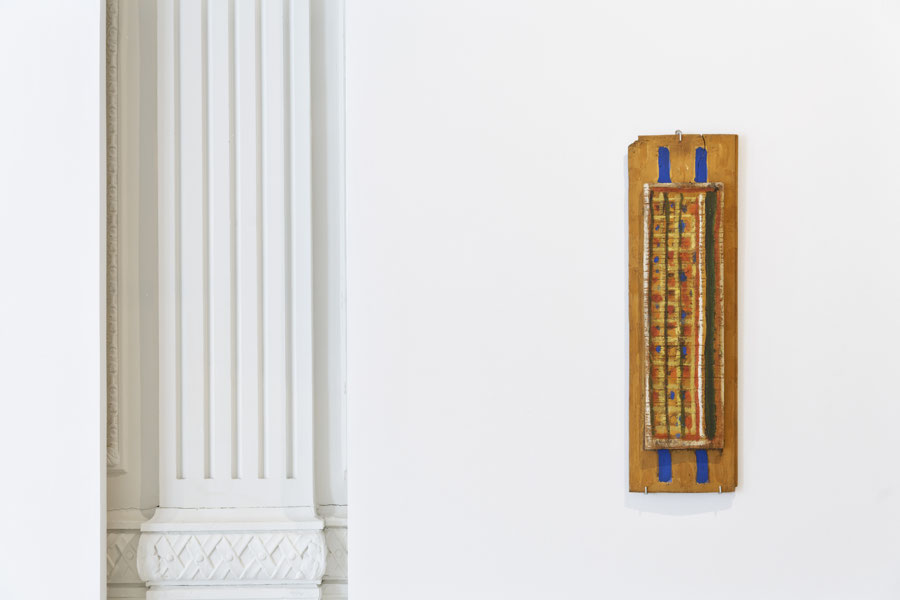
It was with tapestries that Bissière returned to the artistic scene in 1947, at the René Drouin Gallery, an institution that, by exhibiting Surrealists, Concrete art, as well as Jean Dubuffet, Alfred Manessier, Simon Hantaï, and Judit Reigl, established a bridge between the pre- and postwar periods. These works were sewn by his wife, Mousse, from his drawings, using all kinds of fabric scraps, thus stemming from an artisanal technique and giving rise to a specific spatial language: an arrangement of compartmentalized layers and materials, a decorative construction responding to scarcity while searching for an order at the scale of the artist’s hand as well as the piece of cloth.
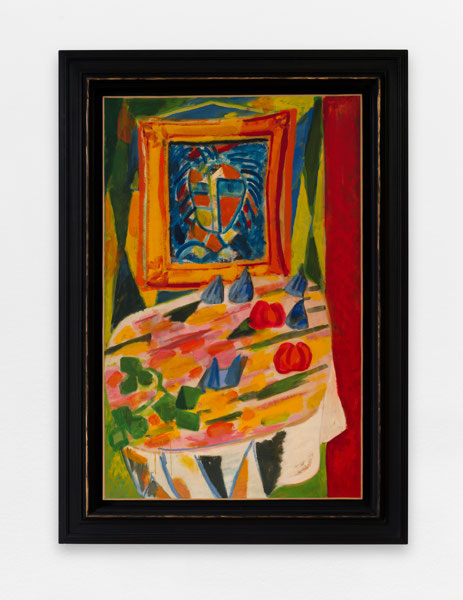
However simple Bissière’s means may be, whether he worked “in oil or water,” whether his painting were “made of fabrics, cement, plaster, or road mud,” to quote a passage from a text written by the artist himself in 1947, whether they unfolded on the scale of a wall or a sheet of paper, or represented human, animal figures or rather lines, shapes, and colors, the question of the frame(s) was central.
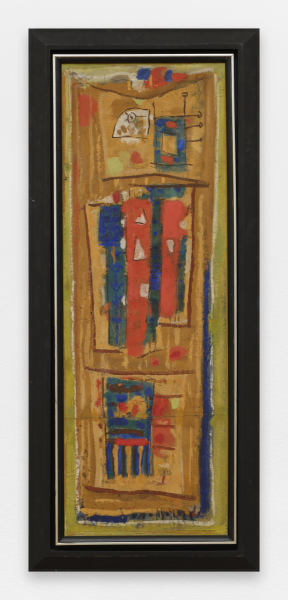
As proof of it, figures and objects appear in the middle of paintings; a cross divides the space vertically and horizontally; a page may contain several compositional ideas, each contained within a square or panel - as one might mark out a garden -; because the block of text delimit areas to be occupied on the printed page, while the margins around it become borders - omnipresent in both paintings on canvas and works on paper, these borders sometimes appear in negative (left blank), sometimes as bands of color laid down either at the beginning or at the end. In each case, space is defined by the medium used as well as the artist. It is designated within limits that ensure the autonomy of the composition while implying an outside world and the possibility of exchanges under certain conditions.
One might think of medieval illuminations, but also of the logic, both illustrative and ornamental, that
governs their spatial organization. Romanesque sculpture also comes to mind, where, according to Jurgis Baltrušaitis, the animated figures obeys “the law of attraction of the frame.” One may likewise evoke gardens, by definition enclosed, or at least delimited and ordered within boundaries, as well as carpets, whose symmetrical architecture is composed of major and minor borders surrounding a field scattered with motifs. Some carpets even take gardens as their model, with that of Heaven as their horizon. From miniature images to inhabitable spaces, such compositions carrie symbolic meaning, and creates, at every scale, from the smallest detail to the overall plan, nothing less than a cosmos.
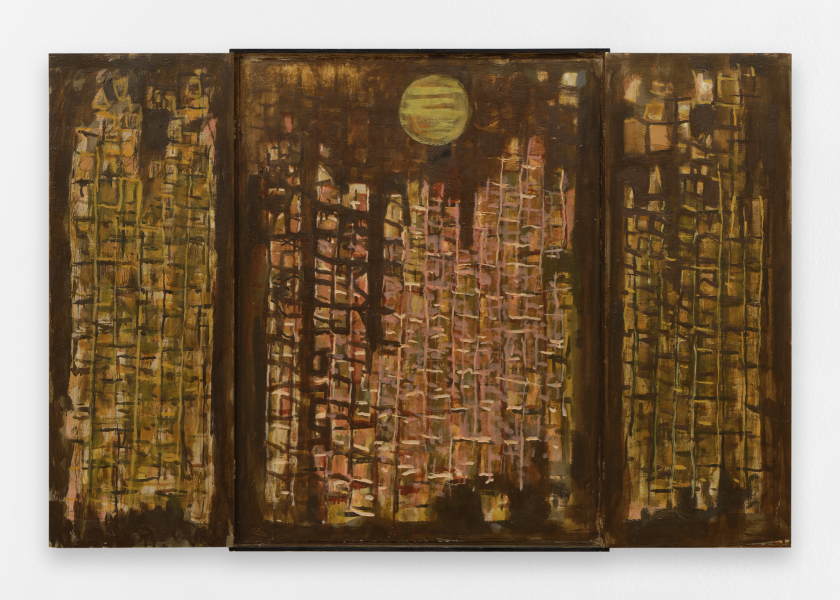
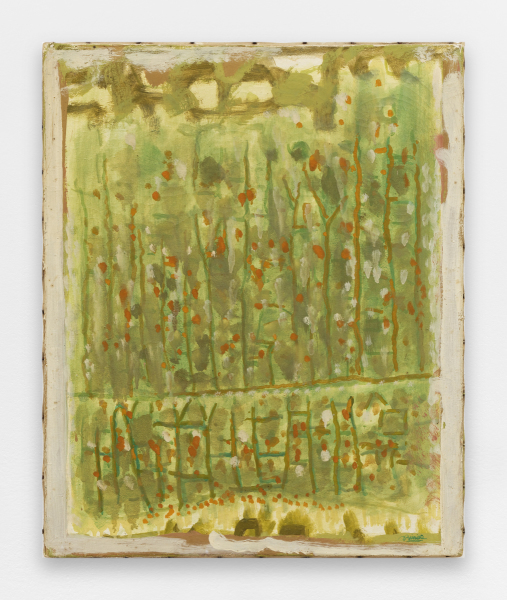
In addition to these borders and frames, the recurring use of various compositional procedures show intersecting lines forming grids and irregular checkerboards; parallel and perpendicular lines repeated like ladders; superimposed networks producing effects of consolidation or erasure. In this way, compositions and figures take shape on the surface, as though the painting were caught within the mesh of a net, a lattice, or a sieve ensuring its cohesion and a certain stability within fragmentation.
“Color,” writes Benoît Decron, “could be supported by drawing, but a simple arrangement of touches was enough to structure the form […]. The drawing remained discreet, underlying, yet sufficient to bring reality back to the surface of this domino game .” Or perhaps to sift, filter, and trap all those “sensations which, little by little, have formed in the depths of myself and now press to come out,” as the artist wrote to his wife in 1945.
Such may be the particular quality of Bissière’s spaces: at once dense and transparent, conducive to emergences and efflorescences as well as to coverings or burials, whether of matter or of meaning. Echoing the Spirits of the Forest, one recalls the opening of Charles Baudelaire’s “Correspondences”:
Nature is a temple where living pillars
Sometimes let forth confused words;
Man passes there through forests of symbols
Which observe him with familiar eyes.
As for the birds we see in these works, they bring to mind Jacques Prévert’s advice on how to make their portrait: begin by drawing a cage, and inside it whatever might attract a bird; once it has entered, erase the bars and replace them with a tree in full leaf. From forests to gardens, Bissière captures butterflies, and painting itself, in his nets; through lines and colors he builds flat spaces to the dimensions of the world and life.