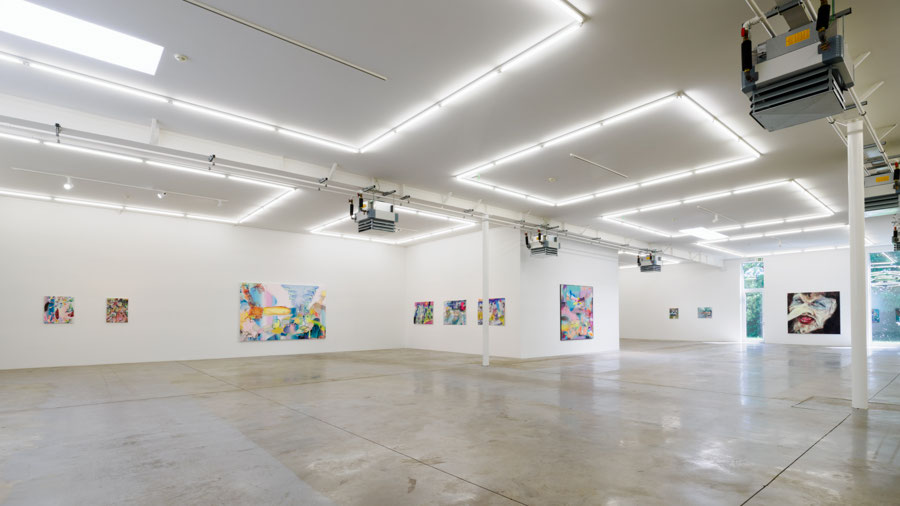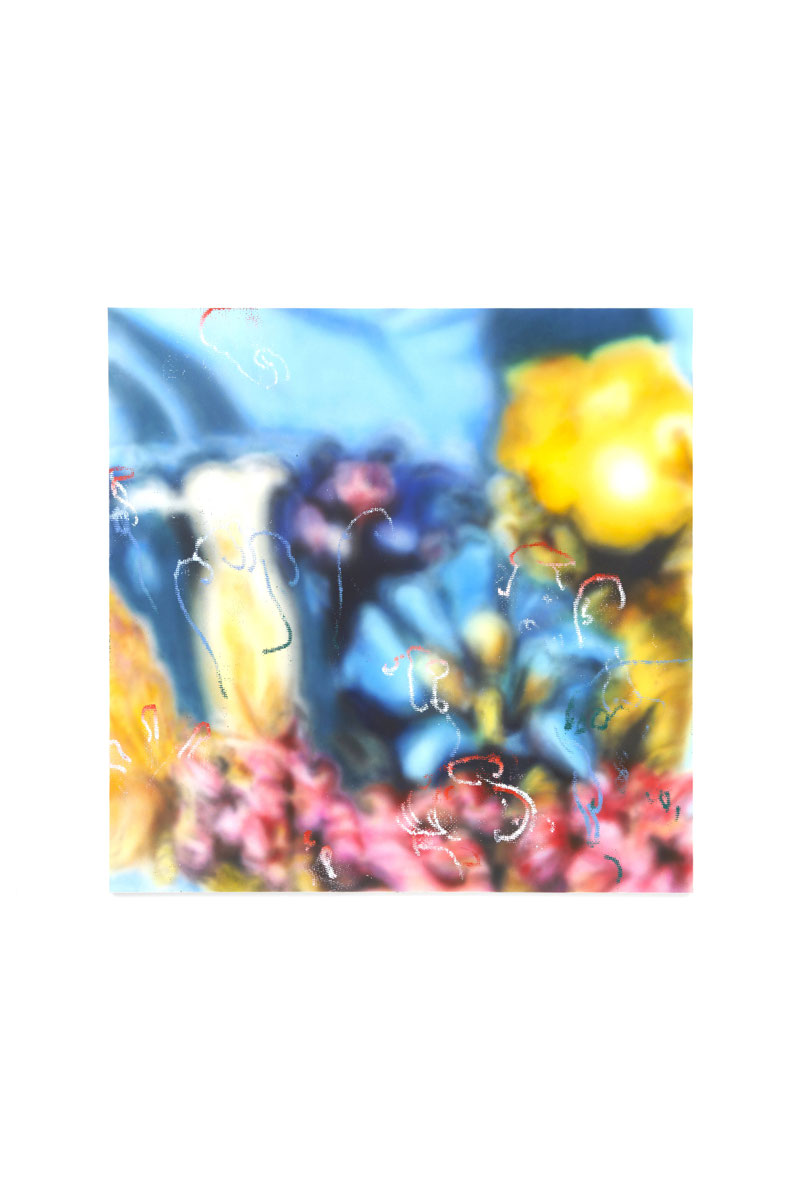
Antwan Horfee's exhibition at Ceysson & Bénétière Gallery, oomph, explores the pictorial field as a way of inhabiting the world—an experience of movement, trace, wandering, and transformation. Through a body of work that brings together painting, drawing, cinema, popular culture, and urban imaginaries, the exhibition gives rise to a visual thinking grounded in the friction of images and the circulation of signs.
Antwan Horfee's practice operates through a logic of constant contamination and metamorphosis. Drawing from graffiti, early cartoons, science fiction, horror films, illustrated books, animation cels, and found objects, his universe unfolds through successive layers, instinctive assemblages, and collisions of influences. His paintings, often imbued with misty, cinematic atmospheres, seem less concerned with representing fixed forms than with capturing states of transition—images in the process of emerging or dissolving.
This approach extends certain ideas explored in The Termite's Bite at the Palais de Tokyo, in which Horfee participated. Inspired by Manny Farber's text contrasting "termite artists" with "white elephant artists," the exhibition focused on discreet, proliferating, and elusive practices that advance through drift, parasitism, and fragmentation. Conceived as an invisible city traversed by signs and cryptic narratives, it proposed an underground reading of art history through the lens of graffiti.
In Horfee's work, this subterranean dimension is reflected in a practice rooted in experimentation and movement. His interest in QSL cards—postcards created by radio amateurs to confirm the reception of a signal—reveals a fascination with vernacular forms of communication, with these modest images produced out of a desire to be seen, heard, and acknowledged. This notion of transmission runs throughout his entire practice.
Born in the northern suburbs of Paris, Horfee discovered graffiti at an early age as a way of creating from nothing and becoming one with the city. Over time, drawing and painting became extensions of this initial energy. Rejecting any notion of the fixed image, he has developed a living, unstable body of work nourished as much by the studio as by experiences beyond it—films, travels, books, conversations, and encounters. His painting thus becomes a space in which images circulate freely, transform themselves, and continue to exert their influence long after they first appear.