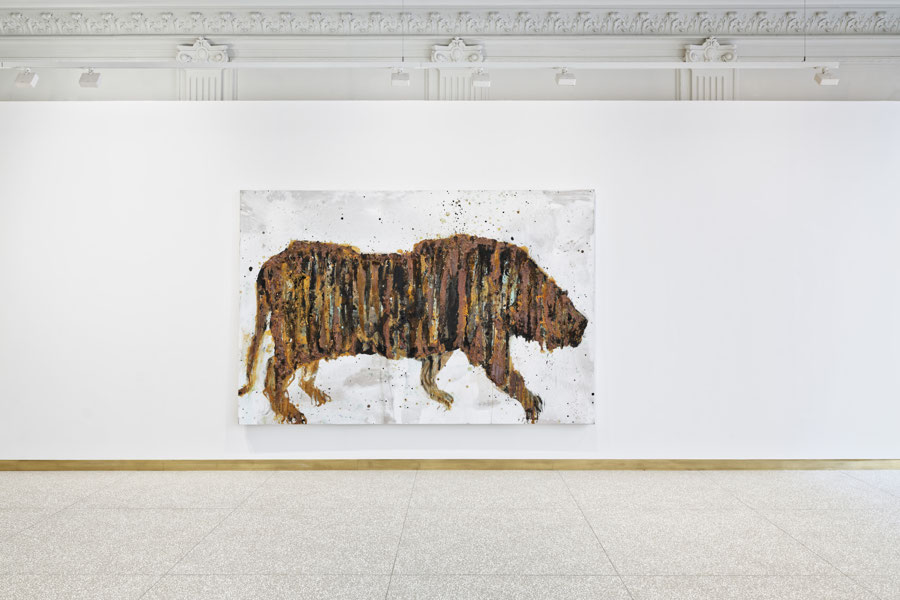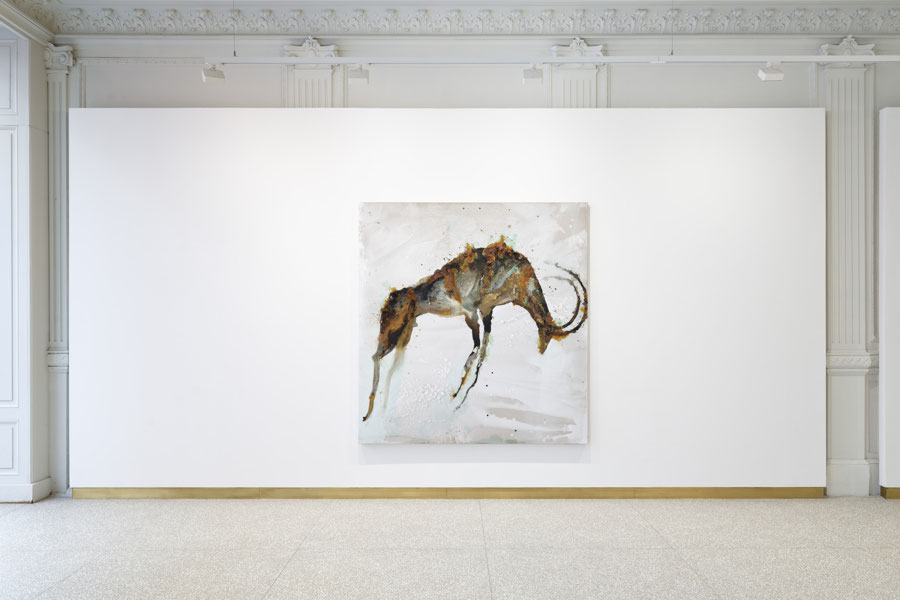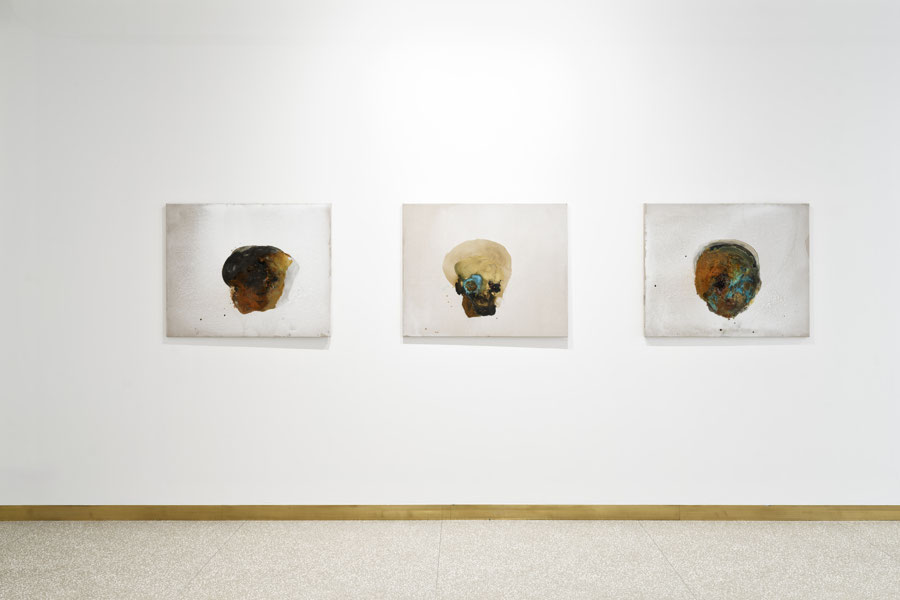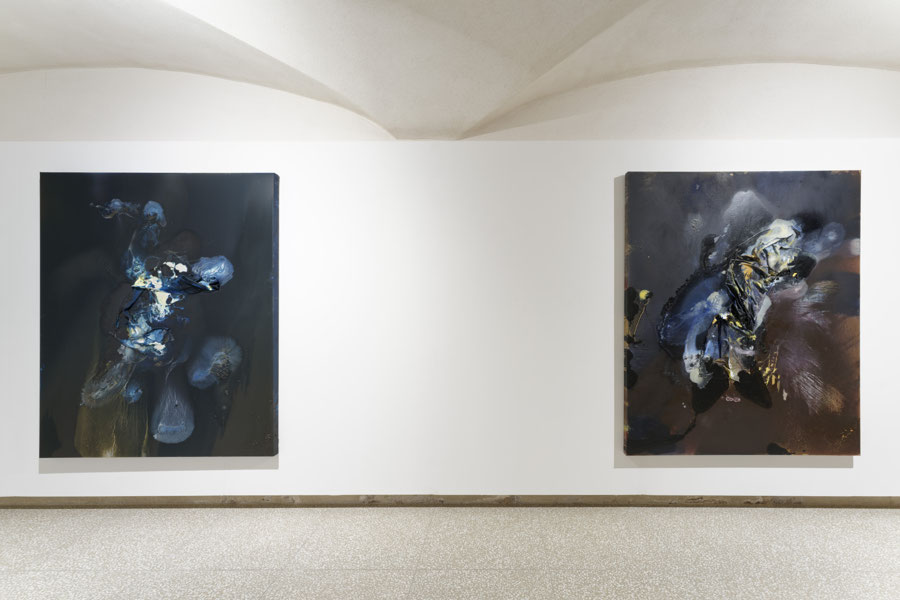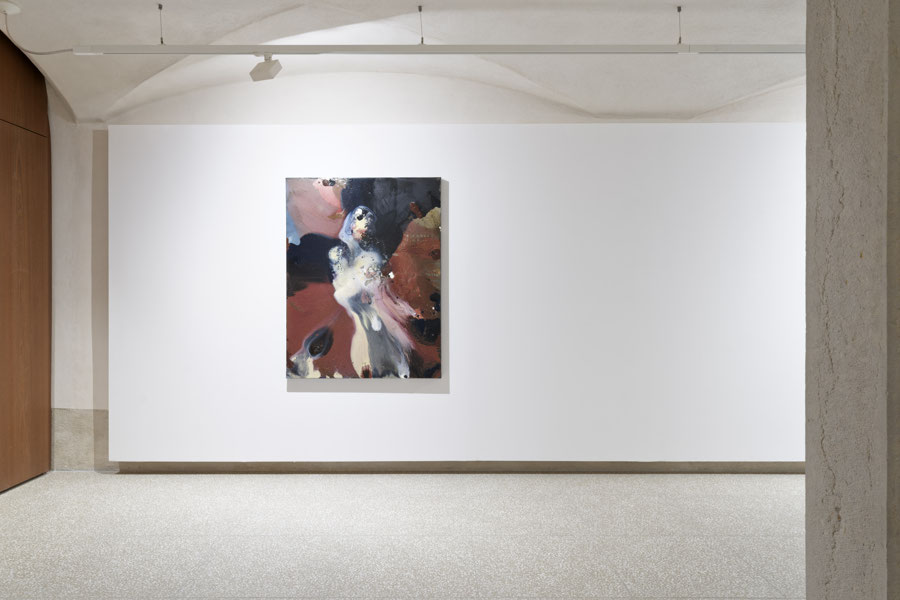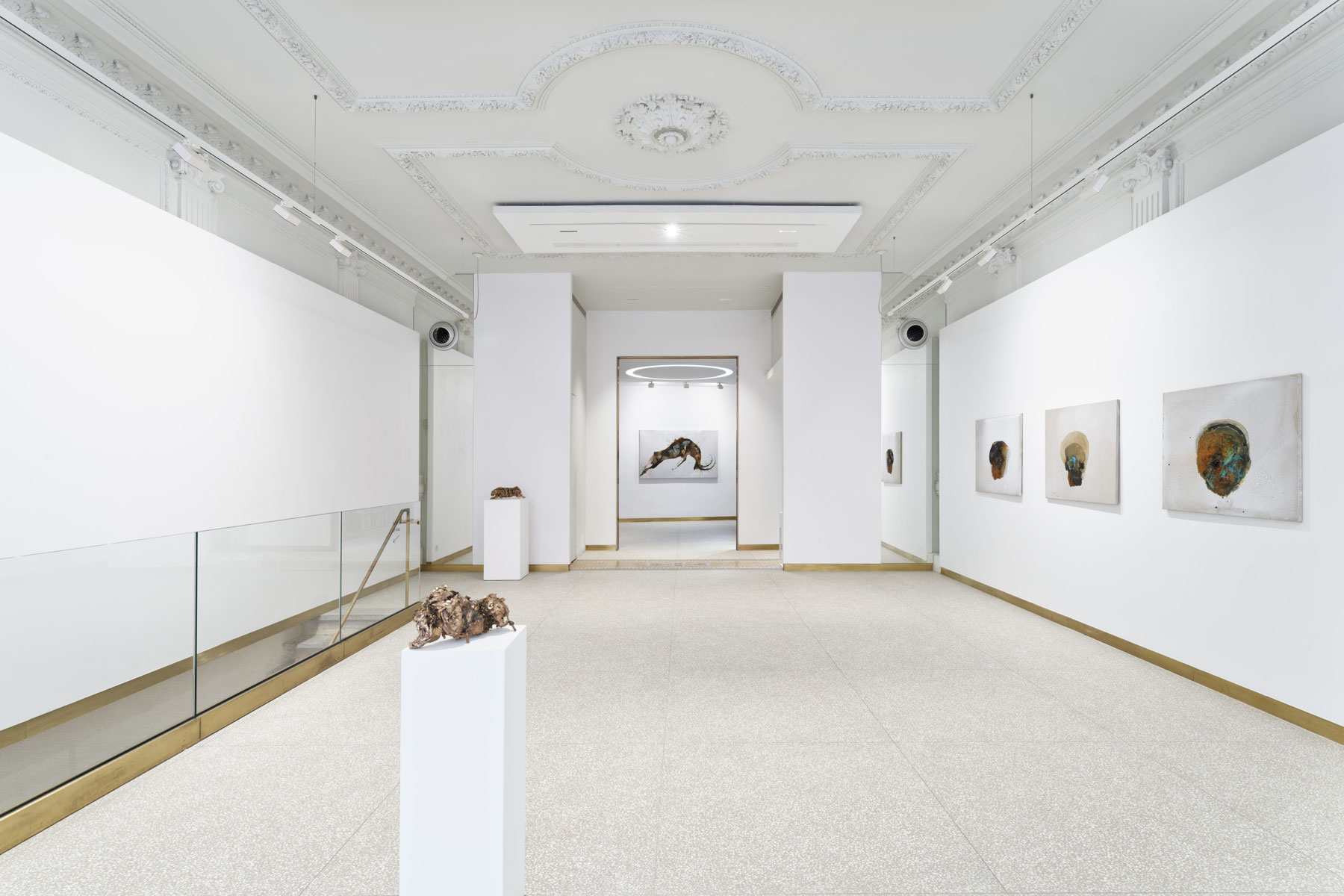
Ceysson & Bénétière Lyon presents Apparitions, an exhibition dedicated to Lionel Sabatté, from September 17th to October 24th, 2026, on the occasion of the 18th Lyon Biennale of Contemporary Art, themed To pass from one dream to another, as part of the Résonance program. Through a collection of previously unseen works, the artist explores shifting territories where the boundaries between matter, memory, and apparition become porous. Between the disappearance and emergence of forms, Lionel Sabatté’s works open up a space of unstable perception, where each image seems to oscillate between multiple states of reality.
Sabatté, a blend of a late-blooming calling and a slow maturation—he began as a physical education teacher before attending art school, but upon graduating, he still did not know for what he was looking— Sabatté, then, exhibits the characteristics of those whose imagination has been stifled by a long period of dormancy and who, on the day they reveal themselves, present a world of unusual vigor and scope—like a spring under pressure that suddenly snaps free. One is reminded of Jean-Philippe Rameau, who bided his time for several decades only to truly come into his own at age 51, on the evening of the premiere of Hippolyte et Aricie, after which the great Campra, dumbfounded, declared as he left—a remark we still remember today: “In what I heard tonight, there was enough material for ten operas.” [...] In a body of work so vast and so rich in o!erings, it is crucial to identify the constants—the guiding principles—that give [Lionel Sabatté’s] work its profound unity. Foremost among these, we can highlight the choice to hybridize the organic and the mineral—two distinct, almost opposing realms, as Nicolas Lémery suggested in the late 17th century—on the one hand, the chemistry of living bodies, whether plant or animal; on the other, that of inert bodies, such as stones, and, beyond that, the study of metallurgy. [...]
From subway dust to dead skin, Lionel Sabatté transforms discarded materials into works that explore our relationship to life, the body, and humanity. This focus on the most humble materials forms the foundation of the profoundly humanistic dimension of his work. [...] The organic/mineral duality in his [animals], first modeled in wax and then, once the wax has been lost, transmuted into metal. Born of the organic, transformed into the mineral. Mineral, certainly, but representing the organic—and in two ways: first, because these [animals] are generic [animals] no more identifiable than the human portraits [in dust] were; but also because they are fundamentally shaped by the artist’s hand, who works them by grasping them as one might a small bird picked up from the ground or just as easily a tool—a bird-like mass, worked with tools and having become one of them—then hung on the wall of what is so aptly called a studio. [By changing] our perspective—and here we’ll be taking the term quite literally, since we’re talking about the view itself—more precisely, its focal length. This is yet another example of the tension between opposites that drives the work of Lionel Sabatté, who is said to be instinctive but is in fact a profound thinker about his own practice. The focal length... That’s the word Proust used when he protested against the claim that he used a microscope to observe his characters: we are mistaken, he corrected, it should have been a telescope. Yet this microscope/telescope dichotomy seems to us to be almost always at work in Sabatté’s art, renewing the dialogue between the whole and the part that every work of art offers a dialogue that often justifies the work itself and engages the viewer. [...]
Telescopes and microscopes also appear in Sabatté’s paintings, primarily because of the way they are made: infusions of minute structures, metallic or volcanic dust (pozzolan), solutions that the artist pours onto the canvas before bringing them to life with compressors whose airflow generates vast telluric, telescopic movements—volcanic or even interstellar explosions. A whole realm of hydrodynamics combined with aerodynamics—large-scale, high-speed fluid mechanics known to produce unpredictable turbulent structures: one of the most vast fields of contemporary science, where the main diffculty stems precisely from the coexistence of disparate scales that must be described from the largest to the most minute. It is also a challenge for the viewer, amplified by the size of the painting the artist chose for its installation at the Museum of Modern Art. Not content
with simply enveloping us, it stretches us and carries us to its very edges, starting from the sort of central magma formed by a silk fabric where everything seems to knot together and radiate outward. A crumpled sheet—organic, in fact—that served as a giant brush or spatula and remains there as evidence of this. [...]
The diversity of perspectives—ranging from the most well-founded to the most outlandish, yet all of which invariably strike a chord—is the test that seems to us the most revealing for exploring the mirror that every work of art holds up to us. If I had to say what it is about this work that moves me [...], it is first of all because it o!ers as much to see as to think about; second, because I recognize and admire in it an unwavering researcher’s approach—with its attempts, flashes of insight, and risks—and in this regard, one may not always follow along; finally, and perhaps most of all, for the chimerical horizon she has set for herself—intrepid, adventurous, and magnanimous—which can be summed up in a single word: others. This is what makes Lionel Sabatté, quite simply, one of us.
David Quéré,
Excerpt from the Prix Marcel Duchamp 2025 oral presentation