Louis Cane
Resonances
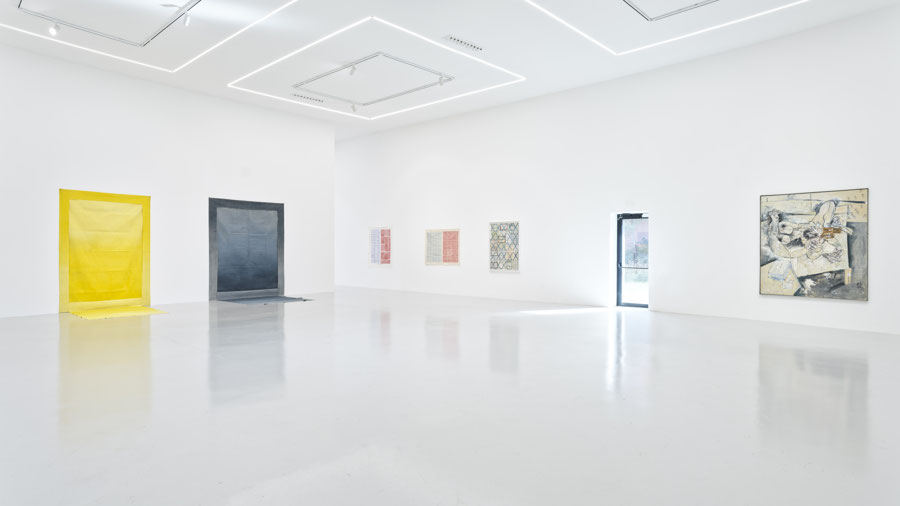
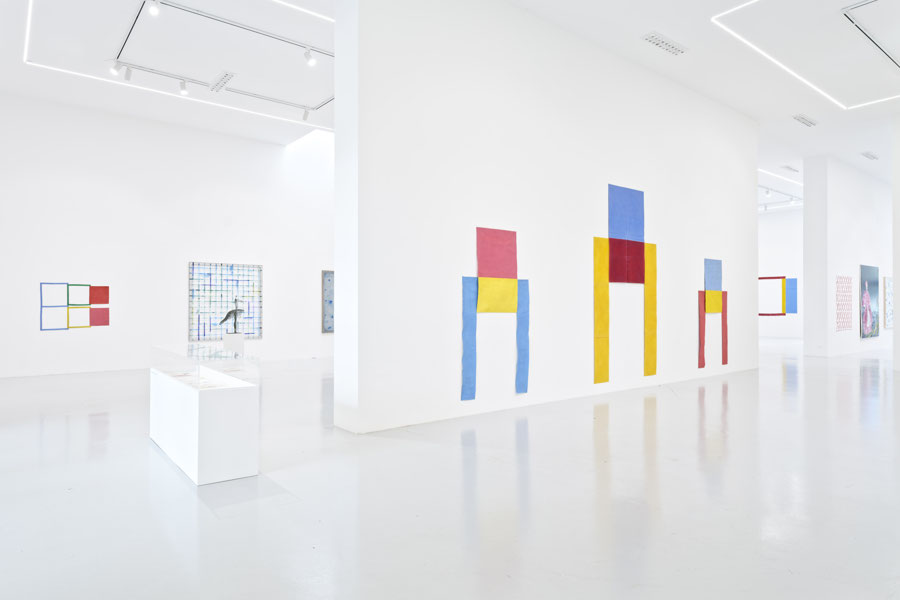
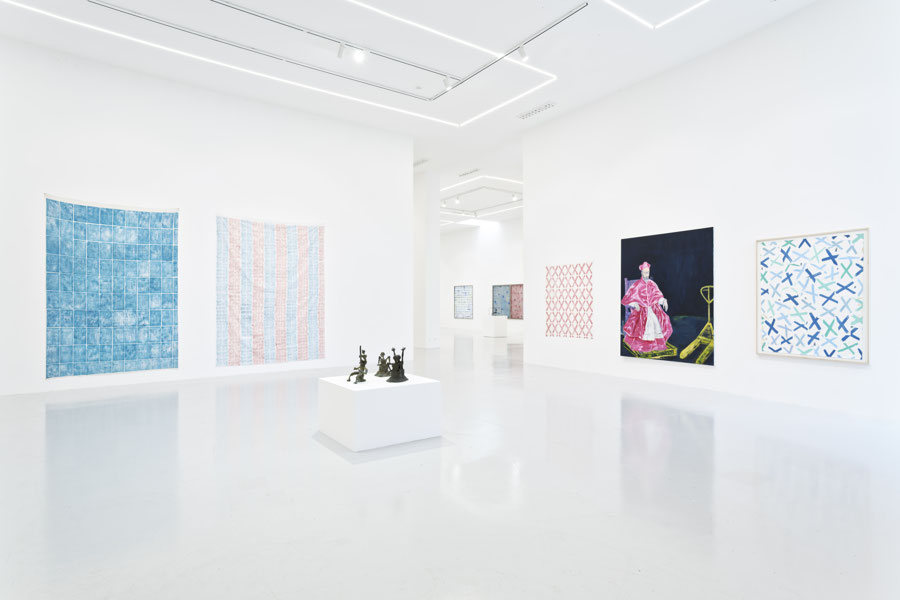
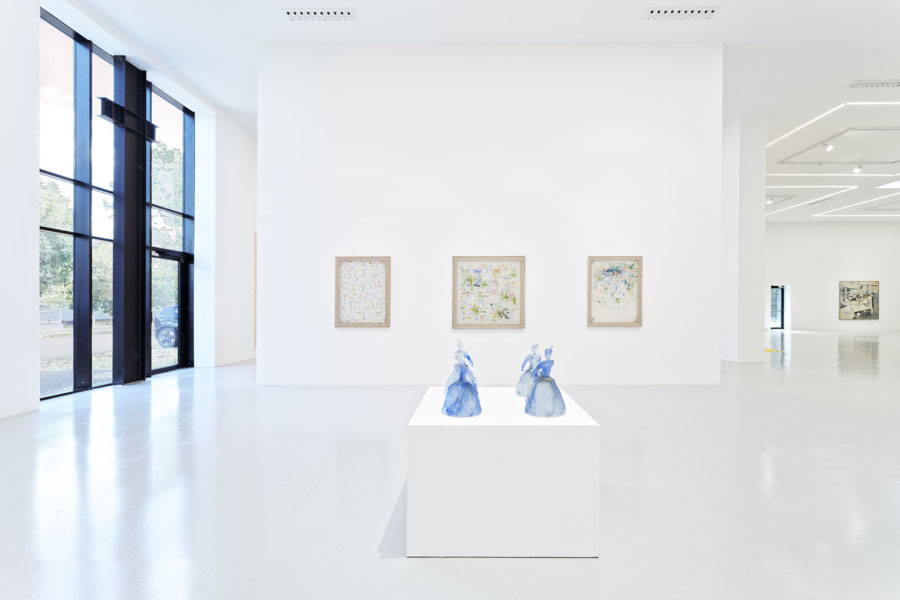
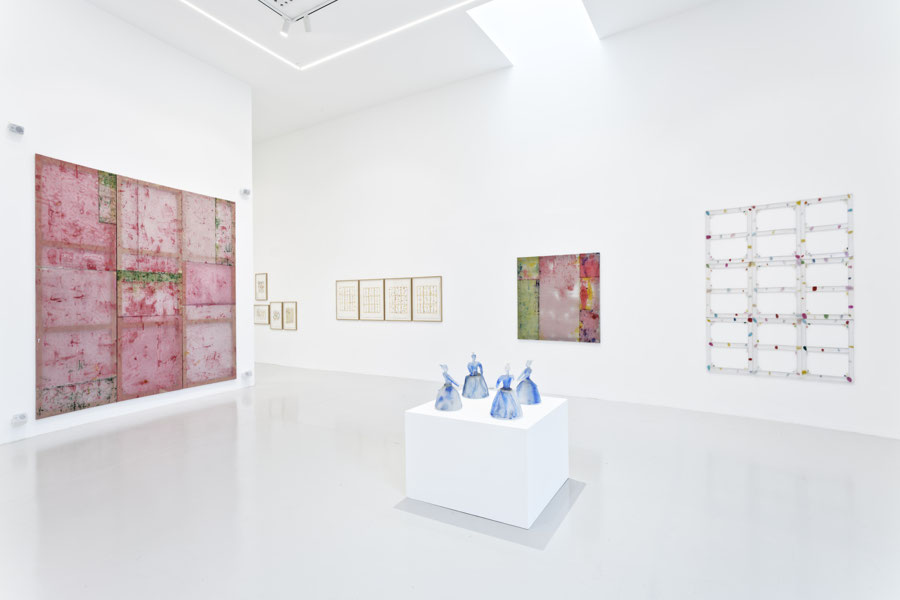
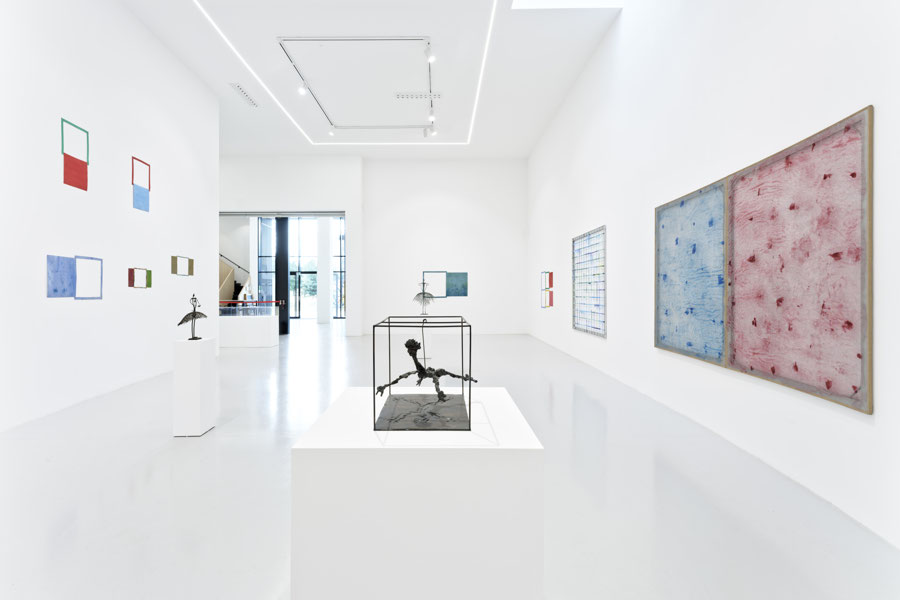
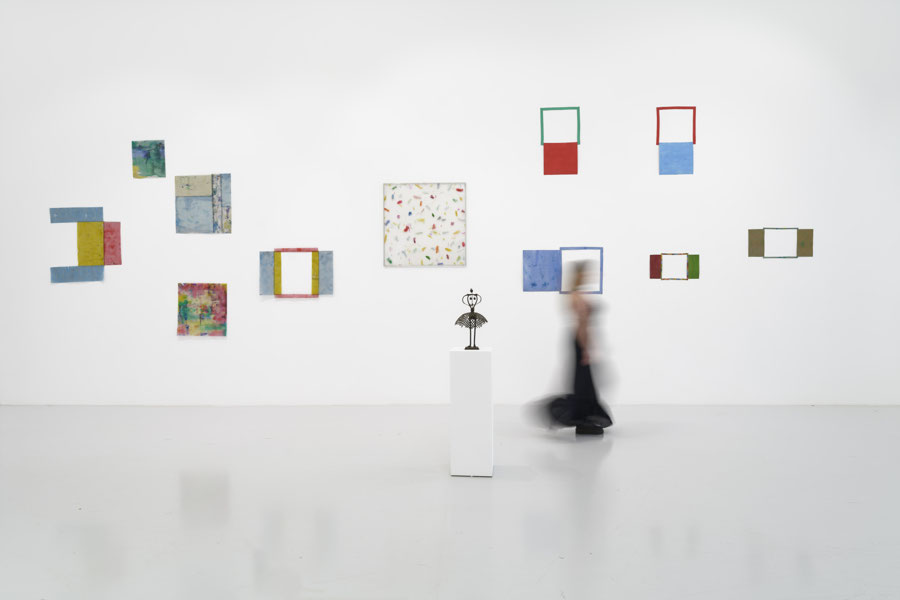
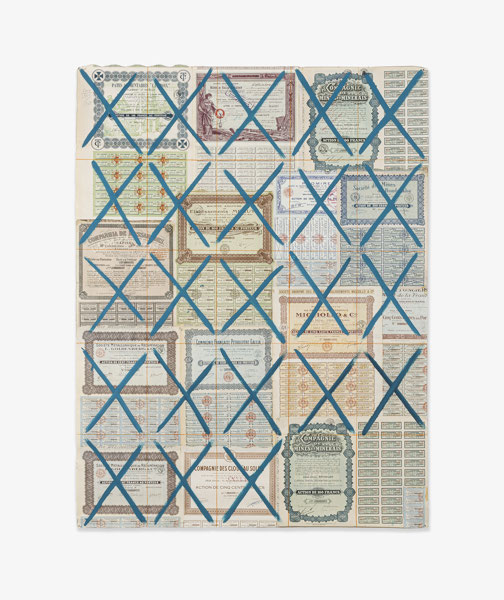
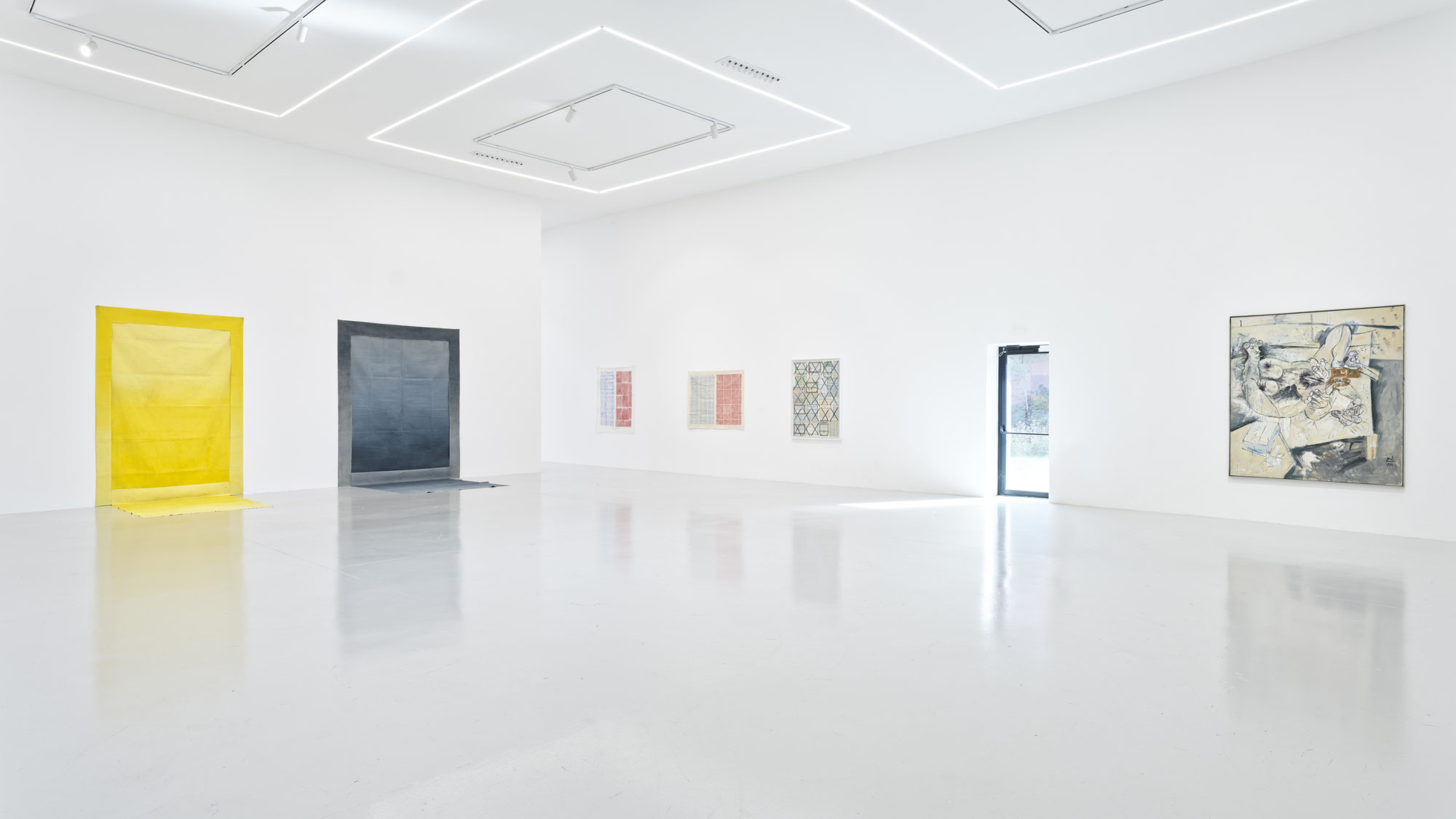
From September 18 to November 20, 2026, Ceysson & Bénétière Saint-Étienne is happy to present a solo exhibition dedicated to Louis Cane, one of the founding figures of the Supports/Surfaces movement. Entitled Resonances and curated by Antoine Py, the exhibition brings together about sixty works, spanning the 1960s to the artist’s final years of production and coming primarily from his studio. Through this exhibition, Ceysson & Bénétière offers a historical yet resolutely open-ended reading of Louis Cane: that of an artist who never ceased to challenge the limits of painting in order to renew its possibilities.
Louis Cane never painted to please. A founding figure of Supports/Surfaces, he began stamping the words “Louis Cane, artiste peintre” (“Louis Cane, painter”) onto his unstretched canvases as early as 1967: a brushless gesture, closer to writing or an administrative stamp than to the painterly touch. The signature becomes a process, repetition replaces expression, and the work asserts painting at the very moment it seems to negate it.
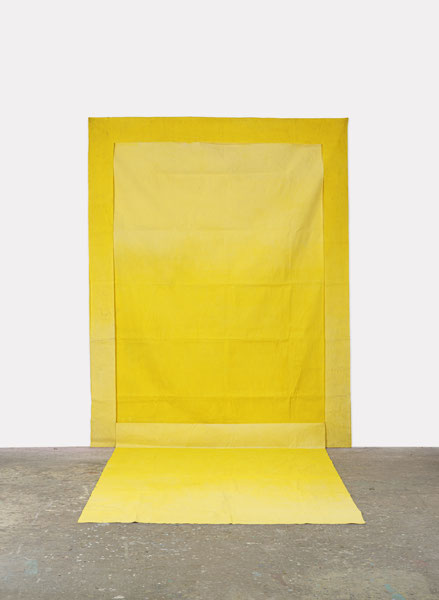
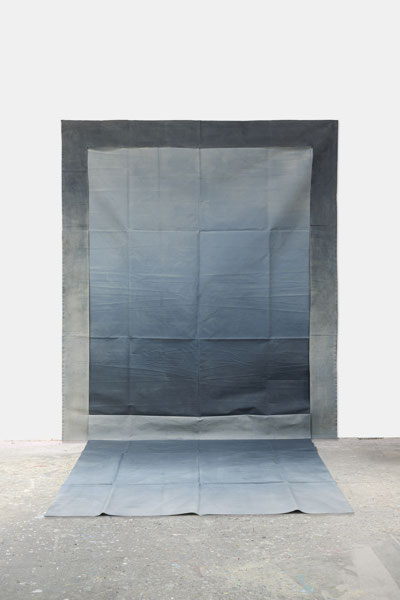
The cut canvases and Sol/Mur works quickly followed: canvas leaves the stretcher and spreads across floor and wall in a gesture of expansion. The painting ceases to be a frontal image to become a physical reality. Cane does not merely deconstruct it; he questions the very conditions that make it possible: the medium, the signature, the gesture, the relationship to the body, the experience of looking.
Recognition came swiftly. Between 1976 and 1977, the Louisiana Museum of Modern Art, the Centre Pompidou and MoMA each held exhibitions of his work one after the other. Cane exhibited with Leo Castelli in New York and Daniel Templon in Paris. His trajectory might have seemed clearly mapped out: to delve further into the Sol/Mur works, extend the possibilities of the cut canvases, and establish himself as one of the leading figures of a now internationally recognised French avant-garde.
Louis Cane chose the opposite path. He refused to let recognition turn his art into a formula. From the Sol/Mur works and arches, he moved on to Nativities, women giving birth, figures of authority, and direct quotations from Picasso, Velázquez and Monet. What French critics in the 1980s sometimes regarded as a repudiation of his earlier work now appears instead as the continuation, by other means, of a logic of critical appropriation already present in Supports/Surfaces. With the stamp, the artist played with first names; the Meninas revisited Picasso revisiting Velázquez; the Cardinals explored Bacon and then Velázquez; the Water Lilies transposed Monet into an experience of air, water, light and transparency.
The Resonances exhibition invites us to read this succession of ruptures for what it is, and not as a series of contradictions: a continuous stream of energy. The works do not simply follow one another through time; they echo, transform and illuminate one another. An intuition born in the 1960s can thus resurface decades later in a painting on wire mesh, a resin work, a sculpture, or a reference to art history.
Two works serve as the common thread of the exhibition: Rebellion, which reveals the driving force running throughout Cane’s career, and Through, in which painting opens itself to air, light and space.
REBELLION
Rebellion traces the reversals and changes of an artist who, in Marcelin Pleynet’s words, embodies “the avant-garde as a contradiction of avant-gardism.” In 1970, Louis Cane handed out leaflets denouncing the “genius prize” at the entrance to the Supports/Surfaces exhibition opening at the ARC; only a few years later, celebrated by the very institutions whose authority he had questioned, he chose quotation over self-repetition. For Cane, quotation never meant submission: it meant appropriating something in order to bend it in another direction, summoning the masters only to shake them up.
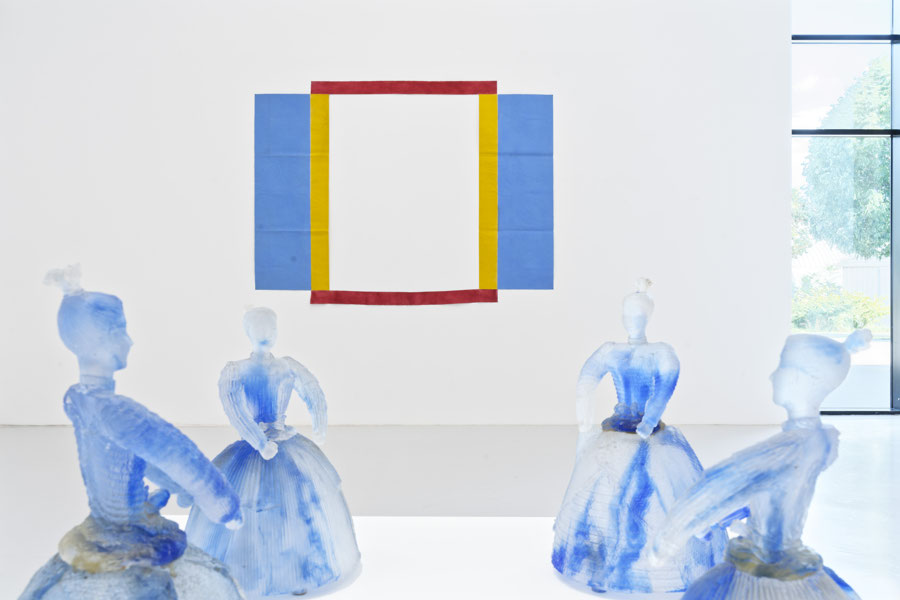
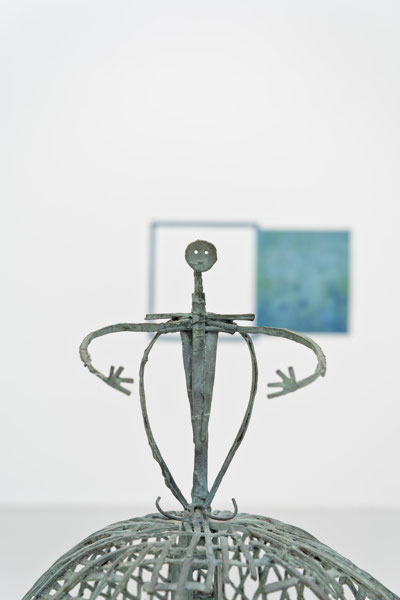
This rebellion also engages with the body, history and power. In the 1980s, his return to figuration scandalised a section of the French critical establishment. Nude women, crouching figures, women giving birth, bodies that stares at the viewer: Cane introduced into the image a tension that abstraction -which had, by then, itself become a confort zone- could no longer always confront. Sculpture extends this energy into space, from Apollo to the Meninas, from Venus with crinoline II to bodies carrying weight or held in tension. Bronze, plass paste, resin: sculpture is not a parenthesis in Cane’s practice, but pursues, by other means, his enduring investigation of form, history and the figure.
THROUGH
Through explores another dimension of this research: transparency, passage, and the opening of painting onto something beyond. From the 1990s onwards, the Water Lilies no longer refered solely to Monet’s motif, but to a way of thinking about colour, matter, emptiness and atmosphere. Wire mesh, ordinarily used to protect or enclose, becomes a pictorial surface: what was once a barrier becomes an opening. Its grid allows the gaze to pass through; emptiness enters into dialogue with colour, while resin diffuses a soft, almost liquid light.
In the Water Lilies, Cane does not revisit Monet in the literal sense. Rather, through different means, he recaptures that fusion of air, water and reflection, making transparency itself a principle of construction. The cut canvases opened up the plane; the wire-mesh works perforate it. The Sol/Mur pieces brought the work down into the viewer’s immediate space; the resins and transparent structures suspend it within air and light. Here again, this is not a return, but the reopening of a question: how can painting move beyond itself while continuing to test the limits of its own possibilities?
Antoine Py, curator of the exhibition
The exhibition is accompanied by a bilingual French-English catalogue featuring texts written by Rachel Stella, Antoine Py, Pierre Passebon and Bernard Ceysson.