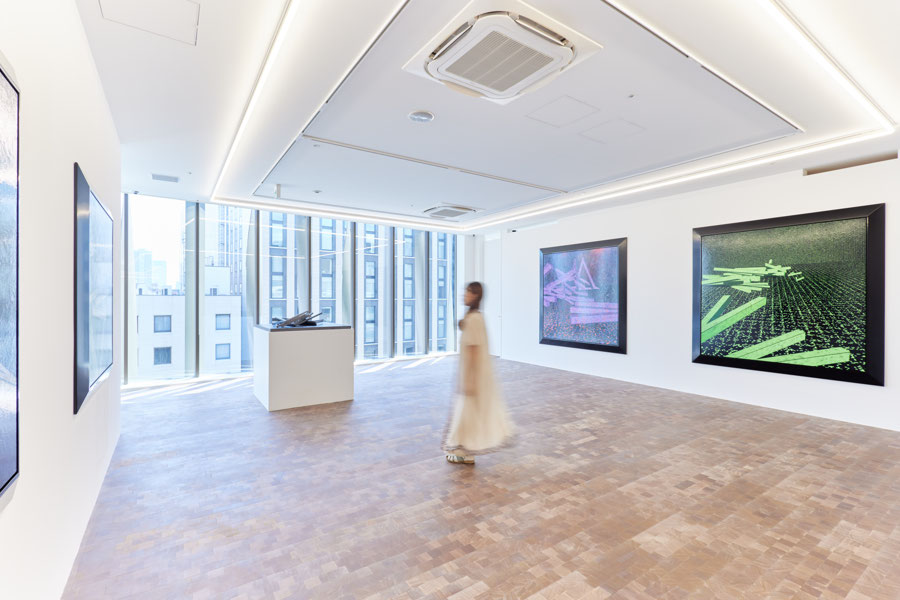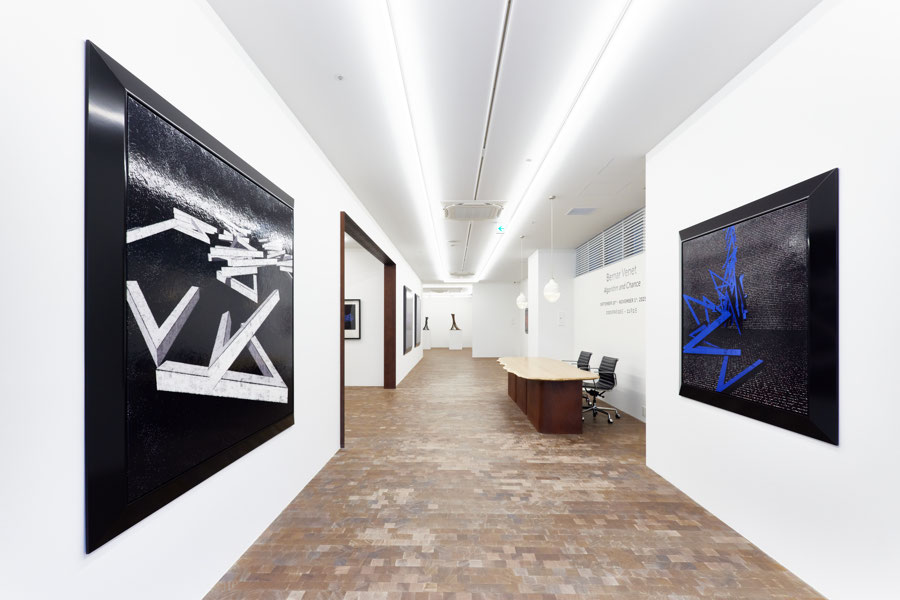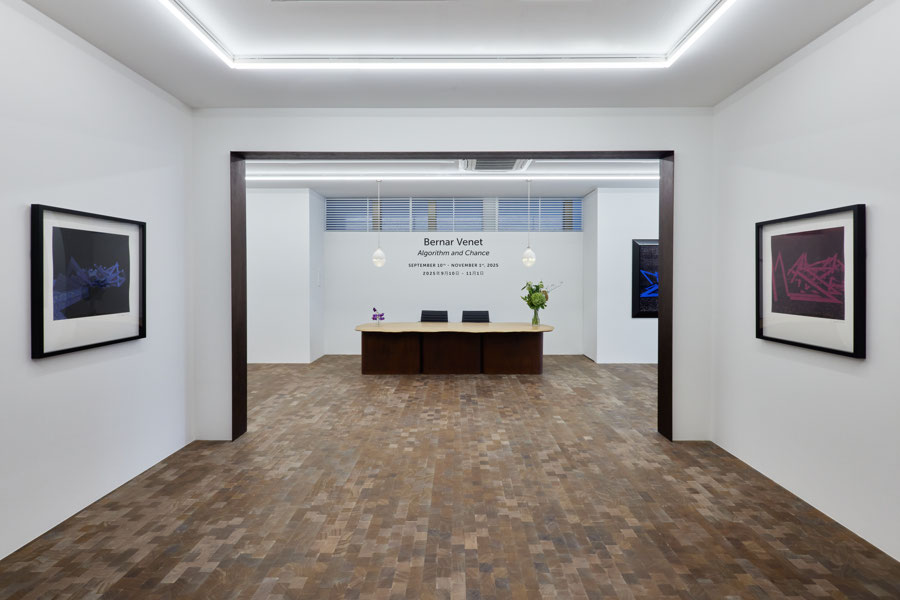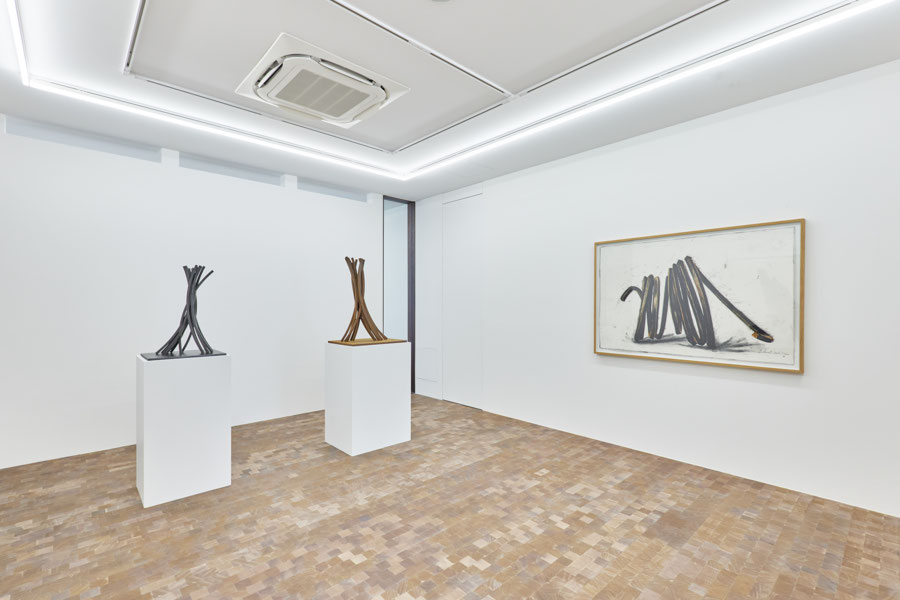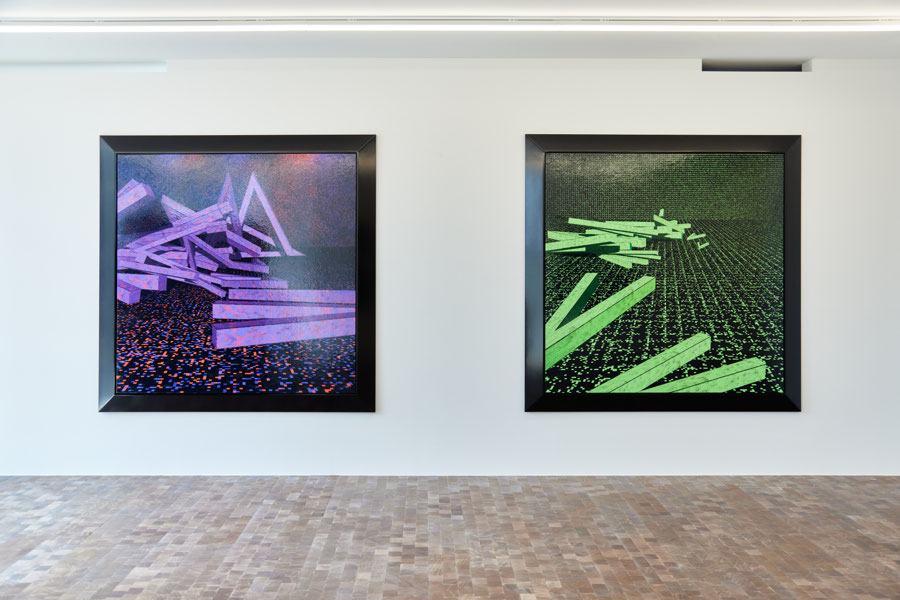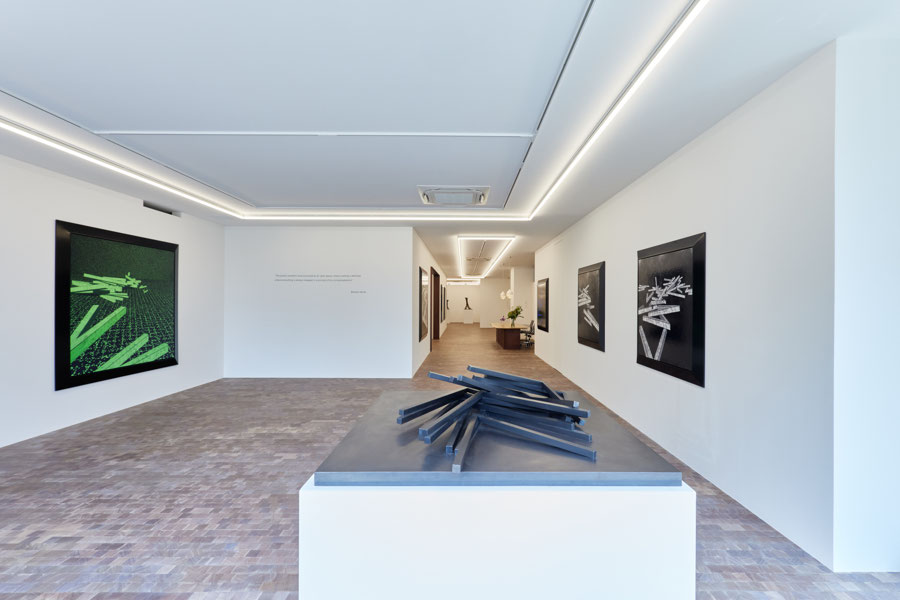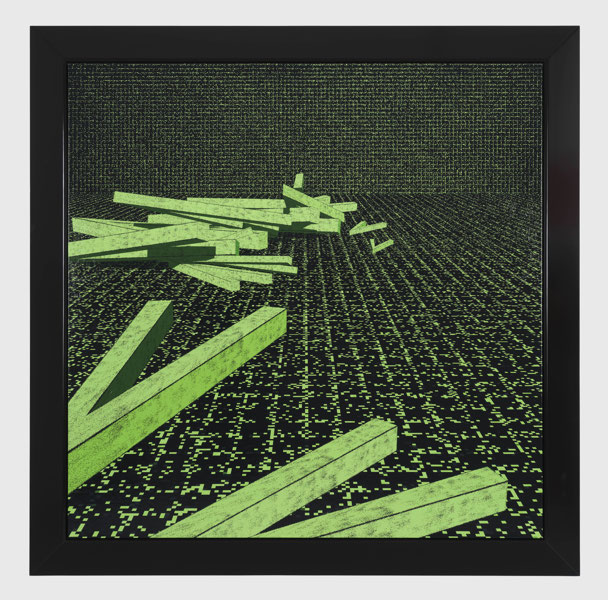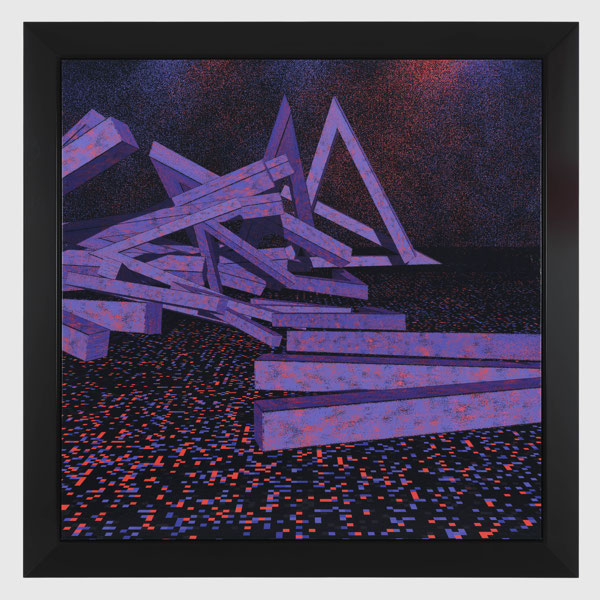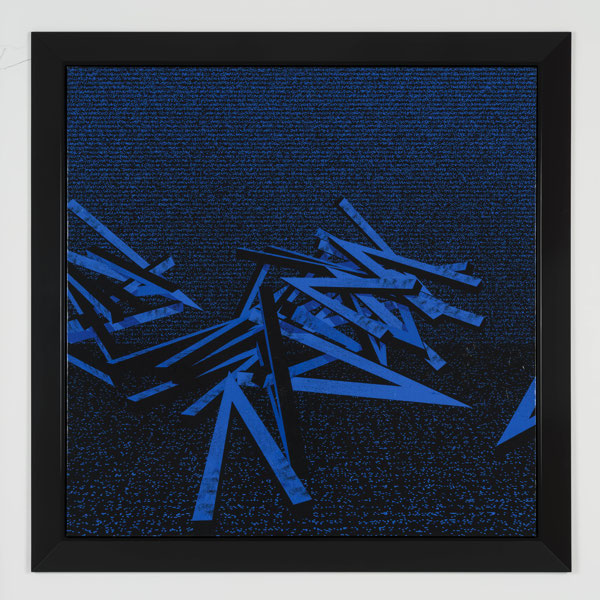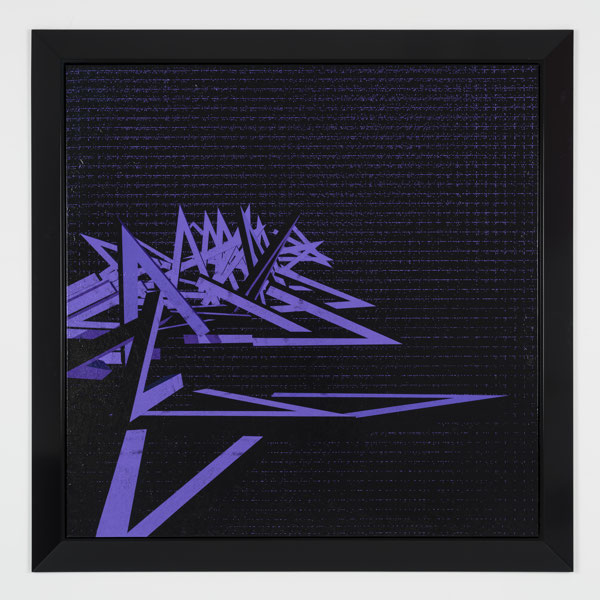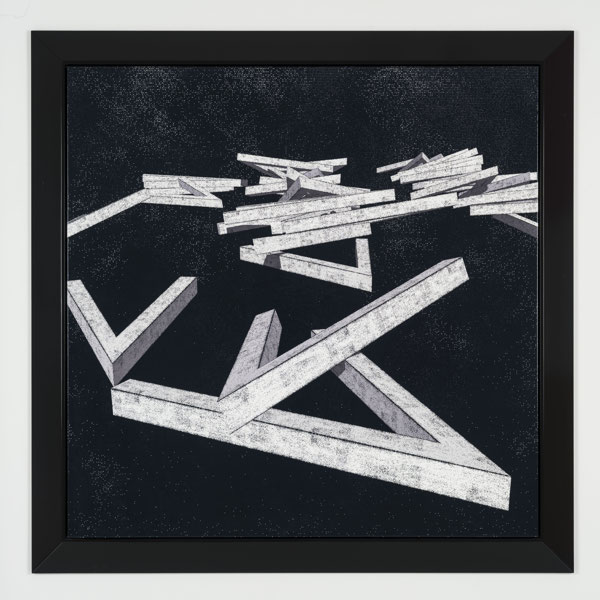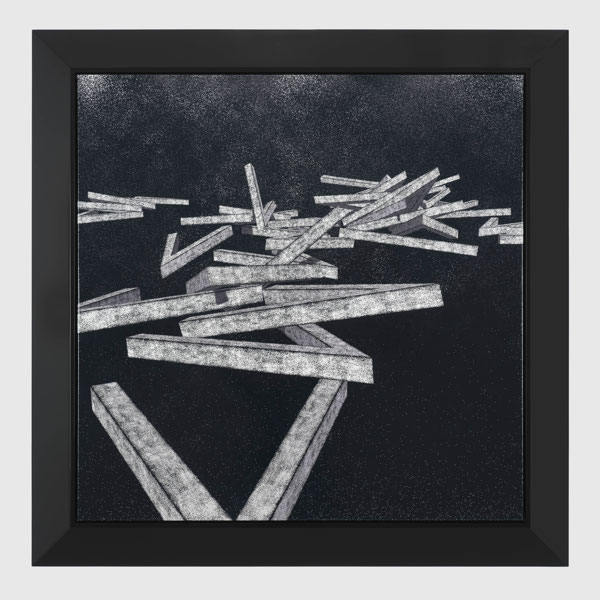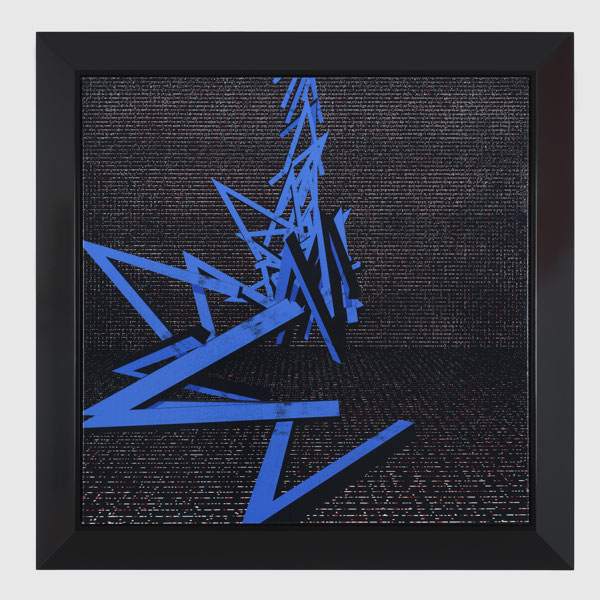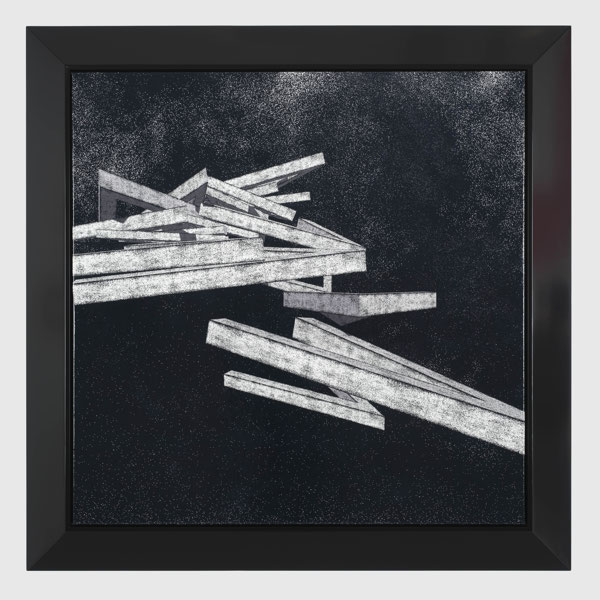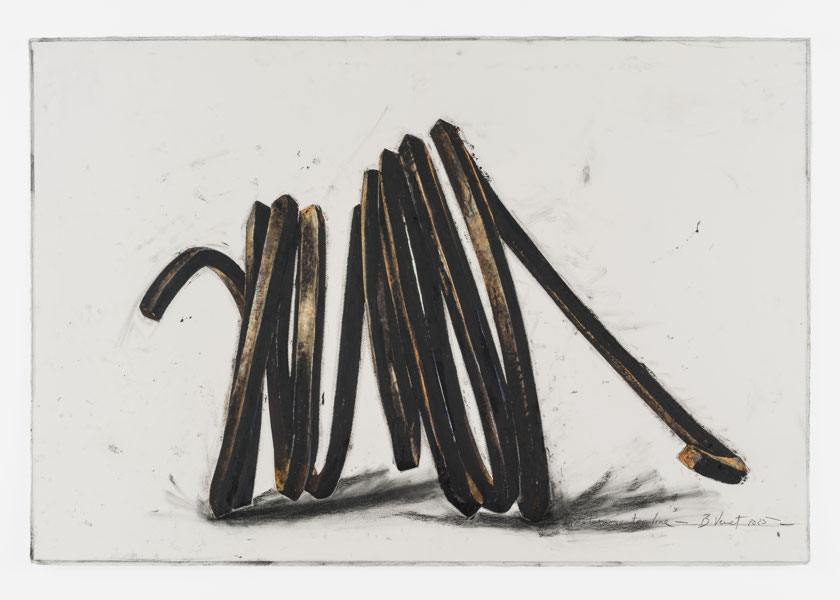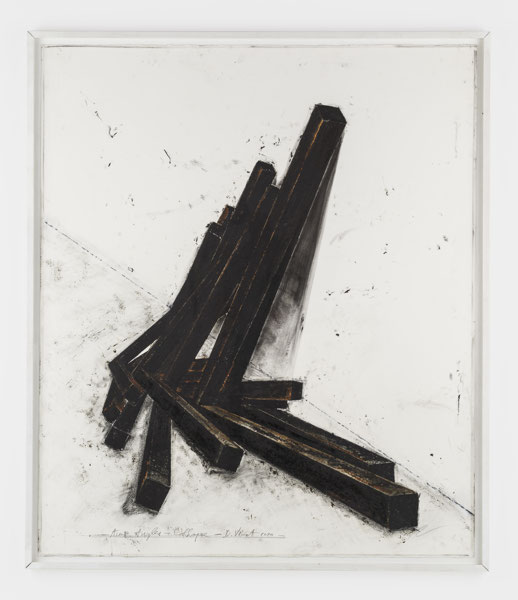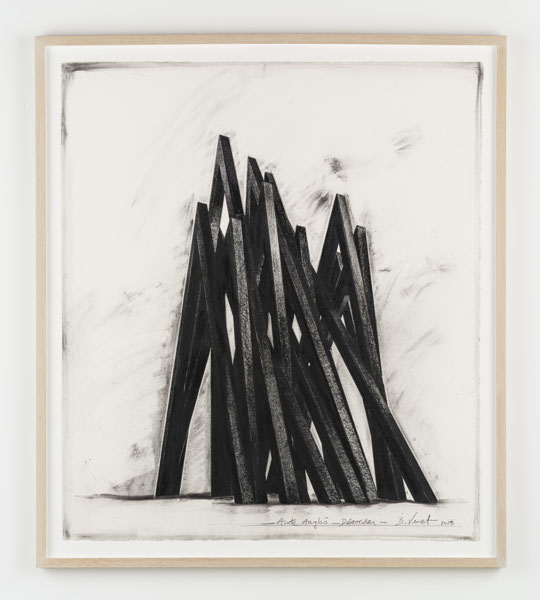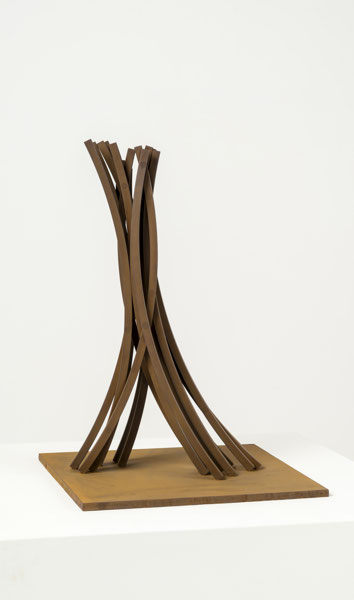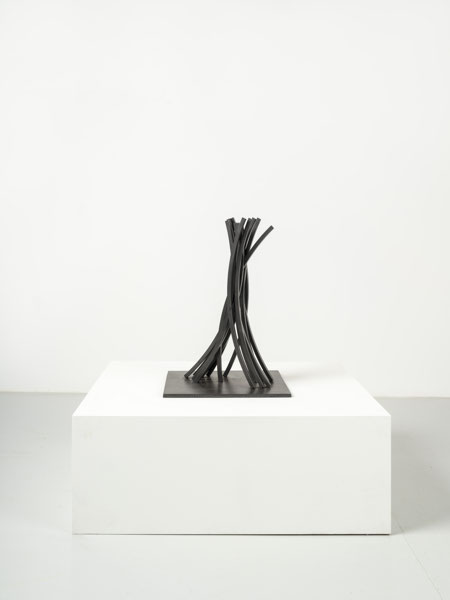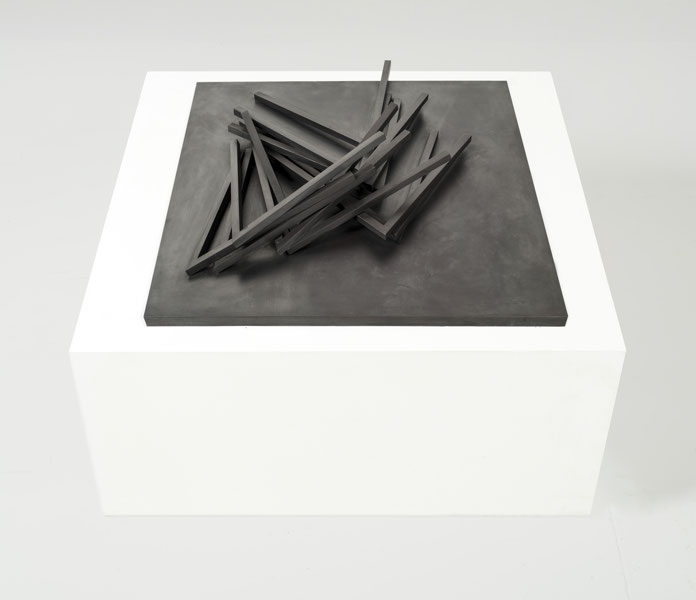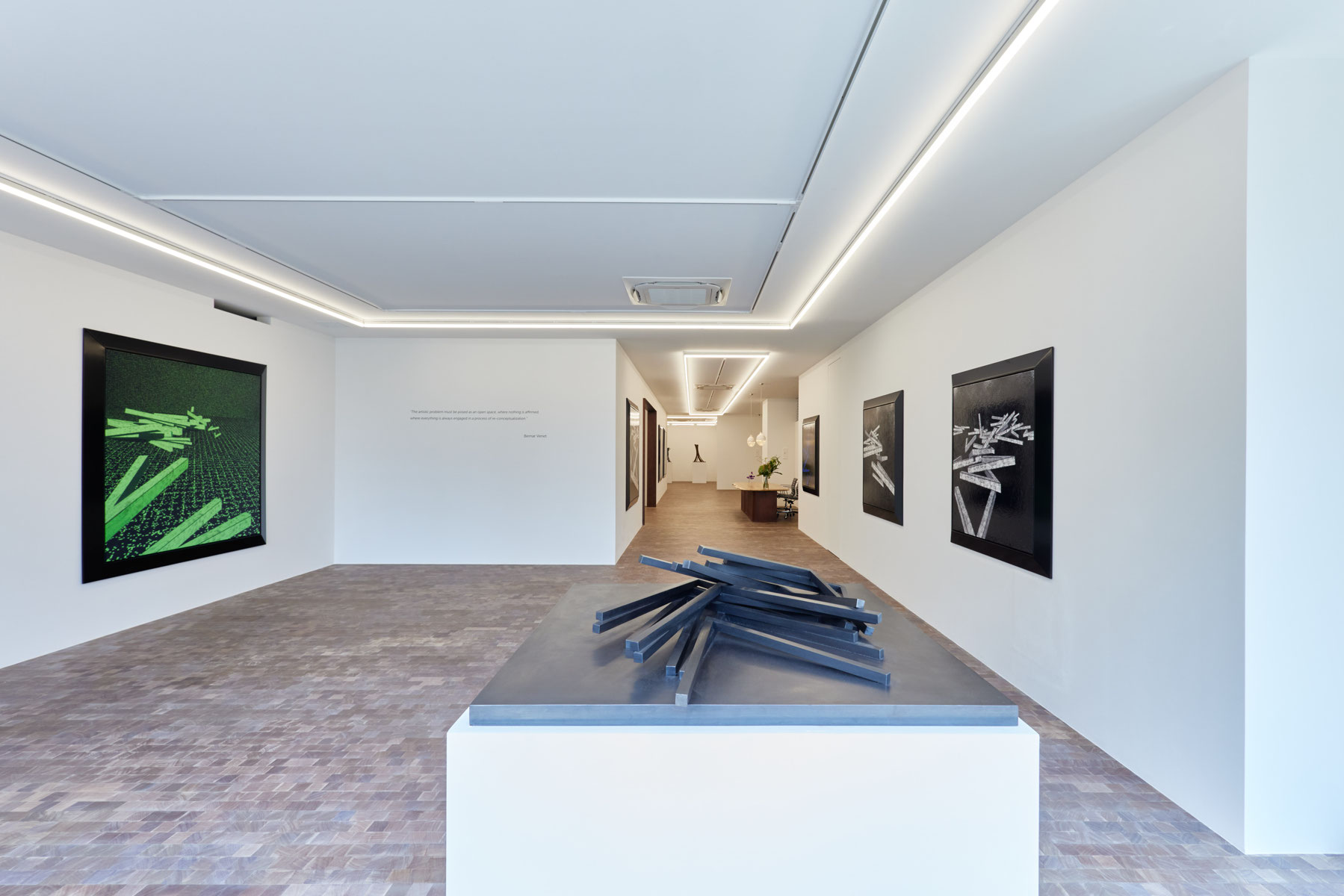
Ceysson & Bénétière Tokyo presents, this September, its second exhibition in its new space with a previously unseen selection of recent works by Bernar Venet. Titled Algorithm and Chance, the exhibition marks a new stage in the ongoing research of an artist who, for over sixty years, has been challenging the very foundations of art.
These new paintings, stemming from a generative process, reactivate a familiar form in Venet’s work: the Angles, which have appeared since 1976 in his canvases, wooden reliefs, and steel sculptures. “Subjecting these forms to the digital experience represents a new step in my ongoing effort to question everything,” he explains. By collaborating with programmers, Venet explores the potential of algorithms to produce images that are unpredictable yet rigorously constructed.
This use of code extends a long-standing logic in his practice. As early as the 1960s, Venet developed the “principle of equivalence”: conveying the same content through different media. Painting, sculpture, performance, sound, and text all contributed to the same momentum. The use of digital tools today simply continues this coherence, anchoring it in contemporary technologies.
“Generative art represents a new field of experimentation for me,” Venet states. In it, he finds a sense of freedom, randomness, and entropy, a concept borrowed from physics that measures the disorder of a system, which he transforms here into a creative force. Already central in his Piles of Coal, Accidents, and his piece exhibited at MoMA in 1970 during the Information show, this idea allows the artwork to become unstable, evolving, and always open-ended.
By rejecting style as a form of personal branding, Venet has always emphasized the importance of context and content over form. This recent series continues that foundational gesture, opening the work to a generative, evolving, and resolutely contemporary dynamic.
Bernar Venet was born in 1941 in Château-Arnoux, France. He lives and works between Le Muy and Paris, France. His work, exhibited in major institutions such as MoMA, the Centre Pompidou, and the Guggenheim, has made a significant impact on the history of conceptual and minimal art. He is also widely recognized for his monumental sculptures installed in public spaces around the world.