
“He’s waiting for the age of mathematics to come!”
Louis-Ferdinand Céline, Journey to the End of the Night
“- Not virtual.
- Without illusion.
- Without appearance.
- Nor metaphor.
- Self-referential.”
Bernar Venet
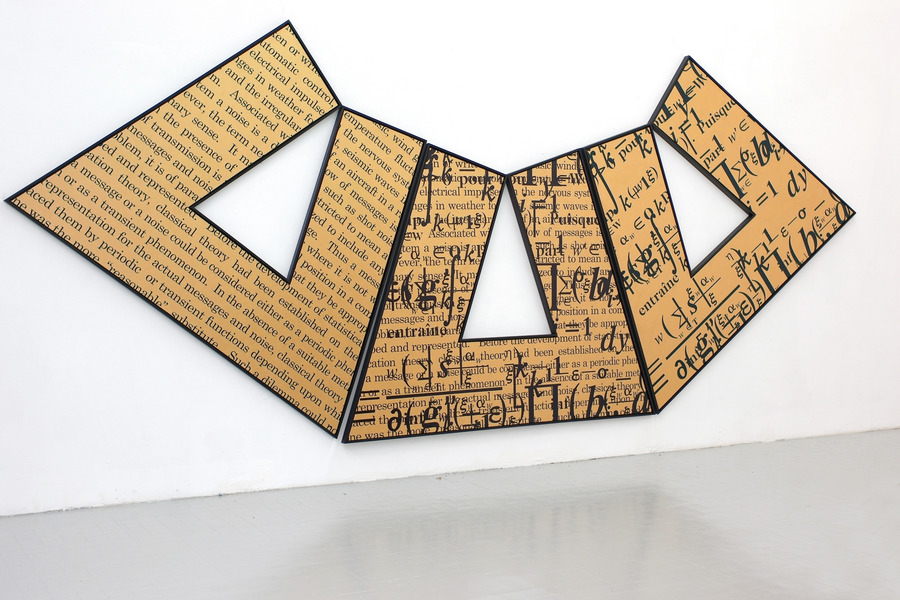
This poem of five verses by Bernar Venet serves as a statement. In four negations and one affirmation, the artist describes himself as well as the body of his work in its entirety. To paraphrase Raymond Queneau, we might see in this a small portable cosmology connecting the part (the poem, the painting, or the film) with the whole. Moreover, if we weigh the range of forms his artistic expression has taken, we cannot help but recognize both the intellectual discipline Venet has subjected himself to, and the great coherence that underpins his oeuvre, from its early days to the present: tar paintings done on canvas, paper and cardboard; industrial paintings on cardboard; black mirrors; representational outlines for future works of art; industrial drawings; mathematical formulas painted out on canvas; photographic blow-ups and photographs; artist’s books; shaped canvases that display a spare aesthetic; reliefs done in wood and steel Scribs; sculptures in steel and Cor-Ten; and after 2000, MRI images; paintings of mathematical formulas and saturations over coloured backgrounds of yellow, blue, red, golden brown, pearl and copper, along with shaped canvases based on these same diagrams; not to mention the films, musical compositions, stage sets and choreographed ballets. Within frameworks that he defines in these terms, “Not virtual/Without illustration/Without appearance/Nor metaphor/Self-referential,” Venet has developed a series of artworks whose value is reinforced by his tendency to work across disciplines. This drive to break down boundaries borrows from Edgar Morin the notion of complementarity, which points to an understanding of the complexity of reality. As an artist-theoretician, Venet has built up an oeuvre in a counterintuitive way to such a degree that each element makes sense, each comes to validate the reasoning and existence of the preceding ones. We must recognize, along with Brian O’Doherty, that “each of his works delivers a patent of inevitability.”
Looking over fifty years of activity since 1961, I realized that it was essential to go back over the principles which Venet grounds his work in and which continue to govern the design of his paintings and sculptures today. The present text aims to provide the keys, the main constituent elements, with a number of supporting statements by Venet and some of the critics who have commented on his work.
The rejection of easy communication
There was first a symbolist period that saw a number of enigmatic figures filling the centre of abstract paintings that feature coloured backgrounds layered over each other. Immediately after this, in 1961, when he was barely twenty years old, Venet tackled a type of unichrome abstraction, that is, using a colour that stands out from the background (the white of the paper support or the ochre of the cardboard one), which was then followed by monochrome painting (i.e., abolishing the distinction between content and form), where black predominates.
Several kinds of works were explored almost simultaneously by Venet starting that same year, 1961. These made use of tar or rubbish, and shared a number of points in common, including the artist’s utter detachment with regard to the composition, an extreme rejection of expressivity, and a fondness for the colour black.
For Venet, “isn’t the ideal of black, from the point of view of content, one of the most profound trends in abstraction? …Black is the rejection of the taste for easy communication—a desire to show one’s difference. Perhaps, too, as in the work of Ad Reinhardt, it’s a fundamentally puritan gesture… Note my complete lack of interest in colour… which I associate with the idea of enjoyment, sensuality, immediate pleasure. Life can be voluptuous, but art has to be ascetic, and if it creates happiness, it is the happiness of knowledge.”
The production of a work of art now existed in a kind of conscious staging that was no longer limited solely to the framework of the support, but lay in movements that escape from the painting. The process is revealed in photographs shot in the artist’s Tarascon studio, which betray a certain urge for mise-en-scène, just as in later performances Venet would invite an audience to watch his Collapses.
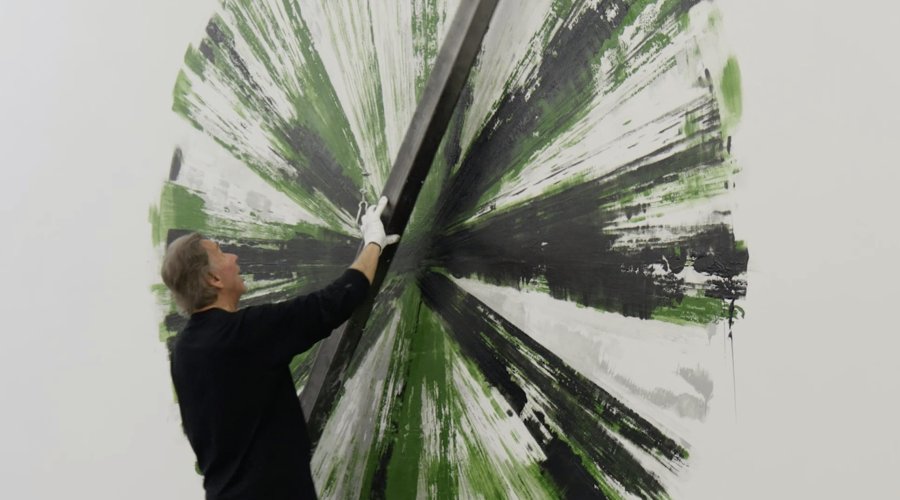
The art created in 1961, the tar pieces on paper and the Rubbish works (these feature paint spills on cardboard), sometimes has an expressionist look, although it clearly displays its rejection of the composition and sophistication one sees in a work of art by a craftsman artist using preparatory studies and traditional instruments like easels, brushes of all sizes, and so on. While the lyrical abstract artists Soulages and Hartung were striving to renew the tools that can be used in painting by employing scrapers and rakes, the young Venet was making clear his direct connection with the support. A sheet of paper, for example, would be laid on the floor and paint spread randomly over it, blindly kicked around until it covered nearly all of the surface, revealing long traces of the arch of the foot as it dragged the pigment over the support, as in a piece by Kazuo Shiraga. In addition, on the floor of his studio in Tarascon, which was located up in the attic of the barracks where he was completing his military service at the time, Venet also spread out several sheets of paper, which he proceeded to mark with a streak of tar while running alongside the paper strip. He then declared himself “the fastest painter in the world.” The French artist Ben tells the story this way, “I take five canvases, line them up on the ground next to each other, take my brush, dip my brush in paint and splatter in a single gesture all five paintings in a tenth of a second, which makes two hundredths of a second for each one; there’s nobody faster than me.” This flash of activity excludes from the outset any idea of conscious composition. Associated with an engaged temporality, these works recall Robert Morris’s series of blind-time drawings, which he began producing in 1973 while wearing a blindfold and attempting to estimate the time accorded to each piece. The same rejection of composition is involved in the work of both the theorist of antiform and Venet.
Multiform monochromes
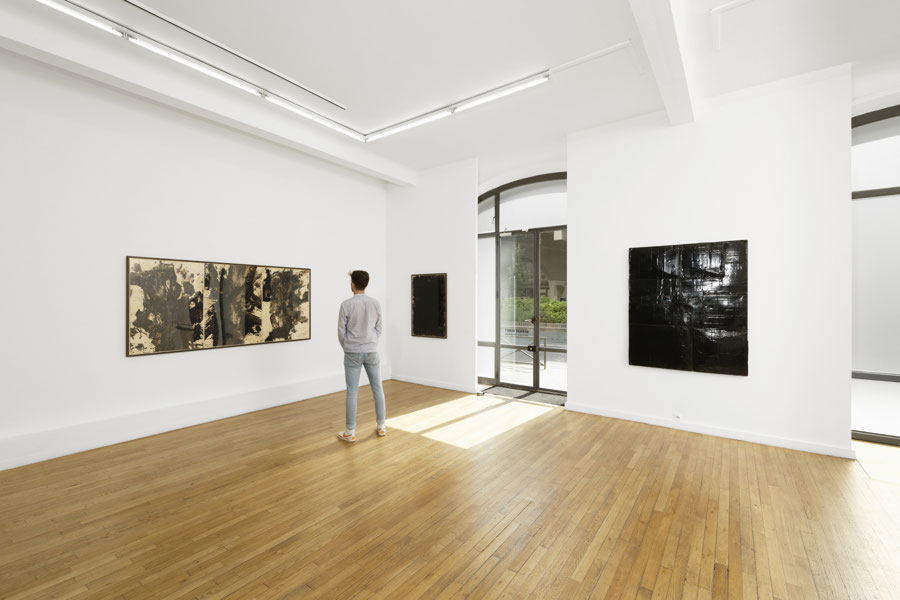
The experience that pointed Venet towards the use of tar for its own qualities was his discovery of a tar flow: “It was in Tarascon in the South of France, when I was doing my military service. One day, during a walk near the barracks, I discovered a site that was peculiar in that it had been dug out of the ground. Down one [of the cliffs], a huge amount of tar had been poured… It wasn’t long before I got some tar from the local highways department… The density of the tar especially interested me.” Although the support was laid out on the floor for the drawings mentioned above, it was soon placed upright to bring the weight and viscosity of the material into play. Having reduced the distinctions between content and form in the pieces he painted with his feet, Venet now reduced his intervention in the painting process by enlisting the metamorphism of tar, that is, its capacity to self-generate the form of the artwork, a particularity that was all the more complex precisely because tar was selected for its mutable qualities.
The “pigment” in this case was uniformly spread out using a scraper while the canvas was laid out horizontally. The canvas was then set upright and positioned by the artist in the same way that Morris Louis would let glycerophtalic paint run in thin stripes down a monochrome white background. Covering the canvas, the tar allowed several zones of differing thicknesses to show through, where the material solidified on its oozy way down the surface. But unlike Louis, Venet rejected any and all compositional considerations and intervened only minimally. Rather, he brought into play the combination of gravity and the tar’s nature. Tar is an active material in that it never really dries completely, unlike traditional paint, and springs back to life when moved, subject to the conditions of its conservation. Tar “doesn’t dry easily and has a life of its own for a long time; it continues to move and becomes soft again, according to the ambient temperature.” Should high heat soften the tar, for example, the process will start up again, and will do so forever. Although they are usually imperceptible to the naked eye, such variations can be observed over the long term. With such changes occurring outside the timeframe of the exhibition, these works, independent of the artist’s control, take on their meaning over vaster periods that are more akin to geological time. The creature escapes its creator. The notion of self-referentiality, which runs throughout Venet’s work and is already present in the above pieces, is pushed to its furthest extreme here. The part played by gravity puts one in mind of mass, moreover, the mass of the artist’s leaning arcs or collapsed sculptures, where gravity becomes the main actor of the piece, bestowing on the steel bars the freedom of the piece’s self-realization, just like the tar on the picture.
The form of the painting
Cardboard in Venet’s work, on the other hand, gives rise to a reflection that is inherent to the fleeting quality of the support. Initially he used it in his Rubbish series, works whose surfaces were spotted with tar drips. Evoking the passage of time, Venet considered these pieces short-lived things that would eventually disappear. The very permanence of the work of art was called into question, for the Rubbish pieces would eventually come to bear the wear and tear of time, accidents which they, consenting victims as it were, would be subjected to. There can be no imaginable restoration of a work of art whose deterioration is an integral part of it. Rubbish (Déchet in the original French) is a title that conjures up a cycle; the painting’s elements indeed sprang from rubbish, and once they had been worked by the artist, the completed piece was to end up as trash. On the other hand, from 1963 on, the cardboard reliefs required regular care and interventions meant to preserve them in their original state, or at least to ensure that they exist in keeping with the principles in force at the time of their creation.
The radicalism of Venet’s works in the early 1960s results from the introduction of a new type of presentation, that is, impersonal, self-referential works stamped by the rejection of the notion of style. Thus, the first monochrome cardboard reliefs appeared in 1963. Assemblages of packaging cardboard, these unrefined reliefs served as supports for monochrome works done in industrial paint and executed, not by the artist, but by bodywork specialists, divesting Venet of any stylistic claims beyond that of the purest uniformity, “The colours I employed, which are used to paint car bodies, weren’t definitive. They were meant to be changed after a few years by me, an assistant, or the owner of the piece.” This use of specialists in a particular field was to become commonplace in Venet’s work, the artist setting himself up as a music conductor rather than an omniscient creator. Far from the fetishism that is usually an inherent part of works of art—the result of a creative process which the artist completes and entrusts as such to the public, critics and collectors—Venet transmits works whose evolution is part and parcel of the creative process. Well aware that there are parameters beyond his control, be it time, the deterioration of the materials employed, the evolution of tar as an art material, or later technological innovations, Venet has made sure that his works remain as close to their original state as possible. He is often distressed to see the old resins yellowing over the years, the monochromes fading because of the light. Bearing in mind the reproducibility of the paintings he turns out, Venet has cautioned that he will not recognize a work that is damaged and hence does not conform to the original he once exhibited, “Nowadays I would consider a work that hasn’t been repainted since its realization as unsatisfactory and not up to being shown. By not respecting my wish to have it repainted, an owner of one of these works runs the risk of my refusing to provide a certificate of authenticity.” Venet considers that the very integrity of the work would be otherwise undermined. Thus, his cardboard reliefs have to retain their look of mass-produced objects. Like plastic, “it’s beautiful, it’s smooth, it’s slippery,” as Roland Topor wrote, the surface of the cardboard works must remain absolutely uniform, the colours clear and bright. Once the conditions of this plan were spelled out, the owner would receive, along with the work of art—as with the sculptures later on—a certificate of maintenance conferring the right to decide the work’s colour in succeeding repaintings. Venet himself has applied this plan of action in the cardboard works he has conserved and which have appeared successively in black, blue, red, green, etc.
The collector’s participation
The transmission of the work therefore comes with a responsibility regarding the painting, which is seconded by a co-decision. Beyond the participation of the viewer, a position advocated by Marcel Duchamp and described by François Morellet in his theory of the picnic, the collector plays a role that is indeed supervised, but also one that is active vis-à-vis the painting, with fundamental elements of its appearance resting in his or her hands.
Putting the work in the collector’s care is absolute with regard to how the surface of one painting was to be covered. The details of its production were spelled out in August 1963. This was a painting in progress whose fundamental features were left up to the owner, specifically, its size, format and again colour. Offering the collector a decisive role to play in how the painting was to look, the artist immediately cuts off formalist commentary and interpretations based on the relationship of the work’s proportions or colour scheme: “The collector purchases a blank canvas of a size that suits him. This canvas will then be divided up into rectangles measuring 30 X 10 cm. He will inform the artist of the colour of his choice and each month thereafter a rectangle will be painted in the same colour until the canvas is completely covered. The painting is to be destroyed one month after its completion. In this example, the time to cover the canvas will have run from 1.8.63 to 1.1.67.”
The studio and the exhibition venue blend, the work of art disappears and only exists in the development process. The normal relationship to the work of art is reversed, the work being shown not as finished but as something yet to be produced. This is one of the major revolutions of conceptual art which Venet anticipated, the concept taking precedence over the material elements. Awareness of this assertion is keen since the material, in this case the painting, is abandoned at the end of the process. It is the experience of the work in progress that is highlighted. The collector’s desire to possess a finished work of art is given short shrift; in doing so, Venet favors construction over the outcome. Once completed, the painting disappears. Covering the painting’s surface is a scheduled end. If the completed piece of art disappears, the memory of its production persists. Venet works by anamnesis in an eternal Sisyphean re-beginning.
The work of art is a passage, its dematerialization is attested and compensated by the presentation of a certificate summarizing the process in detail. The predominance of certificates for conceptual artworks would only begin to appear in the late 1960s in the work of Sol LeWitt, Dan Flavin, Carl Andre and Donald Judd, and would adopt a more systematized form in the early 1970s after a few years of trial and error, becoming the norm. Venet’s intuition in this regard is remarkable, but not limited to the question of dematerialization in the work of art. What the blueprint for producing a work shows, for want of a work of art, is the life and death of a painting, which therefore exists in a temporal relationship that verges on that of something living, rather than the eternal work of art conserved in national museums. By spontaneously destroying his work at the end of a given time, Venet gives it in return the chance to relive eternally and to survive the artist, thanks to the wishes of succeeding collectors. Just like the constantly repainted cardboard reliefs, the covering of a surface will reappear like a new work and not an aging object, offering a response to the dur désir de durer (the hard urge to last) dear to the poet Paul Éluard.
The role of the viewer
Venet has had collectors play a role in his works, to such an extent that they were entrusted with the artist’s essential prerogatives, namely, painting and repainting the picture, even destroying it. But Venet has also involved viewers in the process. During the 20th century, the viewer was enlisted as an observer in the Duchampian spirit in the field of interpretation. This is one of the points where Venet disagreed with Duchamp when they met in New York on 17 November 1967, with the former rejecting any and all interpretation of his mathematical diagrams, “A mathematical equation is a pure abstraction, a pure invention of the mind… In my work, there is a maximum of neutrality, a great distance between my personality and the works I show.”
In 1963, however, it was all about getting the viewer to participate visually and physically. Several artists involved the viewer as an actor, witness G.R.A.V., through its mazes, or Tania Mouraud in 1970 with One More Night, the meditation room she exhibited at the Rive Droite Gallery in Paris. In each case viewers were invited to have an individual experience that engages their cognitive faculties. For his first show, at the Ursula Girardon gallery in 1964, Venet proposed covering the gallery walls completely with black mirrors, actually painted Plexiglas running from floor to ceiling, over every available bit of interior surface. The work, which had to be realized on site of course, escaped the classic relationship to the easel painting, taking the whole space into consideration and containing it in a “black cube” that would have blinded the now famous white cube. In doing so, Venet was seeking to present a paradoxical space, that is, one enclosed by sections of Plexiglas and yet open, thanks to its reflection. The show was not about coming to observe a series of works hanging on the walls but rather experiencing an exhibition that offered a radically new perception of space. Budgetary considerations made it impossible to carry out the project back when it was first designed; it would only be mounted according to the artist’s specifications in 1999 at Mamco (muse d’Art modern et contemporain) in Geneva, Switzerland. But whatever the outcome, it pushed Venet once again towards a neutral, industrially manufactured work of art from which he kept his distance, given that the piece could be executed indifferently by art assistants, mirror makers, or manual workers.
From 1961 to 1965, Venet’s work was rarely exhibited. The artist was still quite young and his presence on the French art scene was marginal. A solo show was devoted to his work at the Ursula Girardon Gallery, and he took part in the Comparaisons Salons in 1964 and 1965 at the invitation of Jacques Villeglé, at the Fourth Paris Biennial in 1965. This was a rather pathetic showing, if we think of the depth and number of perspectives opened up by the pieces that Venet developed during this period. At the same time New York had become the premier site for art in the world, boasting the generation of abstract expressionists and color-field painters, who called the city home. This status was reinforced by the grand prix attributed to Robert Rauschenberg at the 1964 Venice Biennial during pop art’s peak. At the advice of his friend Arman, who also provided financial support for the trip with the sale of a piece, Venet flew to New York on 1 April 1966 and stayed three weeks at the YMCA near the studio, before returning to the capital of art for good in late December. There he discovered an open, dynamic art scene, and became interested in minimalism. While he missed seeing Primary Structures at the Jewish Museum in 1966, that same year he did take in the Howard and Jean Lipman Collection at the Whitney Museum, one of the first important shows featuring the main minimalist artists, i.e., Donald Judd, Dan Flavin and Carl Andre. His interest was all the more pronounced in that he discovered in the movement an echo of his own output in France over the preceding five years, and laid eyes on artworks that were much more radical than what he had been able to see in French galleries and salons. The show cheered him as he continued his experiments in the neutrality of the work of art. While the experience on the human level was trying for an artist who didn’t speak English and had neither a personal fortune nor any other sources of revenue than the sale of his paintings, Venet quickly made a place for himself thanks to his acquaintance with the collector and art patron Babette Newberger, who introduced him to the New York art scene. His connection with Arman, and the proximity with other artists he met at the Chelsea hotel, where he lived off and on in the years 1967-68, allowed him to fairly quickly join circles that included artists, collectors and gallery owners, figures like Christo, Tinguely, Isy Fiszman, Virginia Dwan (whom he met in 1960 at Vicky Rémy’s), Marcel Duchamp, with whom he discussed, Robert Rauschenberg, Jasper Johns, John Chamberlain, Claes Oldenburg, Robert Indiana, Dan Flavin, Carl Andre, Donald Judd, On Kawara, and others. Venet became a friend and showed with them at the galleries of Virginia Dwan, Paula Cooper, and Leo Castelli.
The sciences as subject
It was with a pipe and the instructions for producing it, designed in two phases, that effected the transition between France and the United States. Initially Venet exhibited an industrial pipe as such, left untouched by the artist. The colours—plain charcoal gray, i.e., the uncoated Bakelite pipe, and Kodak yellow, echoing the paint of industrial tools and construction cranes—elicit no subjective judgment but rather borrow the codes that are inherent to the object.
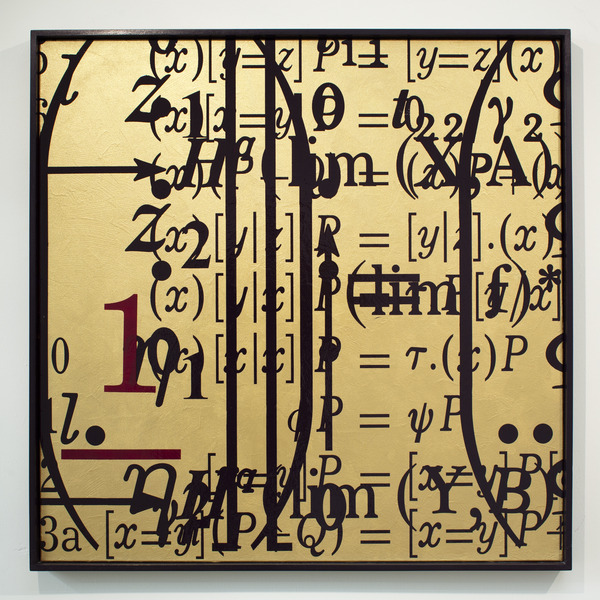
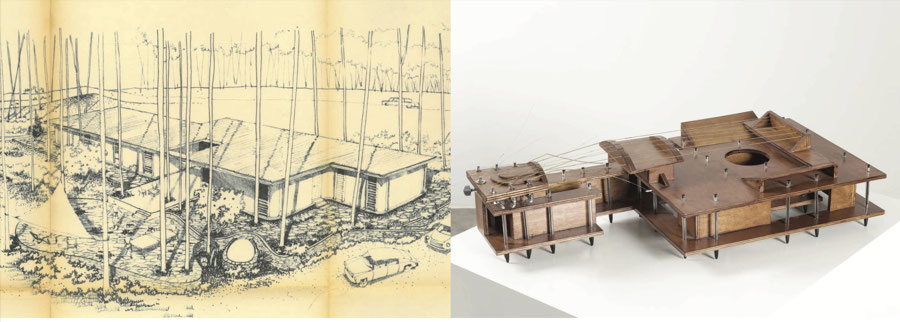
“Not having the financial means to produce these works in a more substantial format, I decided to send in the design for a piece of sculpture in response to an invitation to a show at the musée de Céret in June 1966. The codified system of this industrial drawing immediately grabbed my interest. It was the missing link that led to my mathematical diagrams and all the conceptual work that followed.” Indeed, in this instance, the design predominates vis-à-vis the three-dimensional object; the technical drawing includes the proportions and dimensions, and has the edge over the object itself. All the essential data describing it are spelled out so that it can be realized from a distance, reproduced without variation from the original model, prefiguring the fundamental characteristic of conceptual art. In 1969, Jan van der Marck invited Richard Artschwager, John Baldessari, Mel Bochner, Hans Haacke, Edward Kienholz, Joseph Kosuth, Les Levine, Sol LeWitt, Robert Morris, Bruce Nauman, Claes Oldenburg, Dennis Oppenheim, Richard Serra, Robert Smithson, Bernar Venet and others to come up with artworks following this principle, for the Art by Telephone show at the Museum of Contemporary Art of Chicago. Each artist had to dictate his works by telephone so that they could be produced without his direct intervention. The show took place just as the nascent conceptual movement was taking off, and brought together its main practitioners. Three years after Venet had sent the design plan for the pipe to Céret, conceptual artists were placing information ahead of the art material or the physical production of the artwork. This complete turnaround, the idea for which had been sketched out with the covering of a surface, became systematic in Venet’s work, and the painting now became a document that was needed to produce an object whose qualities correspond to Donald Judd’s definition of the “specific object”, except that with Venet the object in question does not beg to be produced. There followed a series of technical drawings on canvas, starting in 1966, trapezoid thread (filetage trapézoïdal), or denture correction (correction de denture), for instance. The paradox lies in the classic form of the painting and its presentation, or rather simply the reproduction of subjects that are foreign to art. These technical drawings refer to practical disciplines whose finality is tangible, unlike the mathematical formulas, which boast a total degree of abstraction. The depiction of a function like Graphic Representation of the Function y=-x2/4, or Parabola of the Function y=2x2 +3x -2, is the first glimpse of artworks that refer to nonmaterial subjects. We should note the paradox between the term “representation” in its mathematical sense, which is focused on a creation of the mind, a nontangible drawing, and the notion of representation that is associated in art history with figurative painting; Venet broke with all of that completely.
Venet was aware of the radicalness of the conceptual proposition he had anticipated and declared to Duchamp in 1967, “It’s possible to think that if what I’m doing is accepted one day as artistic, then a new definition will have been added to art.”
To underscore this, in the 1970s Venet pushed the discussion of his work as being apart from traditional oeuvres further, i.e., it was figurative and abstract, and introduced the new notion of monosemy into art. “By moving out of domains that have already been used, polysemy (figuration) and pansemy (abstraction), I was proposing a new sign of signs in the domain of art: monosemic signs (the code of mathematics, diagrams), which tend to have a single level of meaning.”
Settling in New York allowed Venet to pioneer conceptual works and to play a role as a major force for spreading the new art in France a few years later. In her interviews with Richard Leydier, Catherine Millet stresses that she discovered conceptual art through Venet’s diagrams in César’s studio in 1969, “I met Venet for the first time in the garden of César’s house in Montparnasse. [Bernar] began to talk to me about this form of art that was just then emerging.” Fairly quickly, Millet became the standard bearer of conceptual artists in France and affirmed Venet’s predominance in the movement. The artist was playing a pivotal role at the time, introducing Millet to Donald Karshan, Donald Judd and Joseph Kosuth at the Conceptual Art and Conceptual Aspects show at the New York Cultural Center, an exhibition that included contributions by Venet as well. Given Venet’s insider status in the New York art scene, we are right to wonder about the role the capital of art played in the development of his works. While the direction he began to move in with the Musée de Céret and the outline he submitted for making the pipe certainly pushed his thinking towards nonmaterial work, it is clear that the minimalist shows influenced the young artist just as much as the affinities he developed with the artists in New York. Venet remarked, “When I consult my notebooks from that period, I am flabbergasted by the number of daily encounters that occurred between artists. One day Sol LeWitt, the next Smithson, Weiner, Walter de Maria, Judd and how many others! …We’d meet up at home, at Paula Cooper’s, Virginia Dwan’s, at the Judson Memorial Church Theater, the Chelsea Hotel, Max’s Kansas City.” In 1971, the catalogue raisonné established by Donald Karshan mentions the presence of works by Venet in artists’ collections and attests their proximity as well. The catalogue lists such names as Joseph Kosuth, Sol LeWitt, Christo, Dewain Valentine, Shusaku Arakawa, Peter Hutchinson, John Chamberlain, César, Arman, Takis, France Raysse, Mimmo Rotella, Shunk Kender and John Gibson. One can also make out in its pages the presence of well-known collectors like MoMA, Peter Ludwig, Peter Brant, Philippe Durand-Ruel, René de Montaigu, and others.
This proximity led to a number of fruitful exchanges, and it is worth recalling that Venet was very much in the foreground of this art scene, as Brian O’Doherty has pointed out. O’Doherty, who saw a lot of Venet in those days and attended his performances alongside Lucy Lippard and Barbara Rose, states that “the conceptual performance at the Judson Church hardly had any equivalent at the time.” The dates of Venet’s works make clear his participation in the founding exhibitions of the movement as well, notably Conception-Konzeption in Leverkusen, Art by Telephone at the Museum of Contemporary Art of Chicago, and Art selon plan at the Kunsthalle of Bern, in 1969; and Conceptual Art and Conceptual Aspects at the New York Cultural Center, Informations at MoMA, Conceptual Art/Land Art/Arte Povera at the Galleria Civica d’Arte Moderna in Turin, in 1970, all of which underscores Venet’s omnipresence on the international scene and his inevitable influence.
It was during “Prospect Düsseldorf 68”, a key event bringing together avant-garde galleries from around the world, that the Wide White Space Gallery exhibited two two works purchased by Paul Wember, the director of the Haus Lange Museum Krefeld, who offered Venet his first retrospective show in 1970. The Bruno Bischofberger and Hans Mayer galleries Zurich and Düsseldorf respectively, the Santandrea Studio in Milan, Yvan Karp in New York and Daniel Templon in Paris fell in behind Krefeld and soon were also showing Venet’s Blow-ups. In 1971, with the conclusion of his plan of action running its course, Venet was the first conceptual artist to be offered a retrospective in New York at the invitation of Donald Karshan, which was held at the New York Cultural Center.
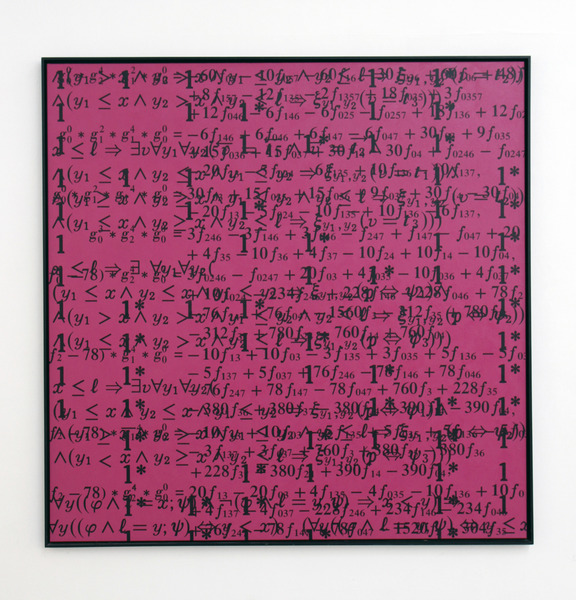
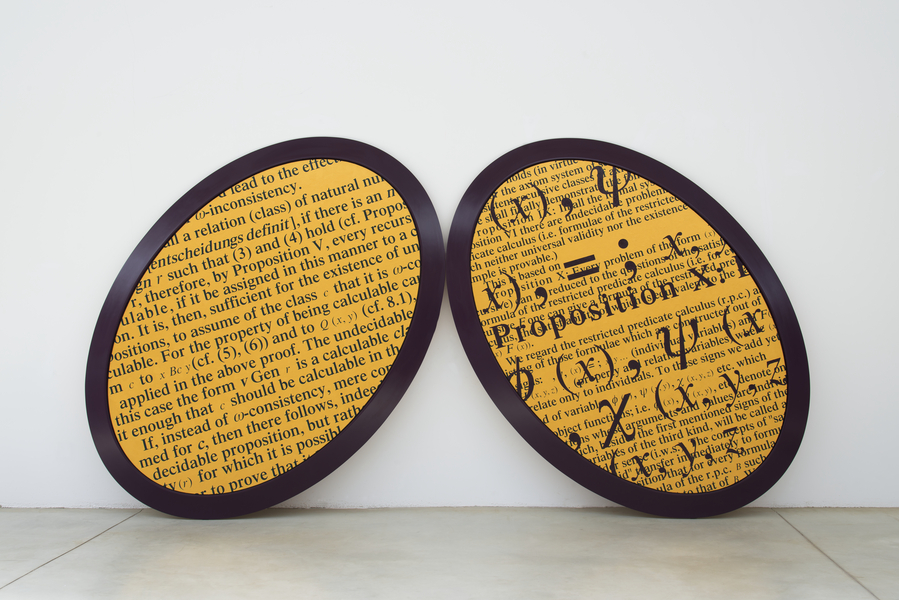
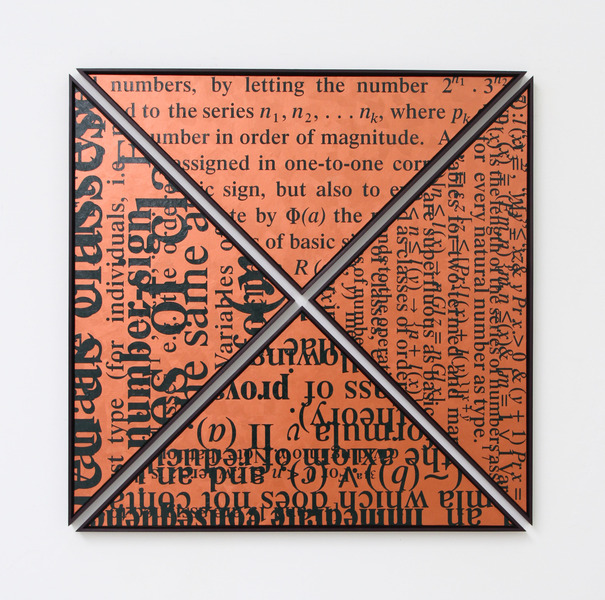
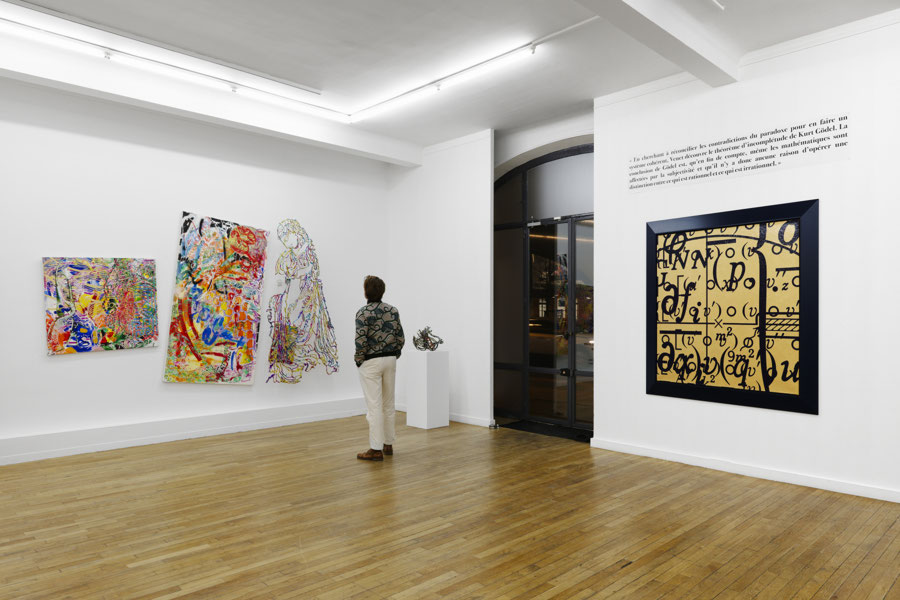
Since his arrival in New York in 1966, Venet had come to occupy a position of major importance just as he interrupted his career voluntarily and precociously, following a programme elaborated by the artist himself. The plan was to tackle essential scientific disciplines in order to present an overall view of knowledge. In each field, works are made up of formulas, graphs or synopses of scientific works, selected by specialists according to scientific criteria, without taking into account the possible formal—that is, plastic—qualities of the subject. Venet was well aware of the evolution of science; the paintings were fated to be replaced by the latest advances in research.
“My first artworks, in 1966, were based on school mathematics, physics, chemistry, and industrial design. In 1967, I have decided on the disciplines that I am going to treat over the next four years:
ï Astrophysics ⎯
ï Nuclear physics ⎯ 1967
ï Space sciences ⎯
ï Mathematics by way of calculus ⎯
ï Meteorology ⎯ 1968
ï Stock exchanges ⎯
ï Meta-mathematics ⎯
ï Psychophysics and psychonometry ⎯ 1969
ï Sociology and politics ⎯
ï Logical mathematics ⎯ 1970
For each discipline, a specialist has advised me on the subjects presented: each subject has been chosen for its IMPORTANCE.
I haven’t presented mathematics as Art, but mathematics as it is, for its own importance, for its own function. Art only existed on a propositional and conceptual plain.
It wasn’t a question of creating a new object, a new readymade using mathematics.
I attribute an instructional aim to their presentation.”
This planned end, anticipation of the exhaustion of his contribution to the world of art, speaks volumes about the sharp eye with which Venet views his own work. Completely at odds with an intuitive, personal art, Venet pushes the logic of his approach which is at work in its entirety. This rejection of output was asserted very early on in his work, the output of the 1960s, for example, proving not terribly forthcoming in this sense. His ambition doesn’t consist in producing traditional paintings, but in articulating new ideas. Catherine Millet aptly describes this when she notes that “through that gesture, Venet foregoes a sterile practice that is nonetheless common in many contemporary approaches, wherein an artist, having found a new idea, exploits it for the rest of his or her life, offering only variations on it.” For Venet, the idea of the work of art is enough. Thus, the pile of coal and the covering of a surface were only produced in a single iteration, whereas tradition in art would have demanded a multiple repetition of a motif. Venet produced but few Tar pieces and Cardboard Reliefs. If he is the fastest painter in the world, he is also one of the least expansive, rejecting the accumulation and imperatives of a commercial output. The art market took little interest in Venet’s work at the time and Venet happily paid it back in kind. The development of this plan of action is a work of art in itself. Focusing on scientific, semiological and philosophical questions, the plan doesn’t stand out for its formal qualities, and is more akin to the outline of an essay. The plan is a work of art in itself that gave rise to a multitude of other works; the urge to classify them was answered with the retrospective mounted at the New York Cultural Center in 1971 and the joint publication of a catalogue raisonné. Thus, the approach was pushed to its conclusion and fulfillment in that the catalogue bodies forth the successful completion of the announced plan of action, in the same way that the verification of a mathematical equation, coming after the demonstration, attests the accuracy of the calculation and concludes the procedure undertaken.
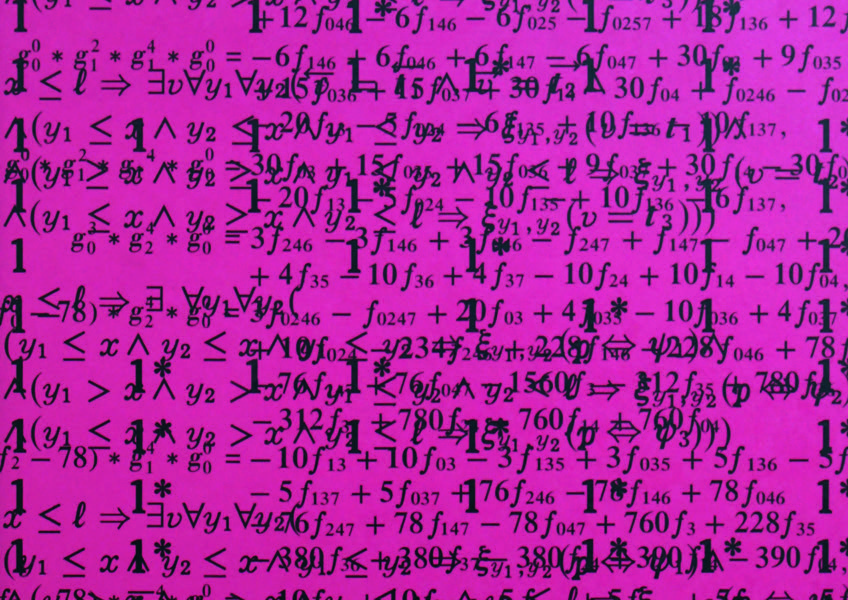
Although the works of Venet’s plan were reproduced mechanically and copied from scientific works submitted by specialists, they were preceded by a series of pieces that we might characterize as preparatory, in which Venet manually reproduced mathematical graphs and equations. Whole chapters were thus methodically retranscribed by Venet. The concession to writing granted by the artist matters little. Calling for no particular manual ability, and yielding to no formal imperative, these pages or scrolls of writing are akin to the work of monk-scribes to whom the notion of style is foreign. It is already the content, the message, that counts, but it is interesting to note the obsessive determination with which Venet applies ink to paper. Like Opalka counting to infinity on his canvases, or On Kawara mechanically typing out the past and future One Million Years, Venet displays the same qualities of doggedness and devotion to an artwork whose production is demanding and painful. With the possibility of reproduction being granted to him, the writing gave way to copying while the content focused on mathematical abstraction.
The completed plan opened the way for the conversion of the eye, the moment of analysis of the work, and the pictorial, yields to the verbal. The 1970s began with lectures in Brussels, London, Tokyo, New York and Rome, among a number of places, to a nontraditional class on art theory delivered at a post-May ‘68 Sorbonne and at the invitation of Bernard Teyssedre, who created the departments of Plastic Arts and Art Sciences at Université Paris-I. This reflection can also be seen in the series of shows devoted to Venet’s body of work that were mounted in Rio de Janeiro, La Jolla Museum of Contemporary Art, PS1 in New York, and the Institute of Contemporary Arts in London, or at the XIII São Paulo Biennial alongside François Morellet and Gottfried Honegger.
A self-referential formalism
The years of reflection delimiting the conceptual work eventually led to the development of new formalist artworks. Recognizing the omnipresence of line in his output, Venet opened conceptual work to depictions of straight lines, arcs and angles on canvas. The first such piece, designed in secret, consisted of a white triangular canvas, two sides of which were highlighted with a black stripe that made clear the angle governing the painting’s shape. The shaped canvases carried on the experiments glimpsed in a series of paintings thought up in 1966, not all of which were executed at the time. The preparatory outlines of the various iterations of geometrical shapes survived: monochrome circle, square, rectangle, isosceles and equilateral triangles, whose sole motif is in fact the mathematical formula generating them. These self-referential works gave way to shaped canvases of angles, chords subtending two arcs, etc. The sparest result of the series is conserved in Paris’s musée national d’Art moderne. It is a diptych made up of two angles measuring 174.5° and 185.5° and thus forming a complete circle. The thickness of the stretcher lends a physical quality to the canvas, underscoring its materiality and bringing out in negative the wall on which the canvases are hung. It was Jan van der Marck’s invitation to Documenta 6 that finally decided Venet to exhibit these pictures, in contradiction with the conceptual work, which, having reached its logical limit, had also reached a dead-end. At Cassel in 1977 he showed Two Angles of 120° and 60°, which display Venet’s interest in space, breadth and thickness, both on and through the wall. The space left untouched between the two parts of the diptych acts like an ellipsis in a virtually full space, just as it appears in the polyptychs of the British minimalist Alan Charlton. The wall in negative completes the painting and reveals a space which the two paintings alone are not enough to delineate.
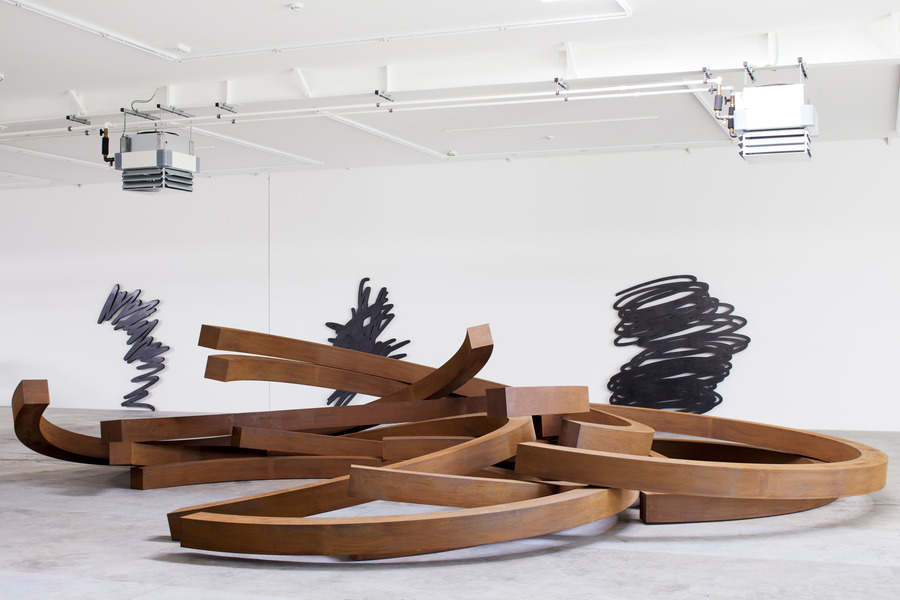
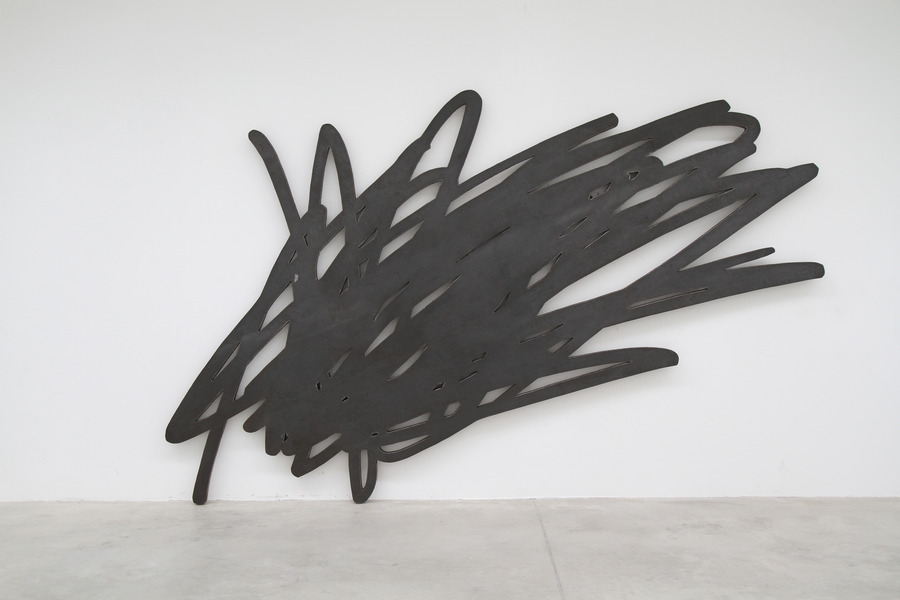
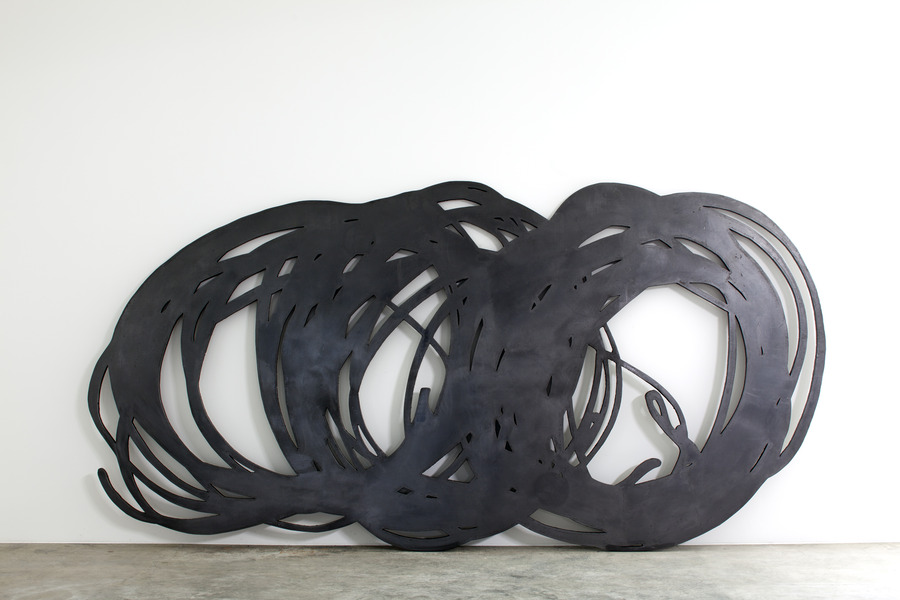
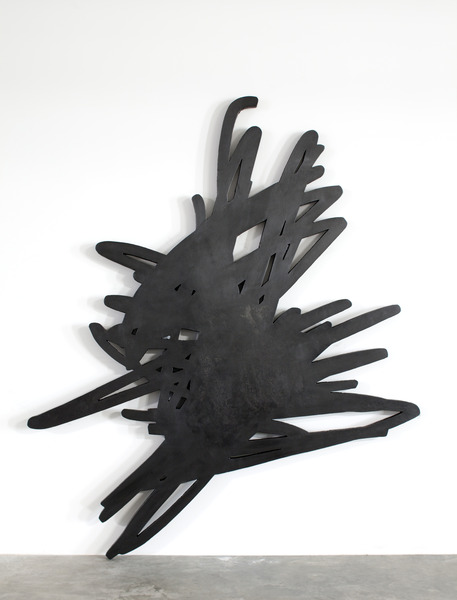
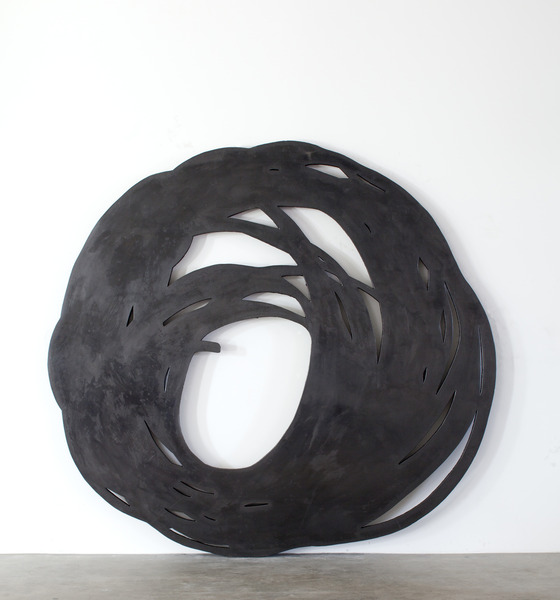
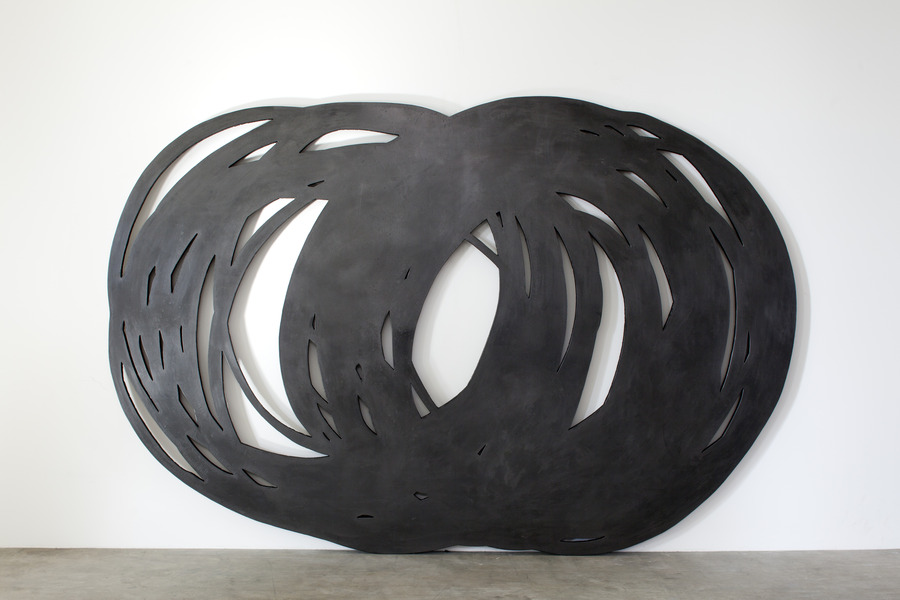
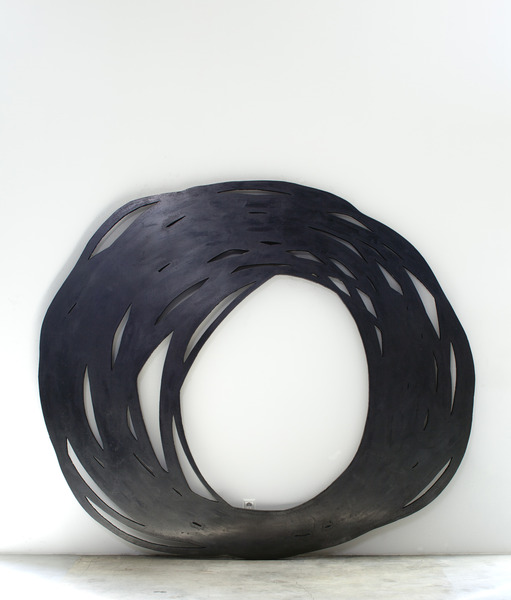
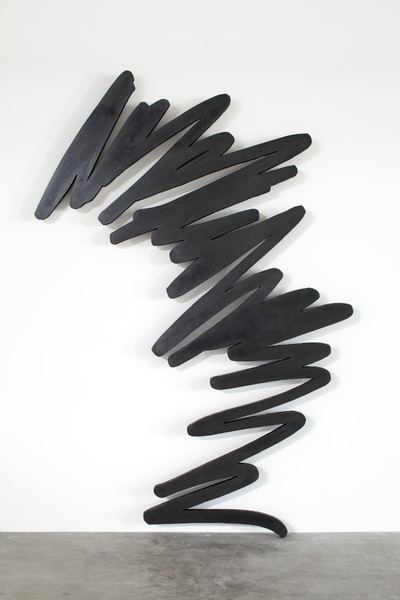
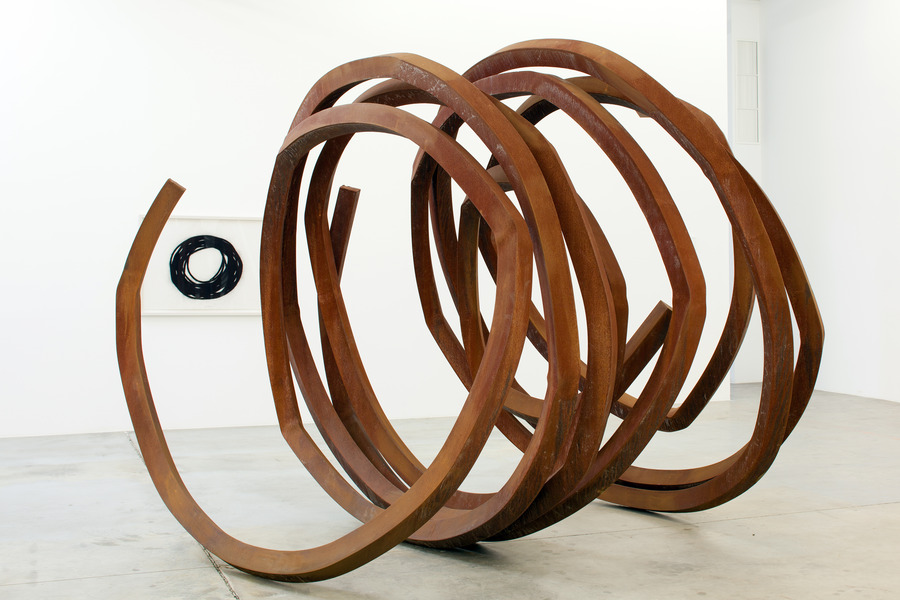
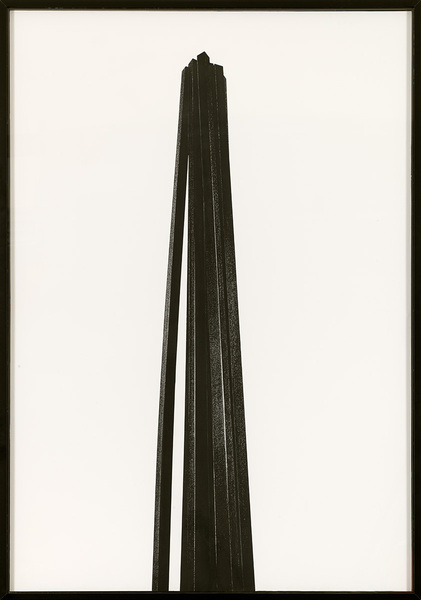
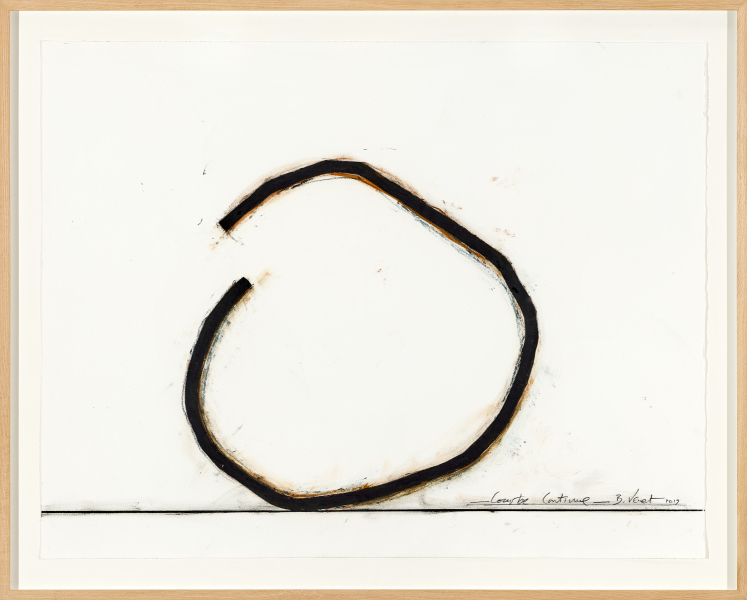
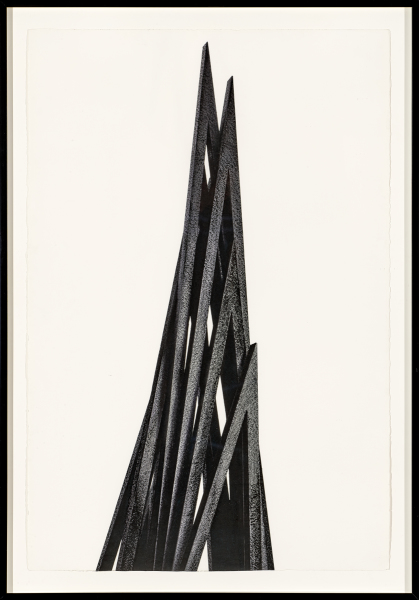
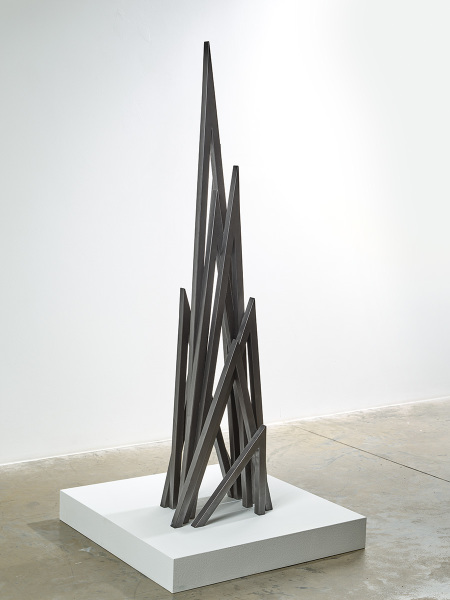
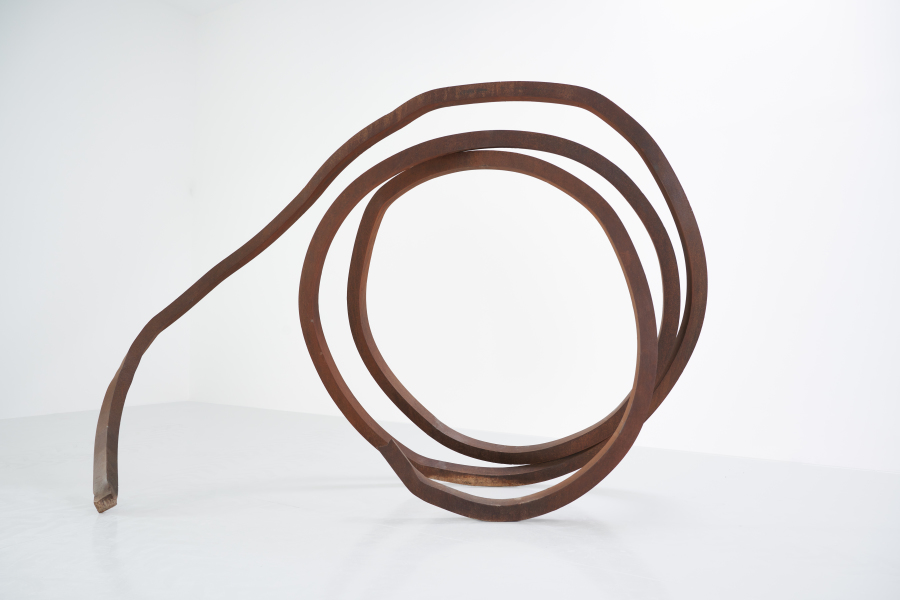
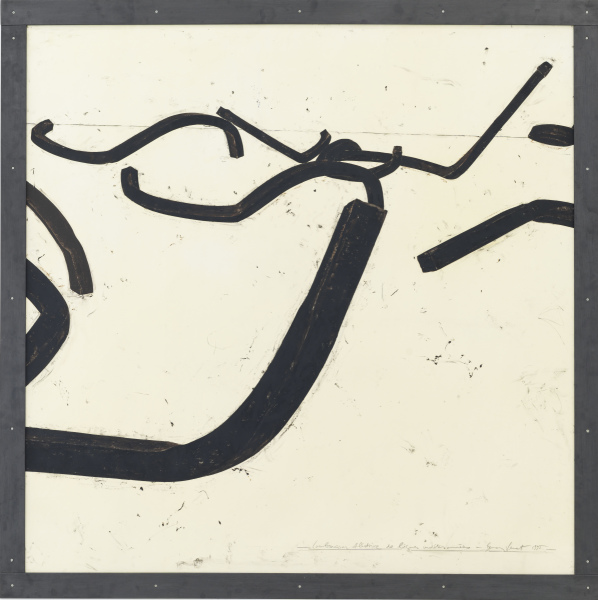
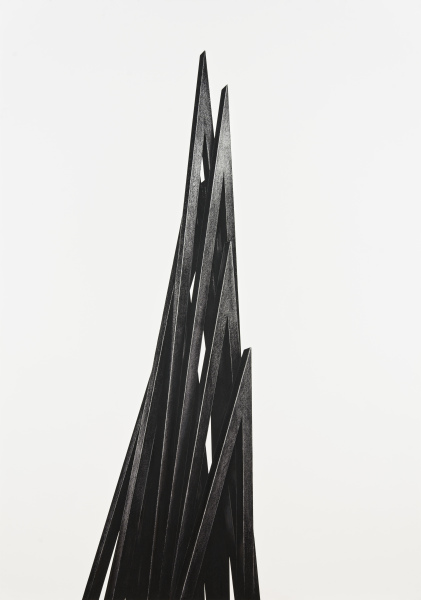
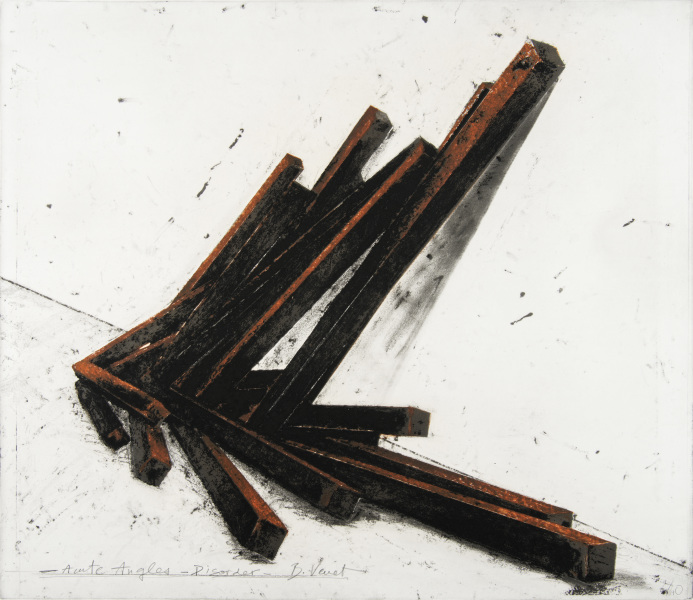
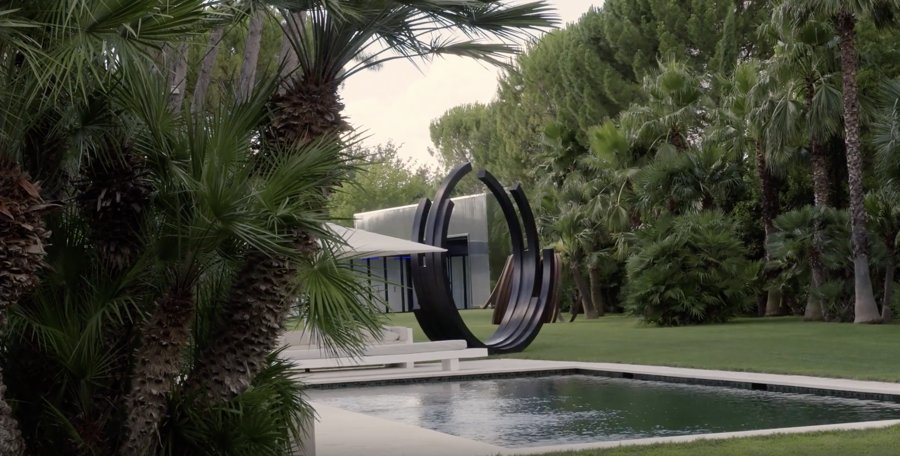
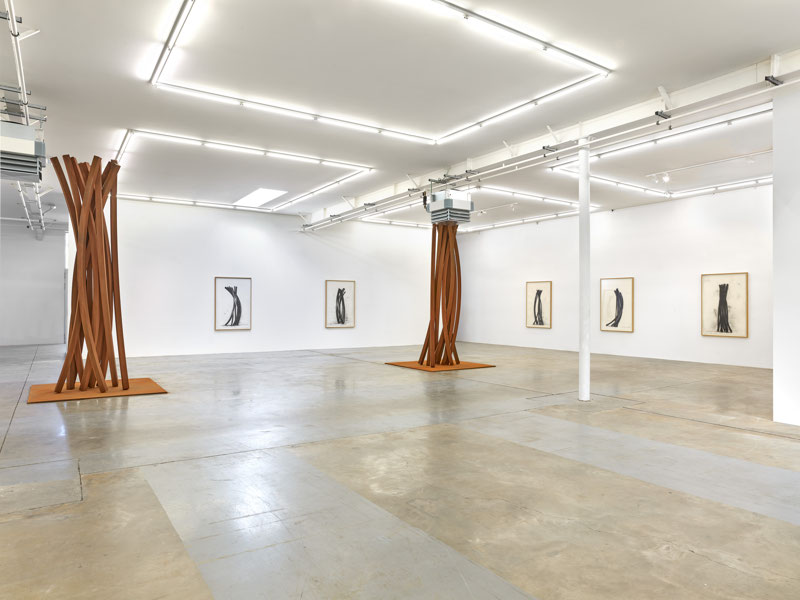
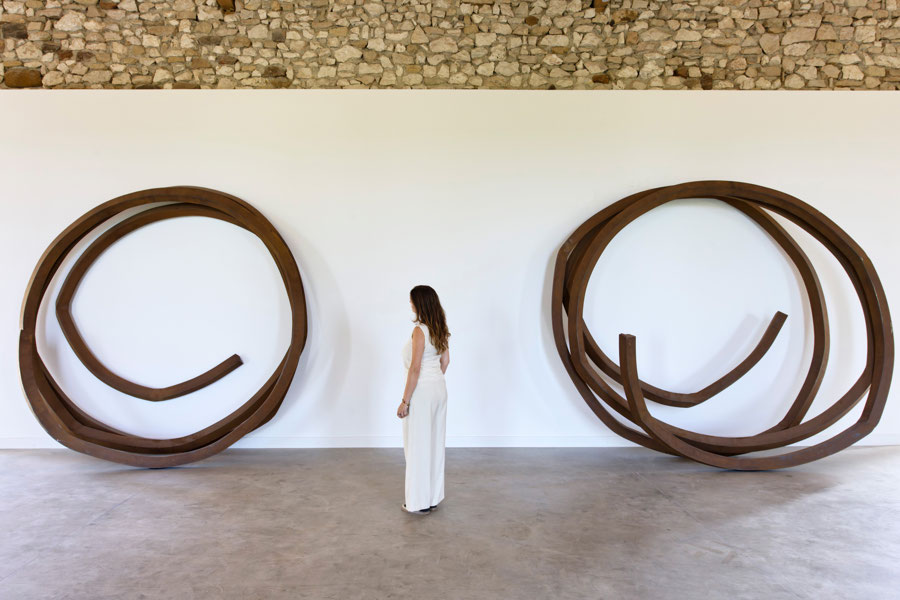
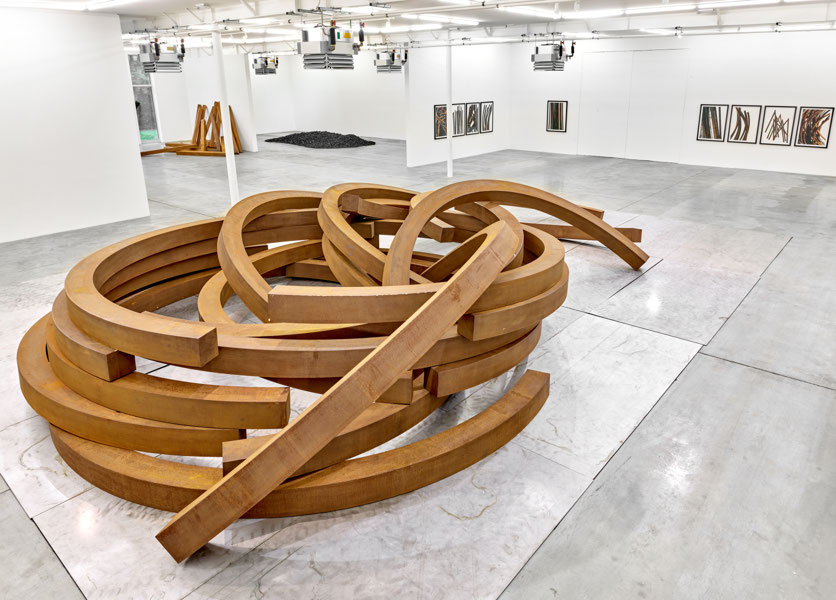
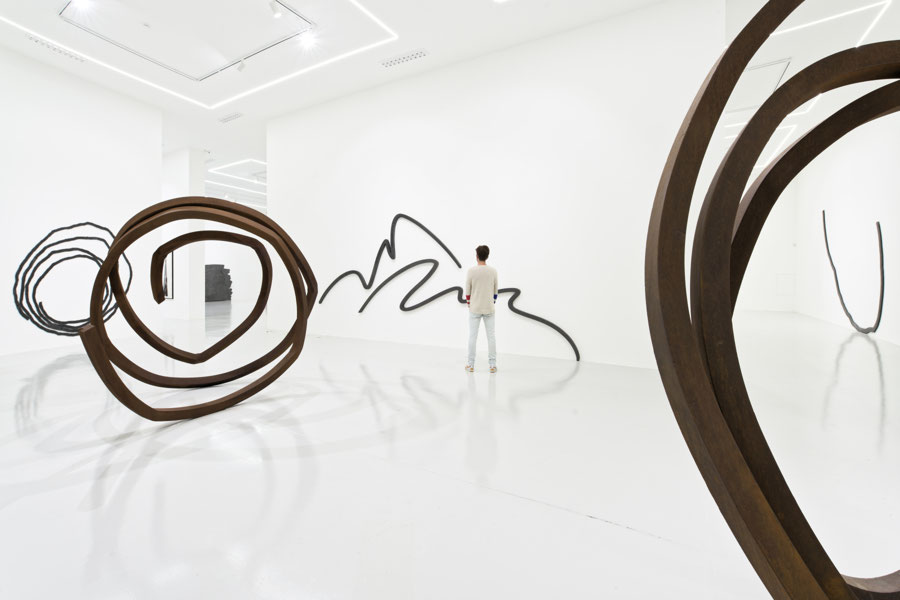
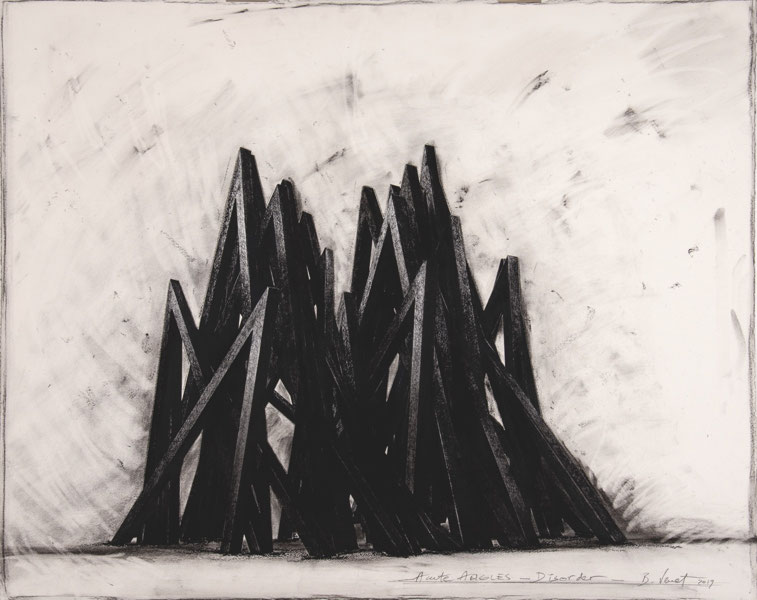
Venet’s formalism reaches its highpoint in the sculpture, bas-reliefs initially and later sculpture in the round. The wood reliefs covered in graphite that came after the series of paintings synthesize what Venet had to say about the lines. It was while cutting the stretcher for one painting he was preparing that the artist became aware of the physical qualities of the arcs, angles and straight lines he was drawing. There he found a synthesis corresponding to his wish for pure, uncluttered lines. Now foregoing canvases, Venet cut out wood strips which he covered in graphite and applied as is, directly to the wall, accompanied by a definition explaining the title, in other words, the number of degrees making up the lines in relief. The graphism of these reliefs put an end to even the slightest pictorial urge while enabling experiments on the margins of the constraints imposed by the plane surface of the picture. It was at this time, too, that the first free lines appeared, which he called “indeterminates,” in opposition to the mathematically determined arcs, angles and diagonals. A kind of scrawl, these lines turn back on themselves, crisscross and overlap. Once revealed to Venet, this spatiality prompted him to use steel to fashion pieces of sculpture that are free of the wall, which they initially rested against. This in turn gave rise to the three-dimensional experiments that we well know and which have appeared on a large scale in New York, Chicago, Austin, Paris, Versailles, Ulm, Seoul, Auckland and other venues, offering the artist a new field of demonstration for his preferred research, i.e., self-referential works interacting with space, whose forms are grounded in mathematics. These offer by turns an idealized classical vision, pure geometrical shapes like 230.5° Arc x 5 (1999), Collection of the City of Shenzhen; and even more so, 88.5° Arc x 8 (2011), the Alan Gibbs Farm, Kaipara Harbor, New Zealand–or a suggestion of the materiality of the work, for example, 217.5° Arc x 28 (2008), the Collection of the Artist, Le Muy, whose listing arcs loom over the viewer–or an image of complete chaos, as in 222.5° Arc x 16 (2011), shown at Versailles, a sculpture whose form is due to the collapse of its constituent parts, with arcs slipping over one another just like the tar flowing over Venet’s canvas in the early 1960s. The shift to sculpture, unthinkable for the conceptual, proved to be inevitable for the formalist. Its many large-scale manifestations reveal the appropriateness of their expression and have led Venet, now turned sculptor, to abandon painting for a while.
GRIBS
Yet while Venet’s experiments have often taken him down the path of geometry, which he has amply capitalized on (witness Calculation of the diagonal of the rectangle (1966), Two angles of 120° and 60° (1976), as well as his arc, angle or straight-line sculptures), for all that geometry is not an artist’s obsession with the right angle and the forming of a perfect circle. It is not in Venet’s character to try to put himself at all costs in the dogmas of any one group of artists, be it concrete art, minimal art, or conceptual art, even though he is one of its historical founders. And even if the geometrical figure predominates in his body of work, we must also hunt between the lines, as it were, and beneath the surface, from the pile of coal to the GRIBS, for works that stand out for their absence of composition, a carelessness and absence of any position taken by the artist with regard to the end form.
Jean Arp – Robert Morris – Bernar Venet: a brief history of anti-compositional art, or the exploration of the laws of chance
From a historical perspective, attention must be paid to the figure of Jean Arp; although he could be purely geometrical in contact with and working by the side of Sophie Taeuber, elaborating with her, for example, their duo collages (1918), Arp nonetheless looked into, starting in 1915, the possibilities raised by exploring the “laws of chance”. The term could be adopted by Venet in the paradox –he would say complementarity –between the scientific framework and giving oneself up to the arbitrary.
By picking up cut-out pieces of paper and assembling them, Arp understood the aptness of this antigeometry, while a piece of paper with shaky edges offered a striking contrast to the neoplasticist experiments of his contemporaries, opening up a field of unlimited possibilities. Squares cut at a slight angle displayed a “screwed-up” geometry, an approximation of squares, and, as Renaud Ego stresses in light of Elementary Construction (1916), “all that was needed was a minute flaw to set everything in motion, like a syncopation in a binary rhythm.” This furtive episode introducing biomorphic abstraction of the late 1920s, a few compositions executed “according to the laws of chance”, prefigure Venet’s work with greater significance than do the geometrical rigor of van Doesburg and his works playing off mathematics, as well as those of the concretists, whether from Paris or Zurich. We should not be taken in by the presentations of Theory of Sets or Total Positivity, or the grammar handbooks conceived as “a mathematics of language”, as Otto Hahn put it. In 1968-69 Venet used the writings of Nicolas Bourbaki and Samuel Karlin in terms of semiology and not as a compositional system. By allowing the participating scientists a free hand in choosing the subject of his works, which occasionally he didn’t even see himself (such was the case of Art by Telephone at the Museum of Contemporary Art of Chicago in 1969, or his own exhibition at the Daniel Templon Gallery in January 1971), Venet clearly shows that he is more interested in the laws of chance than the play of chance.
Just as Venet slips between several designations and often escapes them altogether—Guitemie Maldonado, for example, stresses that Arp “evolved with great freedom in terms of the movements formed, coming from dadaism and exhibiting… with abstract groups and the surrealists”—so one would be hard put to connect Robert Morris with his contemporaries in any lasting way. It was with his blind-time drawings, for instance, that Morris explored his quest for non-composed works, drawing over a sheet of paper with his own eyes blindfolded or having a blind woman draw on the sheet. Other artists before him had tried to exclude the Duchampian retinal.
Chance, blindness and mechanisms put to work to avoid the slightest hint of a composition resonate with the majority of Venet’s works.
Gravity governs sculpture in the case of the pile of coal and the collapses. The use of a natural raw material, coal in first instance, in 1963, may conjure up for us Richard Long’s stone arrangements, if only for the fact that unlike these, Venet does not view the pile as a form, but as a mass devoid of form. His succeeding shows, at the musée national d’Art moderne, the National Museum of Korea, the Musée des Abattoirs in Toulouse, the Mücsarnok in Budapest, and so on, might suggest one and the same work of art being laid out identically, but if we look more closely, the form, size, and consistency vary, and Venet himself, while overseeing its installation, has never sought to reproduce a specific scheme, and has never in fact worked out a design or plan, at most a certificate. The pile of coal falls as it may, as it must, without a specific form. There lies its originality.
Likewise, the sciences and, in this case, scientists decided on the concrete realization as the absence of a position on the part of the person signing the piece. While critics have focused on the recurrent geometry in Venet’s works, notably because of the series that were devoted to geometry, both in the paintings from the years 1976-77 and in the sculptures starting in 1979, they have wrongly overlooked the important chaotic dimension in, for example, the Judson Church Theater lectures, in which three scientists gave talks at one and the same time; in Gravier Goudron (Gravel Tar), which emits the sound of the wheelbarrow rolling over macadam in Tarascon; or in Graduation, which was performed at the Opéra de Paris and refutes any melodic dimension by superimposing the sounds of different symphonies.
The pages of science books conscientiously copied out or the columns of the Wall Street Journal are not there for their rigorous organization; the visual result is a chance occurrence due to these compositions being done blindly or according to mathematical laws since the blackboards whitened by the erratic formulae written out in chalk by Frank Faulbaum at the Kunsthaus Hamburg in 1970, and the attempts by the students of Oberlin College for the Lucy Lippard show Art in the Mind at the Allen Art Museum, spring from the very same mold.
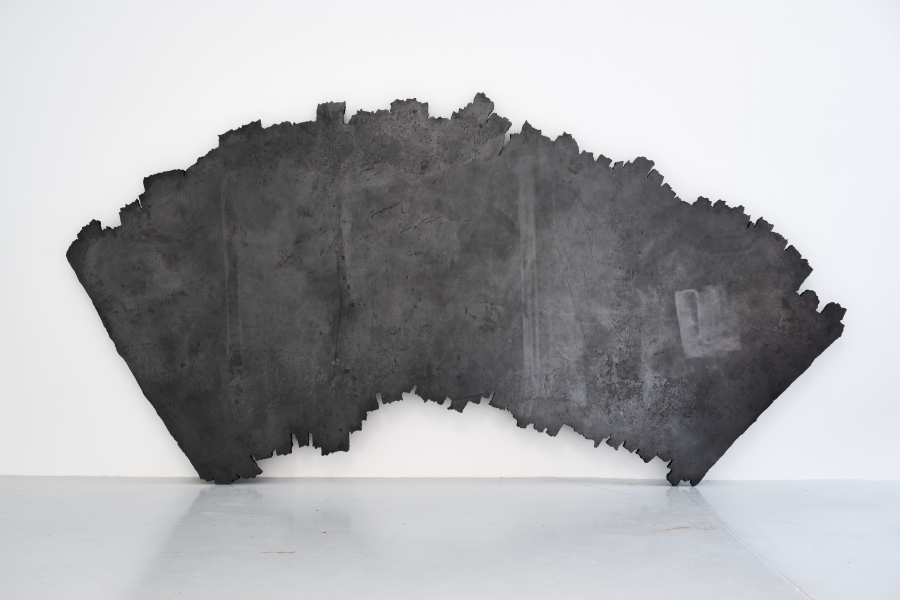
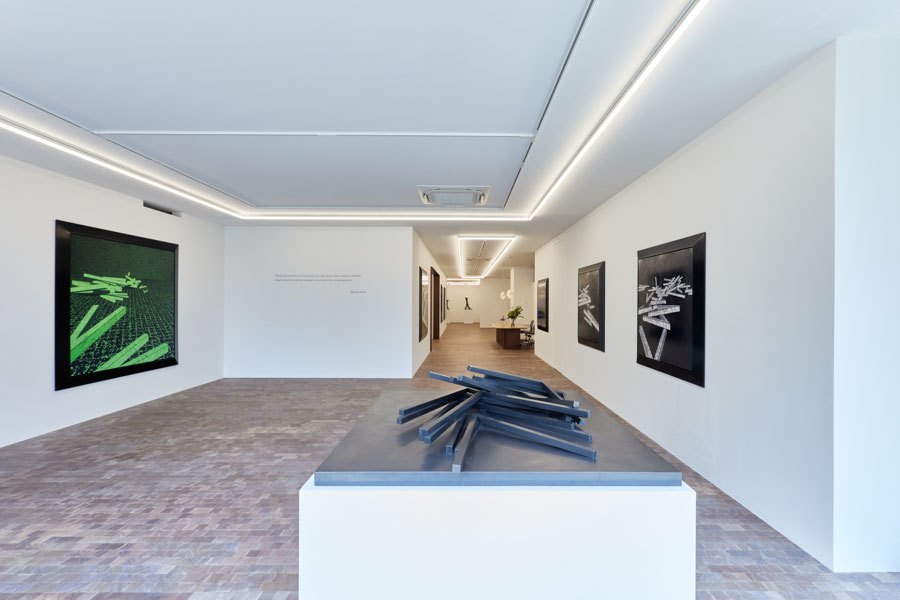
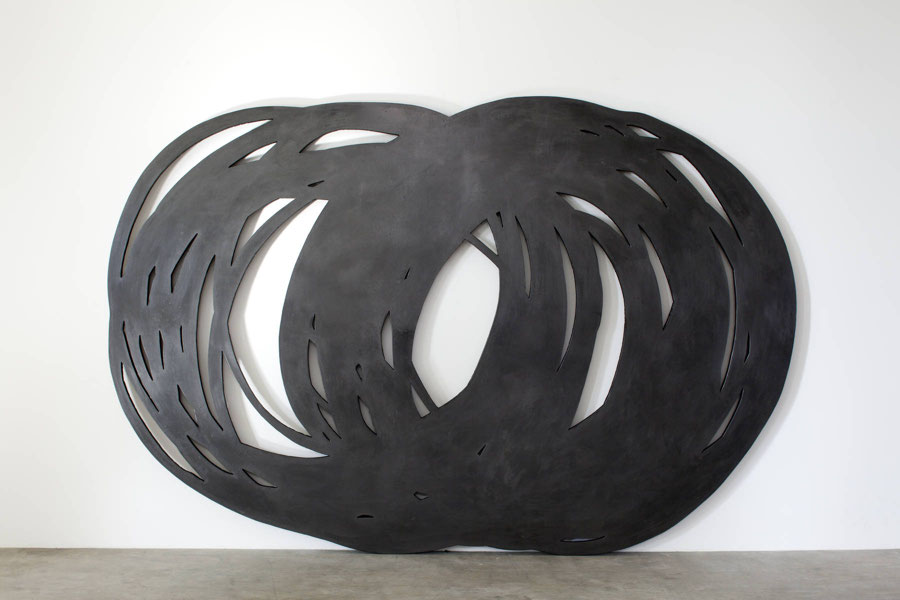
Thus, after the well-known period when the artist withdrew and abandoned his purely conceptual output, whose limits were obvious to Venet from the very first results of its elaboration, the formalist turn of his work in the 1970s explored simultaneously the paths that both geometry and randomness offered. Witness the indeterminate lines that differ from the typology of the mathematically determined lines; the Accidents (Museo Jumeix, Mexico City, or 100 Tons of Steel, which was simply dropped in Le Muy); the Collapses (Arcs, lines and angles, or the Effondrement d’Arcs: 150 tons); or the Random distributions of Points. All of these explorations appeared rather early in Venet’s work, and, shifting to and fro between positions, certainly support this demonstration. Thus, in 2011, Venet returned to the principle of scribbled lines, darkening hundreds of sheets of photo paper especially selected for its lack of resistance to felt-tipped pens and the possibility of a quick, spontaneous line that can double back on itself, and began producing large-scale steel reliefs, which are cut out using a blowtorch. The ambivalence plays on the quickness of the gesture, its fine-drawn line, and inscription in steel, in the thickness of the plate and the power of the mass.
Associating the rejection of composition with the cumbersome and restrictive technique of cutting steel with a blowtorch, Venet has probably attained the highpoint of paradox and complementarity, which is the true search of these last fifty years.
Alexandre Devals in Bernar Venet, Ceysson Éditions, 2016