La Chaulme Connection
Marie Amar, Franck Chalendard, Stephane E. Conradie, Rémy Jacquier, Sadie Laska, Tomona Matsukawa, David Raffini, Lionel Sabatté, David Wolle
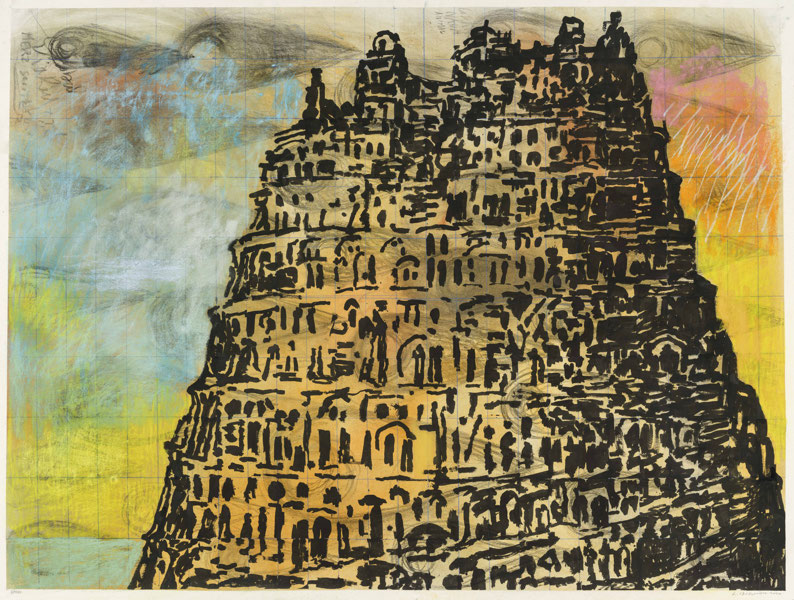
In Genesis, it is written that after wandering upon the waters for forty days and forty nights, the members of Noah’s crew arrived in the plain of Shinar and agreed to build a towering structure that would allow them to reach the Heavens. Under the impulse of the highly controversial Nimrod, son of Ham and grandson of Noah, they set to work. Conditions were harsh, and in order to succeed, they had to labour relentlessly. Alarmed by both these deplorable working conditions and the vanity of the undertaking, God descended from His celestial dwelling and cast among them the confusion of tongues. Unable to understand one another any longer, the project collapsed. One of the keys to understanding La Chaulme Connection may well lie in Rémy Jacquier’s work Babel (2024), a theme revisited throughout two thousand years of art history. Yet here, La Chaulme Connection positions itself precisely as the inverse of the Tower of Babel.
Three years ago, Galerie Ceysson & Bénétière successfully established an artist residency in the heart of nature: a residence complete with a dreamlike studio nestled in the Monts du Forez mountains where artists are invited to work in turn throughout the changing seasons.
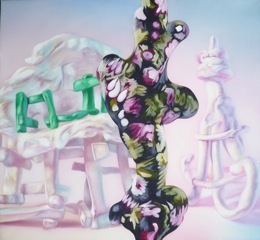
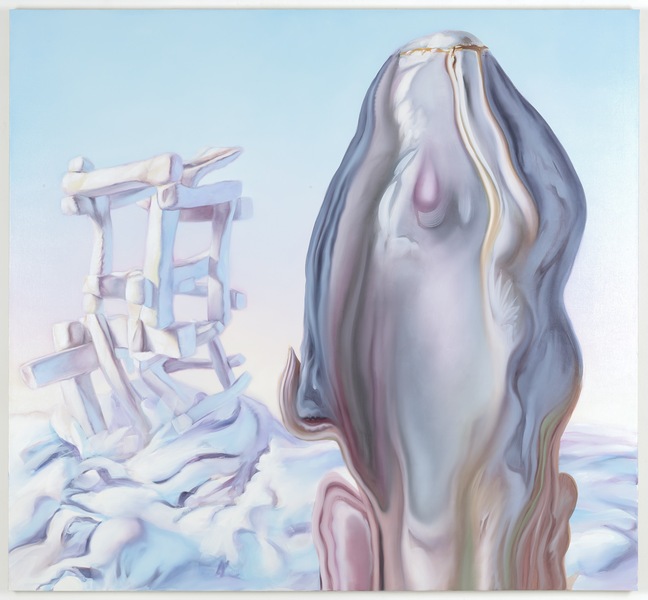
It was there that Rémy Jacquier created a series of small-scale drawings depicting skies by day and night, rendered in pastel, pigment and pencil on formats reminiscent of the intimacy of a travel notebook. These works were exhibited in La Chaulme at the end of his residency. He later created new works from sketches made during his stay. Back in his studio, he expanded them into larger formats using a grid transfer technique and endowed them with a luminous chromatic aura. The emerging forms unfold into an imaginary world that is at times floral — Plants & Rags & Wind (2025) or Citronnier (2024) — and at others akin to landscape painting, as in Sainte-Débâcle (2024), radiating throughout the exhibition rooms.
Returning to Babel (2024), compressed between the upper and lower edges of the paper, the work carries within it countless mysteries and reminds us of the vital role of the arts as witnesses to our civilisations, our thoughts and history.
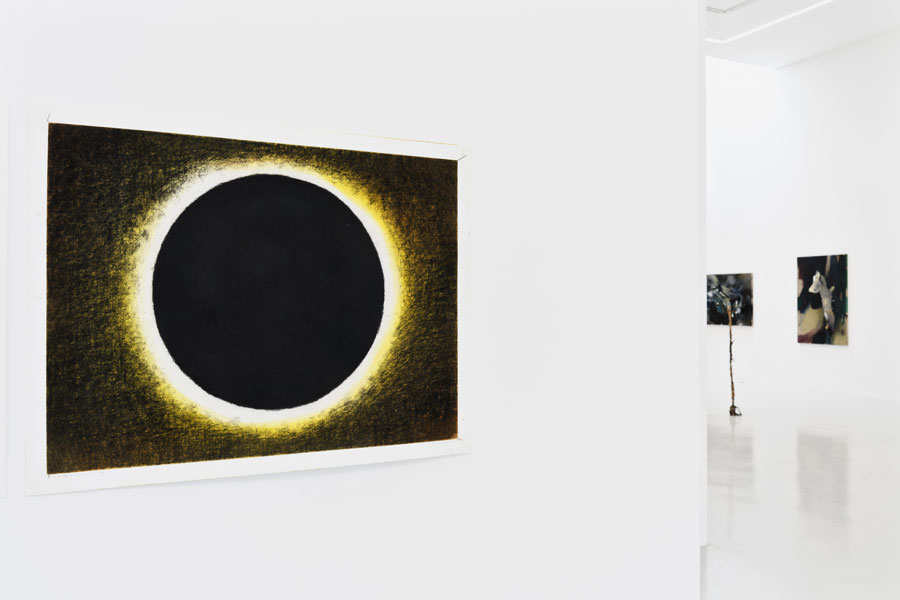
La Chaulme Connection thus reflects the research undertaken by the artists who stayed at Galerie Ceysson & Bénétière’s residency between June 2023 and June 2026, in the heart of the Auvergne-Rhône-Alpes region. Over the course of several weeks, each artist explored a specific aspect of their respective practice. A studio beyond the studio, in a sense: a workspace nestled within a setting of lush greenery or snow, depending on the season. The first to confront winter there was Lionel Sabatté. For many long weeks, he immersed himself in a precise dimension of his work: the dust of time. Sabatté had been invited by Roland Nespoulet, one of the scientific directors of the Musée de l’Homme, to investigate the origin of the pigments used on the walls of the Lascaux and La Mouthe caves. During this research, the team discovered a deposit of oxides near the entrance of the Lascaux cave. Lionel Sabatté was able to collect some of these pigments, this richly charged earth from Lascaux, and subsequently secluded himself in La Chaulme throughout the winter in order to create new paintings, notably Chrysalide Boréale and Chrysalide Appolonide (2023). To do so, he returned to ancestral artesanal gestures: grinding fragments of rock to extract pigments and incorporating them into his paintings.The resulting works exudes a force that reconnects us to the very beginnings of art history. Taking advantage of this creative space immersed in nature, he also produced sculptures of animals in the same spirit: owls and prehistoric quadrupeds.
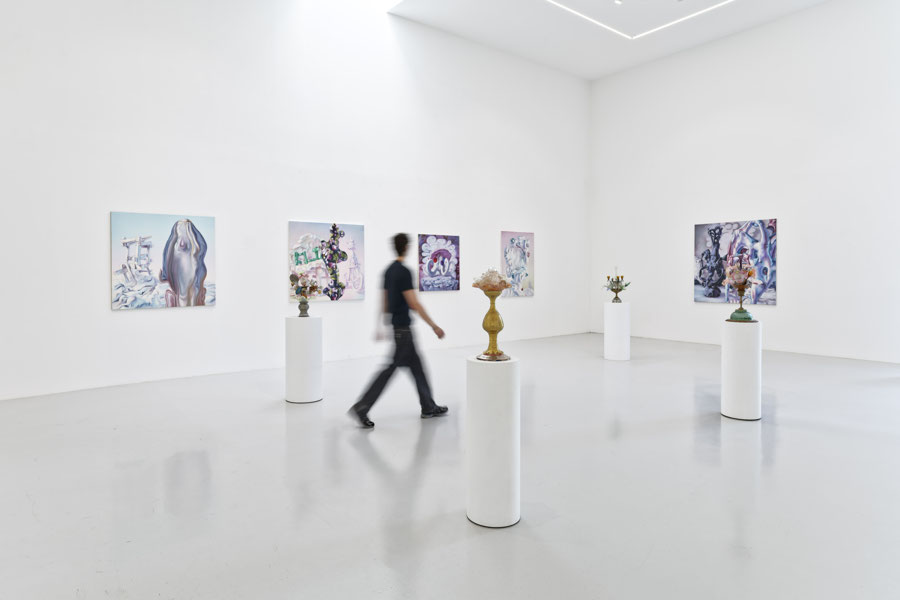
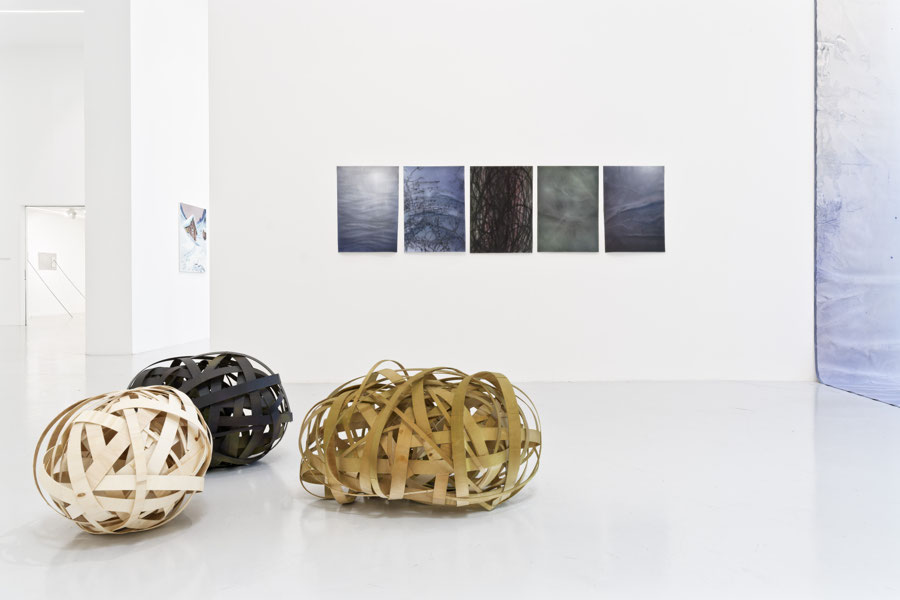
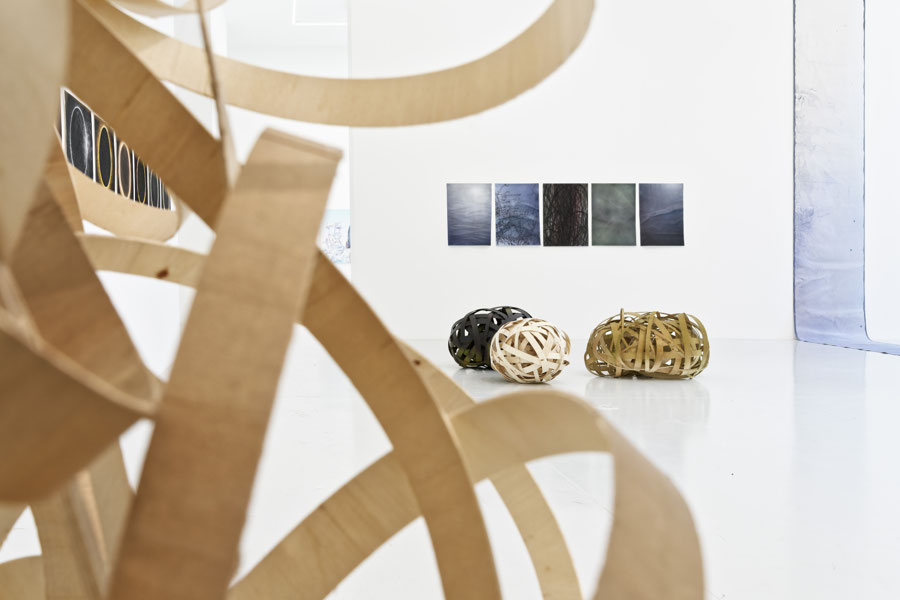
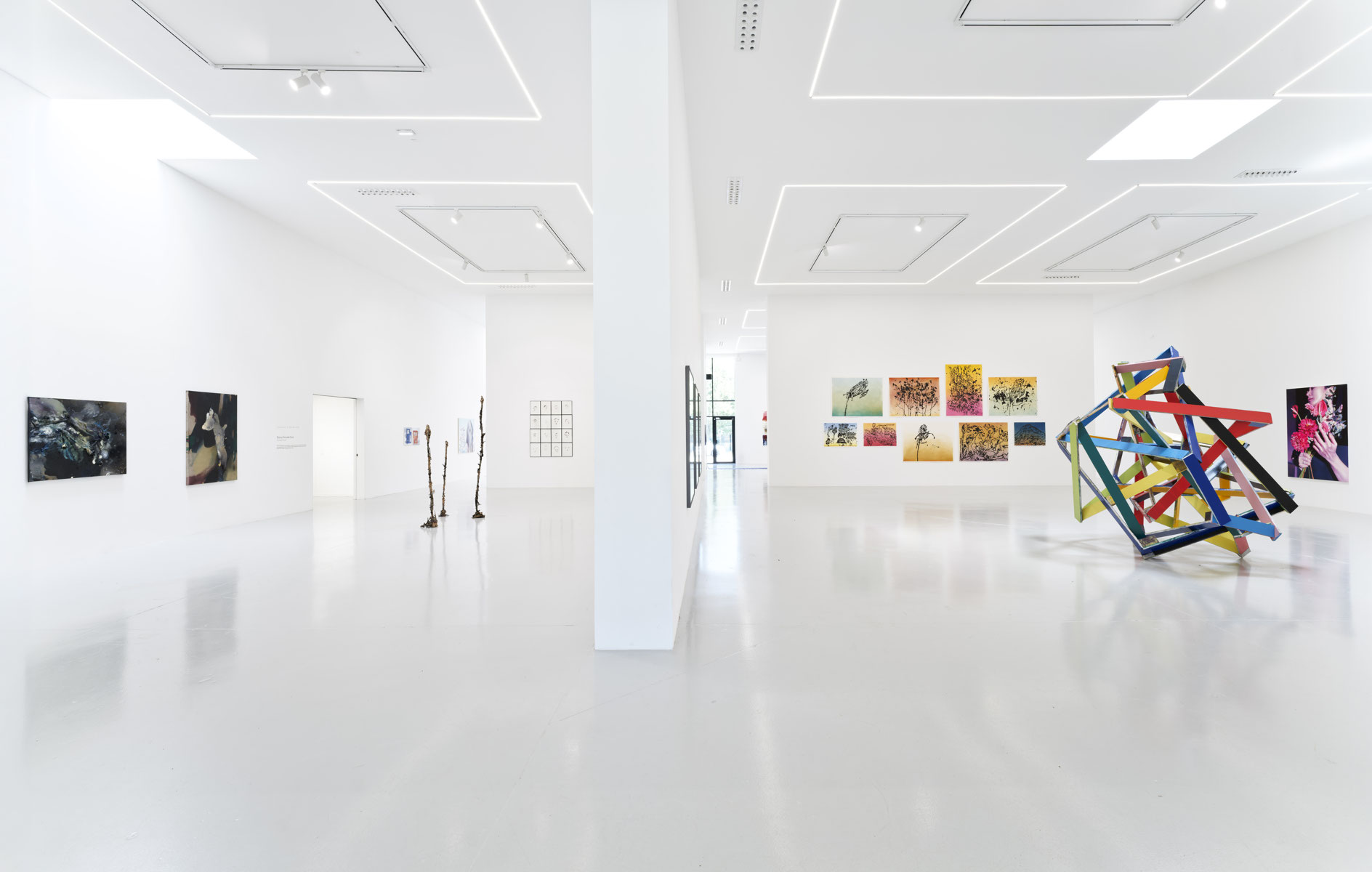
The exhibition itself is conceived as a stroll through the apartment of friends and lovers of art. The works inhabit the exhibition space and enter into dialogue with one another. This is the true beauty of curating: weaving a common thread, understanding which work should stand beside another without diminishing it, within an exchange that instead enhances both. Beneath its surface, the exhibition may also be read as a tribute to the art of collecting.
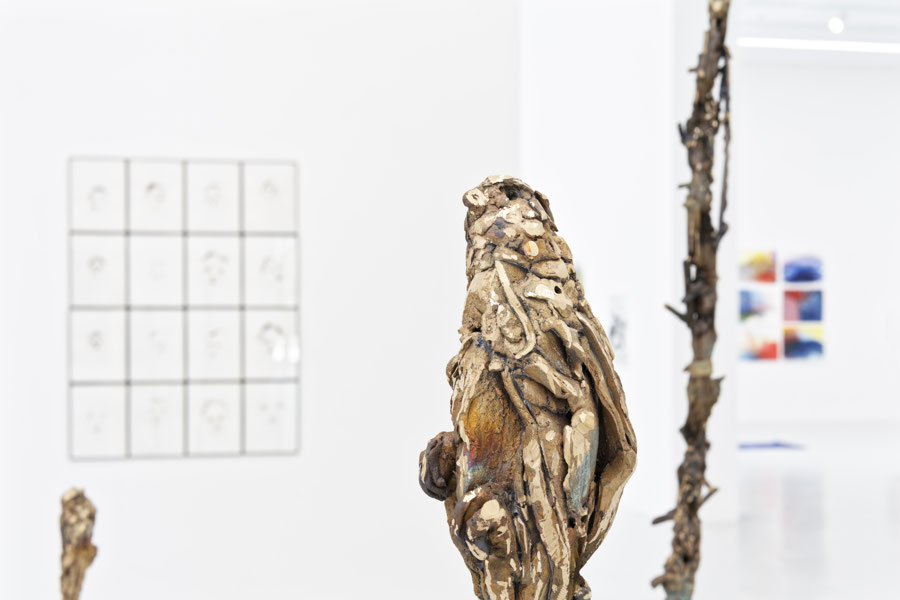
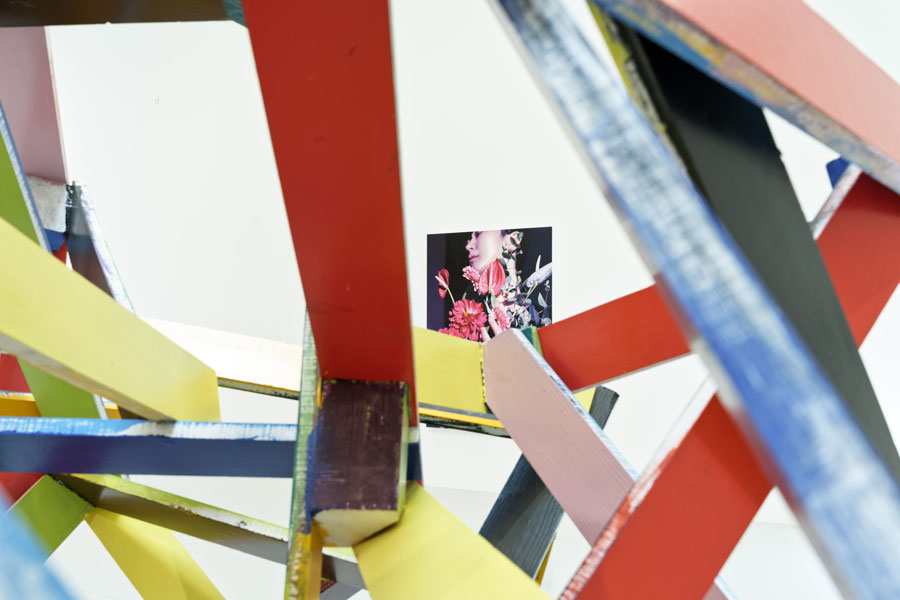
One must wander through the exhibition, moving from one of Tomona Matsukawa’s hyperrealist paintings to the canvases of David Raffini or the Tumbleweeds of Franck Chalendard. In fact, it was La Chaulme itself that inspired Chalendard’s Tumbleweeds, those swirling forms of the high plateaus that can be seen racing across the landscape on windy days. The first Tumbleweeds were made of poplar wood, prized for both its lightness and resilience. The artist soon expanded into materials such as aluminium and iron, whether raw or painted. Originally, the Tumbleweed was conceived around a nucleus, an atomic element orbited by ions held together through gravity, recreating a kind of stellar movement. Yet each sculpture is in fact approached like a painting, shaped through a relationship to the body and to gesture, and it is this relationship that dictates its rules in terms of colours, juxtapositions and forms, much as one would compose a canvas. Alongside these works, Chalendard also created smaller figures from leftover materials gathered during his residency, forms that evoke ceremonial, sacred, even warrior masks hung on the wall.
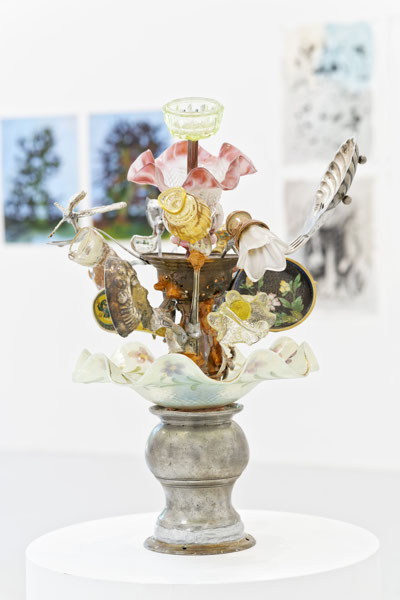
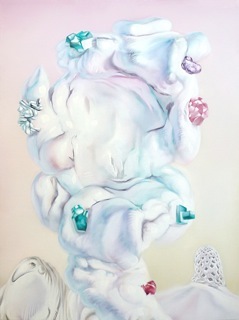
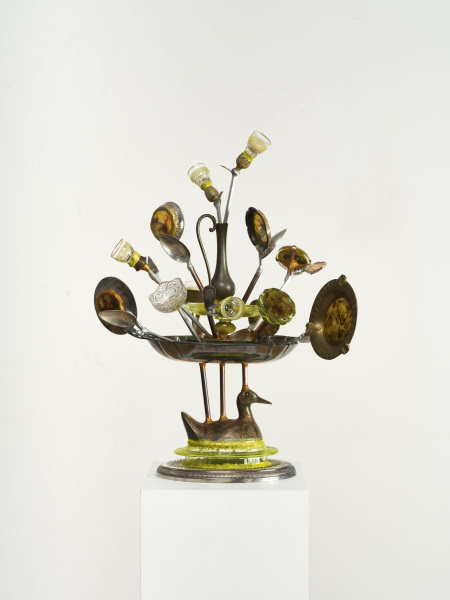
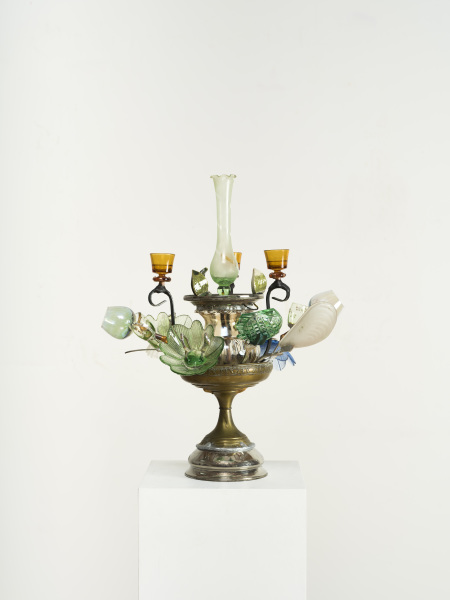
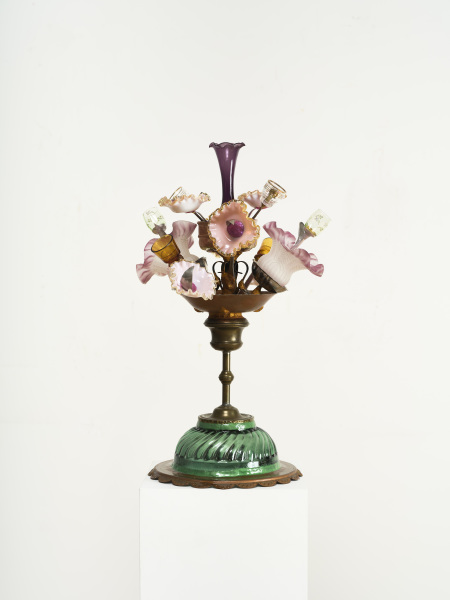
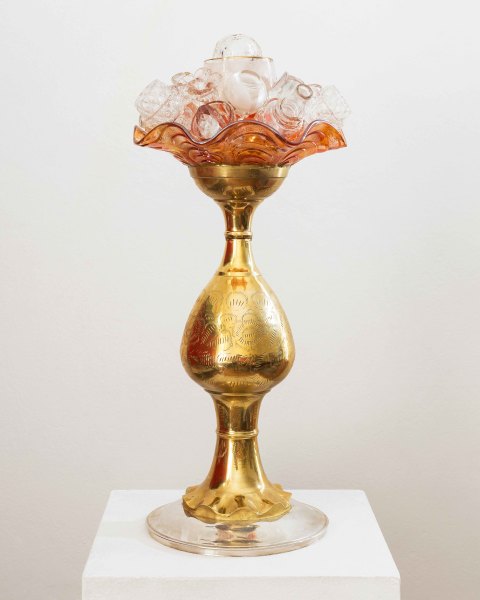
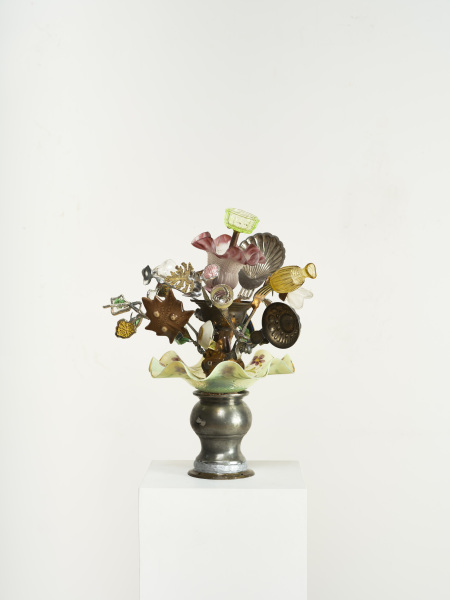
Still within the realm of sculpture, one cannot help but admire the assemblages of Stéphané Edith Conradie, created from found or salvaged materials recovered from abandoned interiors. These modest collections of objects resemble an almost ethnographic inquiry, serving as vehicles for the identity of a social class while acting simultaneously as intimate and collective witnesses. Elevated into sculptures, they acquire a fragile yet sacred, even totemic dimension. One must look beyond their luxuriant appearance, their profusion of glass, clusters of trinkets and bursts of colour, in order to access the artist’s deeper reflections on identity and the ways in which we compose it. Her works created in La Chaulme are structured around this principle, notably through the use of antique glass whose pigments once contained uranium. When exposed to X-rays, these pieces emit a phosphorescent glow. A curious reversal of history, considering that Namibia, Stéphané Edith Conradie’s childhood homeland, alone accounts for 6% of the world’s uranium production. The works on display, harmless in this form, nevertheless recall the extent to which mining has harmed men and women across the world, particularly within colonial and postcolonial contexts of mineral exploitation.
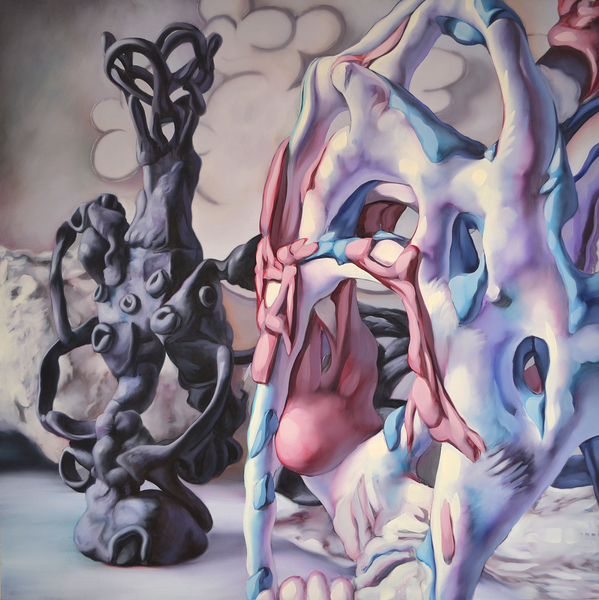
At La Chaulme, the studio made available to the artists is a long, expansive space that allows for the creation of works far larger in scale than most studios could accommodate. It was there that David Raffini worked on a long stretch of canvas laid directly on the floor, a blue cloth continuing his ongoing exploration of the fold. During the early months of summer 2025, Raffini also produced a series of impressions on plain kitchen towels that had been unstitched and pinned to the wall, in both contrast and subtle homage to the School of Nice. Rendered in deep blues and indigos, works such as Blue Froissement et ondoiement bleu (2025) and Brume et ondoiement (2025) evoke contemplations of sky or water. Yet the undulation here refers less to the movement of water than to the religious rite of blessing or baptising a child who has barely lived, and, by extension, to the celebration of a life both fleeting and pure. The long canvas delicately recalls the Baroque fold, which the artist had previously explored through car bodywork, traces of impact, and the beauty of the event or its aftermath. Here, only the trace remains: barely visible, and at times what appears beneath the surface has in fact been painted above it, heightening the sense of perceptual uncertainty.
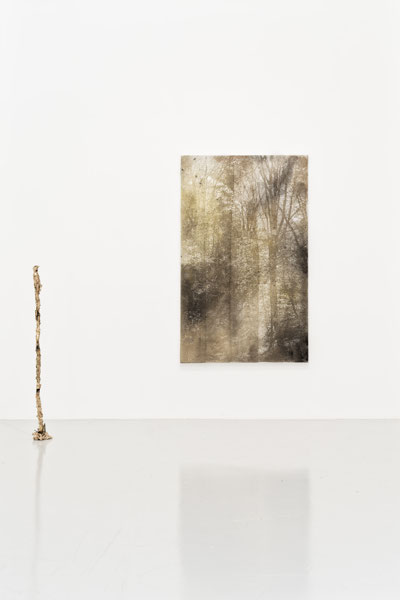
Sadie Laska, too, was immediately seduced by the studio, whose scale far exceeded that of a typical New York workspace. Arriving from the United States, the artist undertook a residency there in the spring of 2026. Spreading an immense linen canvas nearly ten metres long directly across the floor, she worked with oil paint, charcoal and occasionally spray paint. She lived among the views of the Monts du Forez and the Chaîne des Puys visible from the studio, allowing herself to be permeated by the vastness of the landscape, its power and immanence. The canvases were subsequently cut into separate paintings, each functioning like a window onto the outside world, an opening onto nature and the landscape beyond. This method allows her to preserve a broad, expansive gestural language while granting the paintings an even greater sense of scale. One thinks of panoramas, of multiplied visions of space. These works are less concrete representations than portraits of sensations, of the feeling produced simply by being there, within the environment of the residency, absorbing the succession of days and nights, as well as the shifting weather. Fragmented in this way, the paintings reveal subtle plays of transparency and inner light, brought forth through a rich palette of deep tonalities.
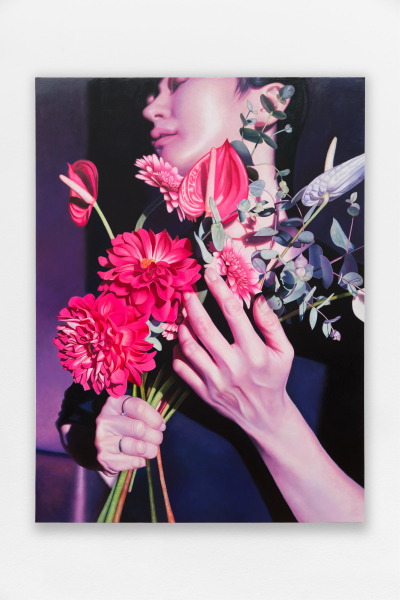
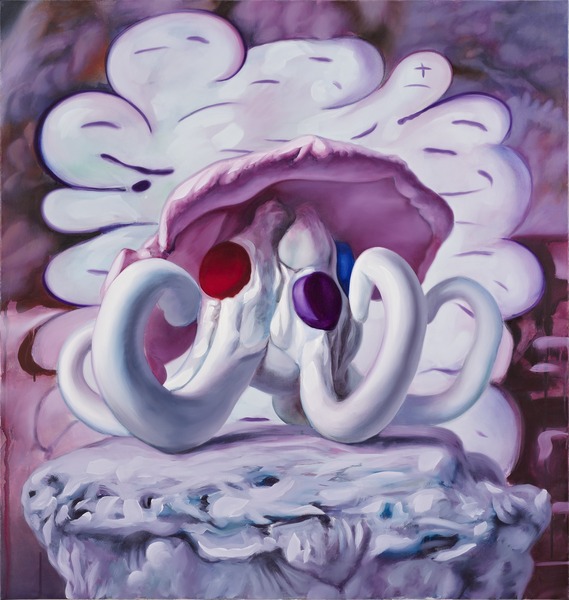
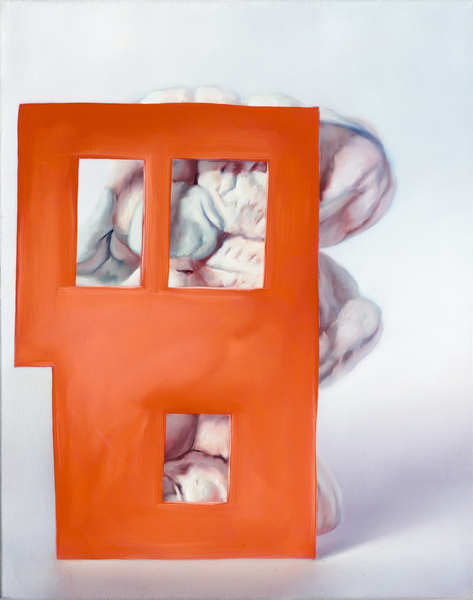
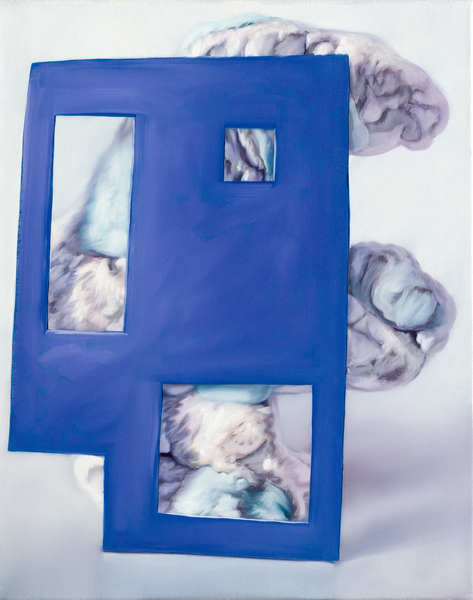
Still within the realm of painting, the Japanese artist Tomona Matsukawa spent a full month of residency in 2024, producing an entire series of medium-sized paintings drawing upon motifs from nature and domestic interiors. The subtle textures of everyday life are central themes to her work: scenes captured in passing, as though seized spontaneously. One senses a suspension of time, the feeling that something has occurred, though we are given no clue as to what it may have been. Yet within the paintings lingers a faint dramatic tension. It is difficult to escape the impression of a beauty tinged with unease. Even the colours are chosen with an aestheticism too smooth, too precise not to conceal something beneath the surface. It is a strange sensation. The titles themselves reinforce this uncertainty, such as I Don’t Know if It Was the Rig (2024), and are not necessarily directly connected to what the image appears to suggest. They imply that there is a before and an after to each painting. The titles inscribe every work within a narrative that remains unknown to us. One therefore spends a long time contemplating them, attempting to pierce their mysteries.
The most recent artist to benefit from the residency is David Wolle in May of this year. At the time of writing, he has not yet fully revealed the works produced there. The artist returns here to drawing, in continuity with works such as Pavel (2021), portrait drawings of the dancer Pavel Gredt that were digitally remodelled through cosmetic surgery software in order to liquefy their forms, before being redrawn by the artist’s own hand. This detour through technological tools allows him to rebalance the physical data of the subject, redefine a pictorial vocabulary, and establish a new protocol. Here, he however chooses to return to drawing from observation. David Wolle became interested in the way our eye itself draws the contours of what it perceives. Certain ancient philosophers believed that rays of light emanated from the eyes; such a theory allows one to imagine the eye itself acting almost like the scanner the artist precisely uses to achieve his reformations and transformations of objects. Why, then, not return to drawing directly from life, inspired by what is available in La Chaulme? It is an opportunity to be surprised, and to discover how the artist remains faithful to the irreverent spirit that usually characterises his work.
A brief analepsis to conclude. The place of the residency used to be an old farmhouse. A man had lived there alone for years, allowing objects to accumulate around him like tangible layers of time, sedimentations through which duration itself could be quantified. After this man departed for other realms, Marie Amar became the indispensable witness, the archaeologist of the house. Interpreting the space and its secrets without intrusion and with the utmost respect, she catalogued the walls, the views, the accumulations, the labour of time, frozen in place. Through her photographs, Marie Amar succeeded in capturing the roughness of an entire life lived within those walls. Among the exhibited images is a photograph of the kitchen, where two old clocks hanging on the same wall, one of them, I believe, made of Formica, display different times, as though within that kitchen in the Monts du Forez a temporal rift had been lived by its occupant day after day. Months later, in La Chaulme, some would still hear, resonating within the silence of the kitchen, the ticking of a clock that had long since disappeared. The artist’s photographs bear witness to an era, to memory itself; they reveal far more than the mere appearance of things, for those who know how to see.
It may be a commonplace, yet it is sometimes necessary — and our era sadly reminds us of this — to restate truths deemed so obvious that they eventually fade beneath the weight of time and the growing dominance of other narratives. The language of artists, and works of art speak intimately to us, and it is in this sense that they allow us to glimpse, and perhaps even feel that Heaven once sought by the descendants of Noah.
Sandrine Chalendard